
Church Tax in Berlin: The 9 Percent Rate, and Why Kirchenaustritt Means the Amtsgericht, Not the Standesamt
If you ticked a religious affiliation box on your Berlin Anmeldung form without thinking much about it, that single checkbox is what triggers Kirchensteuer, a real, legally binding payroll deduction. Berlin charges 9 percent of the income tax you actually owe, not 8 percent like Bavaria and Baden-Wurttemberg, and not 9 percent of your gross salary either, a distinction that matters more than the headline number. Whichever of Berlin's twelve district Burgeramter processed your Anmeldung passes your registered religious affiliation on to the Bundeszentralamt fur Steuern as part of your ELStAM record, and your employer looks it up automatically when running payroll, no separate registration, no extra form. If you want out, don't go looking for a Standesamt appointment the way you might in Munich: in Berlin, Kirchenaustritt is declared at the Amtsgericht (district court) responsible for your registered address, either in person or by notarized written declaration, and it costs 30 euros, a flat fee unchanged since April 2014 and five euros more than Munich charges. It cannot be completed online no matter what a third-party website implies, and Berlin's own official page warns directly against paying any online provider for it. The deduction stops at the end of the calendar month your exit is received. One more Berlin-specific wrinkle worth knowing: official Senate data show barely one in five Berliners is a registered member of the two churches this system is built around, and Islam, the city's second-largest religious community, isn't a tax-collecting body at all, so most of Berlin's genuinely diverse population never touches this mechanism. It's specifically people baptized or registered as children, often without realizing it, who get caught by it as adults.
The Official Rule
For most newcomers, Kirchensteuer starts with a form filled out weeks earlier and mostly forgotten. Buried in the Anmeldung paperwork you file at one of Berlin’s district Burgeramter is a field asking about religious affiliation, and ticking it, even without much thought, is a legally binding declaration in the eyes of German tax authorities. That checkbox is what shows up as a real deduction on your first Berlin payslip.
The mechanism runs entirely in the background, with no separate registration step. Whichever Burgeramt processes your Anmeldung, whether you filed it in person or through the newer eAnmeldung portal available to EU/EEA eID holders, forwards your declared religious affiliation to the Bundeszentralamt fur Steuern (Federal Central Tax Office), which stores it as part of your ELStAM (electronic income tax deduction characteristics). Your employer looks this up automatically when running payroll. There’s no Finanzamt visit to trigger it and no extra form beyond the Anmeldung you already filed, the data simply flows from your Meldebehorde to the BZSt to your employer.
In Berlin, the rate is 9 percent, one point higher than Bavaria and Baden-Wurttemberg. Those two states charge 8 percent; the other fourteen, Berlin included, charge 9. And the number that actually matters is easy to misread: it’s 9 percent of the income tax you owe, not 9 percent of your gross salary, a distinction that surprises people who assume the scarier-sounding figure applies straight to their paycheck.
Leaving the church (Kirchenaustritt) in Berlin is not a Standesamt matter, and this is the detail that trips people up if they researched another German city first. You declare your exit at the Amtsgericht (district court) responsible for your registered address, either in person, where staff record your oral declaration on the spot, or in writing with a notary-certified signature sent to the court. It costs 30 euros, a flat fee unchanged since April 30, 2014. Berlin’s own service page is blunt about the rest: an online declaration is not possible, and you should not transfer money to any website claiming to process it for you.
| Item | Berlin | Bavaria (Munich) |
|---|---|---|
| Kirchensteuer rate | 9% of income tax owed | 8% of income tax owed |
| Where you file Kirchenaustritt | Amtsgericht (district court) | Standesamt (registry office) |
| Kirchenaustritt fee | 30 euros | 25 euros |
| Online declaration possible? | No, explicitly ruled out | No |
One more layer worth understanding is Berlin’s own jurisdiction map, since it doesn’t line up with the twelve Bezirke the way you might expect. Amtsgericht boundaries were drawn separately from district boundaries: the Wedding court also handles Spandau and Reinickendorf, the Schoneberg court also covers Zehlendorf and Steglitz, and Mitte’s court reaches into Tiergarten and Prenzlauer Berg. Confirm the right court for your registered address before booking anything, rather than assuming your Bezirk name matches a court of the same name.
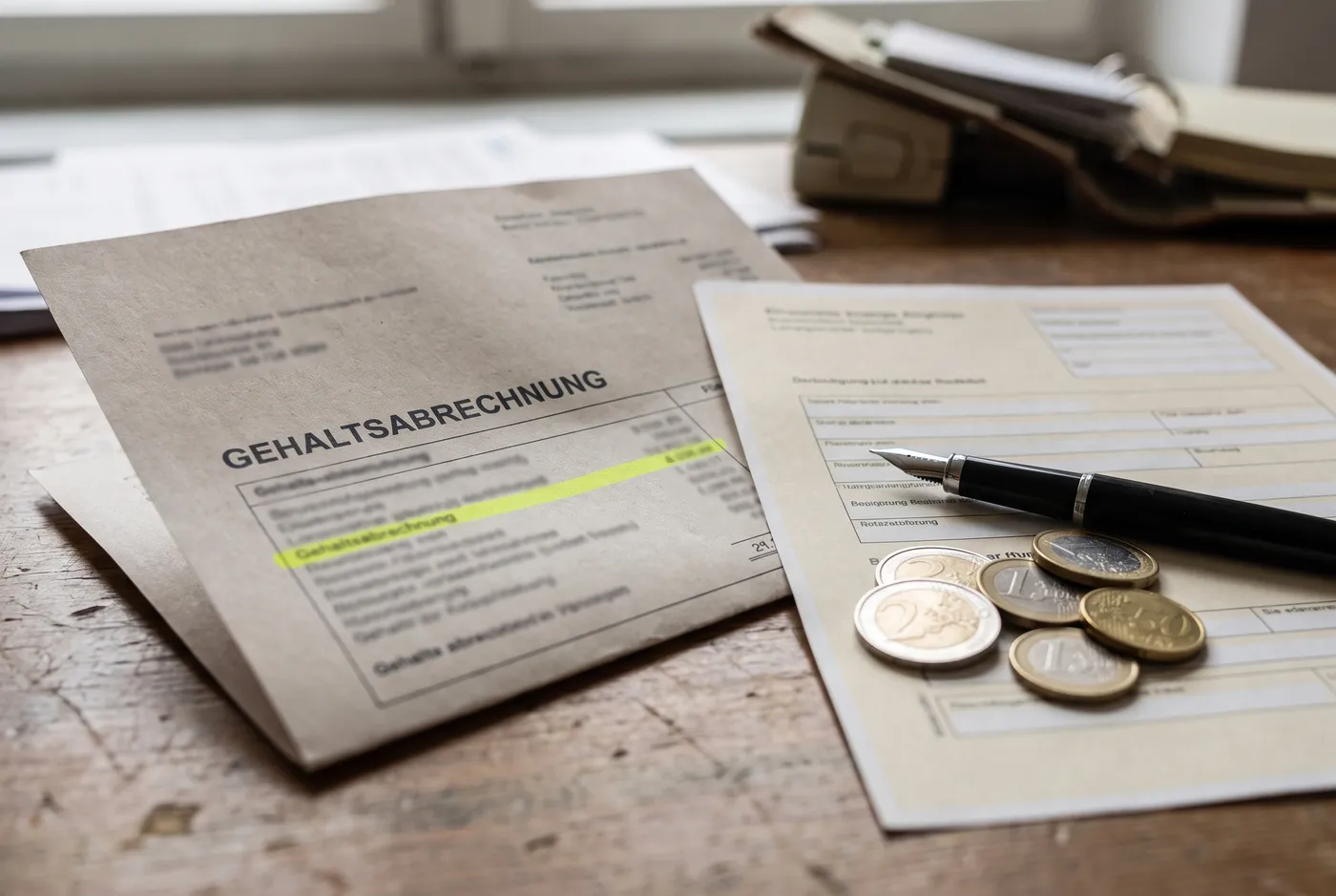
What Real People Say
English-language guides aimed at newcomers, like All About Berlin’s Anmeldung walkthrough, consistently flag the religion question on the registration form as the moment this whole system quietly switches on, and the guide’s own warning is worth repeating: some people who register as non-religious in Germany still end up with Kirchensteuer deducted if a baptism record from their home country is on file somewhere in the system, which is exactly why checking an early payslip matters more than trusting your own memory of what you ticked.
What’s less discussed in generic “church tax in Germany” content is how narrow this system actually is against Berlin’s real population. Berlin’s own Senate administration for culture describes the city as fundamentally pluralistic, with Christian communities as the largest membership group, Islam as the second-largest religious community, and Judaism as the third-largest, alongside sizable Buddhist, Hindu, Baha’i, and Sikh congregations and a large non-religious population. Yet official Statistikamt Berlin-Brandenburg data cited by fowid puts registered Evangelical and Catholic membership combined at 19.99 percent of the population as of the end of 2022, just under 770,000 people out of the whole city. The reason the gap is so wide isn’t that Berlin’s other faith communities are small, it’s that most of them aren’t structured as tax-collecting Korperschaften des offentlichen Rechts under German law. Muslim religious communities in Germany generally lack that recognized status, so there’s no equivalent automatic deduction tied to being Muslim, no matter how observant someone is. The clearest exception among Berlin’s minority communities is the Judische Gemeinde zu Berlin, which does collect its own Kultussteuer through the tax authorities, a narrower, separate system worth knowing about if it applies to your household.
Step by Step
- Treat the religious affiliation field on your Anmeldung form as a real decisionIt has direct payroll consequences, whether you register in person at a district Burgeramt or, if you're eligible, through the eAnmeldung portal.
- Check your payslip for a Kirchensteuer line if you're unsure whether you're registeredIt only appears if a religious affiliation is on file, including one carried over from a baptism record you might not remember declaring.
- If you want to leave, find the Amtsgericht that actually covers your registered addressDon't assume your Bezirk name matches a court of the same name; Berlin's court boundaries were drawn separately from its twelve districts.
- Choose in person or a notarized written declarationBoth are valid, but an online declaration is not an option, and Berlin's own service page warns against paying any website that claims otherwise.
- Budget 30 euros, paid when you fileThe fee has been flat since April 2014 and is five euros higher than Munich's.
- Note the calendar month your declaration is signed or receivedYour Kirchensteuer obligation ends at the close of that same month, so filing early in a month rather than late can save you that month's deduction.
Compliance Note
This page explains the general rules around Kirchensteuer and Kirchenaustritt as they apply in Berlin, current as of mid-2026. It is not tax or legal advice. Individual situations, joint tax assessments, prior baptism records from another country, or membership in a smaller tax-collecting community, can change what you actually owe. Confirm your specific case with your Finanzamt, a Steuerberater, or the relevant Amtsgericht directly.
FAQ & Common Pitfalls
Is Kirchensteuer only for people who actively practice a religion?
No, and this is exactly the misunderstanding that catches newcomers out. Kirchensteuer is tied to formal, registered membership in a tax-collecting religious community, mainly the Evangelical and Roman Catholic churches in Berlin, not to how often you attend services or how religious you actually are. If you're a registered member, whether that's because you were baptized as a child back home and never formally left, or because you ticked a box on your Anmeldung form without realizing its significance, you owe 9 percent of your income tax regardless of your actual religious practice.
Where do I actually go to leave the church in Berlin? Is it the Standesamt, like in Munich?
No, and this is the single biggest thing that doesn't carry over from a Munich playbook. In Munich, Kirchenaustritt is handled at the Standesamt. In Berlin, it's the Amtsgericht, the district court, responsible for your registered address, and Berlin's twelve Bezirke don't map neatly onto Amtsgericht boundaries: the Wedding court also covers Spandau and Reinickendorf, the Schoneberg court also covers Zehlendorf and Steglitz, and so on. Check which Amtsgericht actually serves your registered address before you show up anywhere, Berlin's official Kirchenaustritt service page links out to the right one district by district.
How much does Kirchenaustritt cost in Berlin, and can I do it online?
It costs 30 euros, a flat fee that's been unchanged since April 30, 2014, paid on the spot when you file, either in person as an oral declaration recorded by court staff, or in writing with a notary-certified signature sent to the court. You cannot complete it online. Berlin's own official service page states this directly and specifically warns against transferring money to any online provider claiming to handle it for you, a warning worth taking seriously given how many third-party sites market themselves around this exact process.
I'm Muslim, or not religious at all. Does any of this actually affect me?
Almost certainly not through this specific mechanism. According to Berlin's own Senate administration, Islam is the city's second-largest religious community after Christianity, but Muslim religious communities in Germany generally aren't recognized as the kind of Korperschaft des offentlichen Rechts (public-law body) that can collect tax this way, so there's no equivalent automatic payroll deduction tied to being Muslim. Official Statistikamt data put registered Evangelical and Catholic church membership combined at just under 20 percent of Berlin's population as of the end of 2022, meaning roughly four out of five Berliners sit outside this system entirely. The one notable exception among minority communities is the Judische Gemeinde zu Berlin, which collects its own Kultussteuer through the tax authorities in a broadly similar way.
If I leave the church, does the tax stop immediately?
Not instantly, but close. Once your Kirchenaustritt declaration is signed at the Amtsgericht, or your notarized written declaration is received there, your Kirchensteuer obligation ends at the close of the calendar month in which that happened. File early in a month and you save that month's deduction too. File on the 28th and you're still on the hook for the whole month.
I was baptized as a child in my home country and never formally left the church. Am I liable for Kirchensteuer in Berlin even though I don't practice?
Potentially yes, and this is the scenario that surprises the most people. Whether you actually owe it comes down to what you registered on your Anmeldung form and what data ends up in the German tax system, not your personal beliefs or how observant you are back home. If in doubt, check an early payslip for a Kirchensteuer line, and if it's there and you don't want it, the Amtsgericht process above is how you formally end it.