
In Berlin, Whether an International School Runs a Bus Depends on Where It Sits
Berlin doesn't have one answer to whether an international school runs its own bus, it has three, and which one applies depends entirely on where a specific campus sits relative to the city's own U-Bahn and S-Bahn network. Schools sitting inside that dense core, Berlin Metropolitan School in Mitte, or the bilingual state schools John F. Kennedy School (JFKS) in Zehlendorf and Nelson Mandela School in Wilmersdorf, run no dedicated fleet at all: students use ordinary BVG lines, backed since 1 August 2019 by a free VBB Schülerticket every enrolled Berlin student can claim, a program that predates Hamburg's own citywide free ticket by five years. JFKS goes a step further and explicitly recommends a private, unaffiliated bus company for families who want door-to-door pickup, while stating plainly that any such contract sits strictly between the parents and that company, not the school. A second group of schools runs something that looks like a bus service but is really a shuttle between a school's own buildings, not between home and school: Berlin Cosmopolitan School (BCS) runs a daily transport link between its City Campus in Mitte and its Nature Campus at Müggelsee, folded directly into its income-adjusted tuition, and Berlin British School (BBS) shuttles students between its Early Years, Primary, and Secondary sites around a central Dickensweg pickup point. The clear exception is Berlin Brandenburg International School (BBIS), whose 36-hectare forested Kleinmachnow campus sits roughly 17km southwest of the city center, genuinely outside the dense network; BBIS contracts a real fleet through PotsdamBus GmbH, priced from 2,236.30 EUR per seat for 2026/27 (up from 2,065.10 EUR the year before), covering routes into both Berlin and Potsdam.
The Ring Changes the Answer
Ask a Munich family whether an international school runs a bus and the answer is close to a flat yes, both MIS and BIS operate large, distance-banded fleets that most of their own enrolled families rely on. Ask a Hamburg family and the answer splits between a school-run fleet and one chartered through the city’s own transit authority. Ask a Berlin family the same question and the honest answer is: it depends which ring the school sits in.
Berlin’s U-Bahn, S-Bahn, tram, and bus network reaches further into the city’s residential fabric than almost any comparable German network, and most of the international and bilingual schools this page covers chose locations squarely inside that reach. That single fact does more to explain Berlin’s version of this topic than any school-by-school comparison could: a dedicated bus fleet only shows up here once a school’s own site pushes past where the network already does the job.
Inside the Network: No Bus, Just the Ticket
Berlin Metropolitan School (BMS), in Mitte, sits within a few minutes’ walk of the U6 at Oranienburger Tor, the S1, S2, and S25 at Oranienburger Straße, three tram lines, and a city bus route. Its own materials lean on that access directly rather than describing any shuttle of its own, and nothing in its public pages points to a dedicated bus service.
The two bilingual state schools most expat families encounter sit in a similar position. JFKS, in Zehlendorf, is a short walk from S-Bahnhof Zehlendorf on the S1 plus several bus stops. Nelson-Mandela-Schule, in Wilmersdorf, sits near both the U3 and U7 with several connecting bus lines. Neither runs its own fleet, and neither needs to: since 1 August 2019, every enrolled Berlin student has been entitled to a free VBB Schülerticket, valid across the whole BVG and S-Bahn network, a program our free school transport ticket guide covers in full and one that arrived a full five years before Hamburg introduced its own equivalent.
What’s genuinely distinctive is how JFKS handles the gap the free ticket doesn’t close. A free ticket assumes a child can already manage an ordinary stop alone. For families who want more structure, particularly with younger children or an address the network reaches less conveniently, JFKS’s own transportation page names a private bus company directly, but is explicit that any resulting contract is strictly between the parents and that company, not the school. That’s a meaningfully different posture from Munich or Hamburg, where even the schools that don’t publish a fee are still the ones contracting and running the bus themselves.
Between Buildings, Not Between Home and School
A second group of Berlin schools runs something that reads like a bus service on paper but solves a different problem entirely: getting a school’s own students between its own multiple sites, not between a family’s front door and a single campus.
Berlin Cosmopolitan School (BCS) teaches grades 1 through 4 partly at a Nature Campus on the Müggelsee in Köpenick, apart from its City Campus in Mitte. A daily transportation service connects the two, and, unlike every bus fee described on Munich’s or Hamburg’s equivalent pages, BCS folds that cost directly into its own income-adjusted tuition instead of billing families for it on its own.
Berlin British School (BBS) runs its own version of the same idea across Early Years, Primary, and Secondary sites, with a central pickup and drop-off point at Dickensweg. The Primary-to-Early-Years run leaves around 8:30am and returns at 3:00pm; the Primary-to-Secondary run leaves around 8:00am and returns at 3:30pm, with K3 children brought back to the Primary site earlier since their day ends sooner. The same buses double as transport for swimming, other sports, museum visits, and day trips around Berlin and Brandenburg.
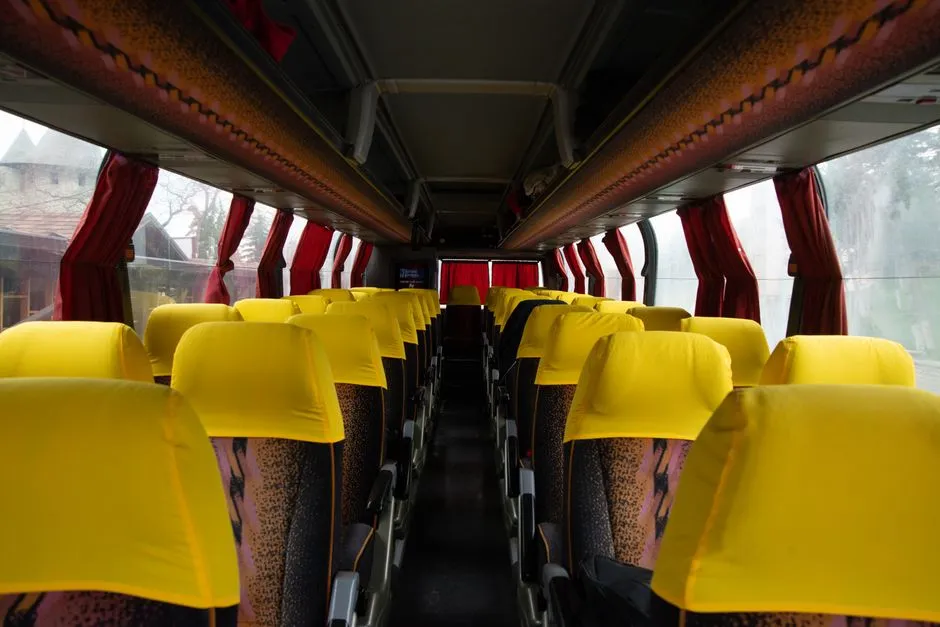
Photo by Александр Лич on Pexels
Neither BCS’s nor BBS’s shuttle is something an outside family can book into. Access runs through enrollment at the school itself, the same way access to BCS’s own extensive holiday vacation programme, covered elsewhere on this site, is tied to already being a student there rather than something purchased separately.
Outside the Ring: BBIS’s Real Fleet
Berlin Brandenburg International School (BBIS) is the exception that actually proves the pattern. Its campus, roughly 36 hectares of forested land on the Machnower See in Kleinmachnow, sits about 17km southwest of central Berlin, and notably across the state line into Brandenburg rather than Berlin proper, a profile that maps closely onto Munich International School’s own lakeside site out by the Starnberger See. That distance from the dense inner-city network is precisely why BBIS is the one school on this page running a genuine, contracted, Munich-style bus operation rather than a shuttle between its own buildings.
BBIS contracts its service through PotsdamBus GmbH, an independent transport company with an office on the BBIS campus itself, open Monday to Friday from 8am to 4pm. The fleet runs routes into both Berlin and Potsdam, plus separate late-bus options for students staying for after-school activities.
| School year | Price per seat (incl. 7% VAT) |
|---|---|
| 2025/26 | €2,065.10 |
| 2026/27 | €2,236.30 |
That’s roughly an 8% increase in a single year, and BBIS’s own materials note that individual pricing can be arranged on request for situations the flat rate doesn’t cover well. For current routes, stops, and terms, PotsdamBus GmbH is reachable directly at +49 (0)33203 8849-25 or info@potsdambus.de.
Where Each School Actually Sits
| School | Where the campus sits | What actually happens |
|---|---|---|
| Berlin Metropolitan School | Mitte, on top of U6/S1/S2/S25/tram/bus | No dedicated bus; free VBB Schülerticket covers commuting |
| JFKS / Nelson-Mandela-Schule | Zehlendorf / Wilmersdorf, well inside the U/S-Bahn network | Same as above; JFKS also names an unaffiliated private bus company for families who want more structure |
| Berlin Cosmopolitan School | City Campus (Mitte) plus Nature Campus (Köpenick) | Daily inter-campus shuttle, cost folded into tuition |
| Berlin British School | Split Early Years/Primary/Secondary sites, Dahlem area | Inter-site shuttle plus activity transport, central Dickensweg pickup |
| BBIS | Kleinmachnow, ~17km SW, outside the dense network | Full contracted fleet via PotsdamBus GmbH, priced per seat |
The comparison worth sitting with isn’t Berlin against itself, it’s Berlin against the two other cities this site covers. Munich’s MIS and BIS run large fleets because most of their families genuinely live beyond easy transit reach of a single suburban or lakeside campus. Hamburg’s ISH and Phorms run paid services aimed mainly at younger children who aren’t yet ready for the free citywide ticket on their own. Berlin’s version looks smaller not because its schools are less international, but because most of them picked addresses the U-Bahn and S-Bahn already cover, leaving a formal fleet as something only one campus, sitting genuinely outside that reach, actually needs.
Step by Step
- Check where the specific campus actually sits before assuming anythingA Mitte, Zehlendorf, or Wilmersdorf address behaves completely differently from a Kleinmachnow one.
- If the school sits inside the core network, register for the free VBB SchülerticketFree since 1 August 2019 for every enrolled Berlin student, no distance test.
- If your child needs more structure than a normal stop offers, ask the school directly what it recommendsJFKS names a private company but doesn't run or subsidize the arrangement, treat it as a separate contract.
- If the school runs multiple campuses, confirm the shuttle is for enrolled students onlyBoth BCS and BBS's bus services move their own students between their own sites, not outside families.
- If you're considering BBIS, contact PotsdamBus GmbH directly for current pricing+49 (0)33203 8849-25 or info@potsdambus.de, since custom quotes exist alongside the flat per-seat rate.
- Reconfirm every yearBBIS's own per-seat price rose roughly 8% between the 2025/26 and 2026/27 school years, and routes at any school can shift with enrollment.
Compliance Note
Everything above reflects what Berlin Metropolitan School, JFKS, Nelson-Mandela-Schule, Berlin Cosmopolitan School, Berlin British School, and BBIS published about their own transportation arrangements as of July 2026. A campus’s transit access, a shuttle’s schedule, or BBIS’s per-seat price are each reset on their own timeline, none of them locked in place. Treat the details here as a starting point for a direct conversation with the specific school your child attends or might attend, not as a guarantee that still holds by the time you need it.
FAQ & Common Pitfalls
Does every international or bilingual school in Berlin run its own bus?
No, and that's really the point of this page. Whether a specific school runs a bus depends almost entirely on where its campus sits. Berlin Metropolitan School in Mitte and the bilingual state schools JFKS and Nelson Mandela School all sit well inside the city's dense U-Bahn and S-Bahn network, and none of them operate a dedicated fleet, students use ordinary public transit. Berlin Cosmopolitan School and Berlin British School both run buses, but as inter-campus shuttles connecting their own multiple sites, not as a home-to-school pickup service. Berlin Brandenburg International School (BBIS), whose campus sits outside that dense network entirely in Kleinmachnow, is the one school here that runs something structurally similar to Munich's MIS or BIS, a real contracted fleet covering distance between family homes and the school.
Is BBIS's bus service priced the same way as Munich's MIS or BIS?
Not quite. Munich's MIS publishes a distance-band fee table, five sections from roughly 955 to 2,547 euros a year one way depending how far a family lives from the school. BBIS instead publishes one flat per-seat price for its contracted service through PotsdamBus GmbH: from 2,236.30 EUR including 7% VAT for the 2026/27 school year, up from 2,065.10 EUR the year before, an increase of roughly 8%. Custom pricing is available on request for situations the flat rate doesn't fit. Contact PotsdamBus GmbH directly, Monday to Friday 8am-4pm, at +49 (0)33203 8849-25 or info@potsdambus.de, for current terms and whether a route reaches a specific address.
Can a family whose child doesn't attend Berlin Cosmopolitan School or Berlin British School use their shuttle buses?
No. Both services exist to move a school's own enrolled students between that school's own campuses or sites, not as a bookable transport product open to outside families. BCS's shuttle connects its City Campus in Mitte with its Nature Campus at Müggelsee and is paid for through the school's own income-adjusted tuition; BBS's shuttle connects its Early Years, Primary, and Secondary sites around a central pickup point at Dickensweg and also carries students to swimming, sports, and museum trips. Enrollment at the school, not a separate booking, is what gives access to either.
If my child's school doesn't run a bus, is the free Schülerticket really enough on its own?
For a child old enough to travel independently, yes, in most cases, and it's been genuinely free since 1 August 2019, five years earlier than Hamburg introduced its own citywide free student ticket. It covers the entire BVG and S-Bahn network with no distance test. What it doesn't solve is supervision for a younger child who isn't ready to navigate a normal bus stop alone. That's the gap JFKS addresses directly on its own transportation page: it names a private bus company, without running or subsidizing the arrangement itself, and is explicit that any contract a family signs is strictly between that family and the company, not the school.
Why does BBIS need a real bus fleet when other Berlin international schools don't?
Location. BBIS sits on a 36-hectare forested campus in Kleinmachnow, roughly 17km southwest of central Berlin and, notably, across the state line in Brandenburg rather than Berlin itself, a setting comparable in character to Munich International School's site out by the Starnberger See. Berlin's other international and bilingual schools covered on this page chose locations inside or close to the dense inner-city transit network specifically, which is why a formal bus fleet is the exception here rather than the norm. If you're considering a different Berlin-area international school not named on this page, its own admissions office is the right place to ask whether a comparable service exists, since neither the structure nor the pricing described here is guaranteed to carry over.