
St. Martin Lantern Processions in Berlin: A Borough-by-Borough Guide
Berlin has no single flagship St. Martin procession the way some German cities do. Instead, a dense network of parish, neighborhood, and Kinderbauernhof processions runs across nearly every borough in the days bracketing November 11, St. Martin's Day, and the large majority are open community events, not private Kita functions, so you show up with your own lantern rather than needing an invitation. Mitte's best-known version starts with a Martin's play and singing service at Berliner Dom (Karl-Liebknecht-Straße 1) at 17:00, then processes through the Lustgarten to Gendarmenmarkt around 18:00, free with donations welcome. Prenzlauer Berg runs a distinctive three-start model: separate processions leave Stadtkloster Segen (Schönhauser Allee 161) at 16:30, Elias-Kirche (Göhrener Str. 11) at 17:00, and Jugendfarm Moritzhof (Schwedter Str. 90) at 18:00, all converging at Friedrich-Ludwig-Jahn-Sportpark for one shared bonfire with a horse-mounted St. Martin and a live goose. Kreuzberg alone runs at least three separate versions, including one through Kinderbauernhof im Görlitzer Park. Expect Weckmann or Martinshörnchen buns, Kinderpunsch, and Glühwein sold or handed out at most stops, and bring a battery-powered lantern light since most paper lanterns don't include one. A handful of previously well-known events skip a year entirely: Britzer Garten's long-running lantern festival did not run in 2025, so confirm a specific location is actually happening that year before making a special trip. Kreuzberg's Wrangelkiez also holds a separate, secular 'Laternendemo gegen Verdrängung' (lantern demo against displacement) using giant dragon puppets rather than the St. Martin legend, a distinctly Berlin variation worth knowing isn't the same tradition.
No Single Flagship, a Borough-by-Borough Network Instead
Berlin doesn’t concentrate its St. Martin tradition into one central event the way some German cities do. Instead, dozens of parishes, Kinderbauernhöfe, and neighborhood groups each run their own Laternenumzug or Martinsumzug in the days bracketing November 11, St. Martin’s Day, and the pattern across independent roundups is consistent: these are open community events, not private Kita functions. The underlying legend is the same everywhere it’s told: children carry handmade or bought paper lanterns through the streets at dusk, singing traditional songs, usually led by a rider on horseback playing St. Martin, who reenacts cutting his cloak in half to share with a freezing beggar. kinderleicht.berlin’s independent guide lists processions in essentially every borough, describing the large majority as openly inclusive rather than restricted to families already enrolled somewhere.
| Borough / organizer | Typical date & time | Meeting point |
|---|---|---|
| Mitte, Berliner Dom | Nov 11, service 17:00, procession from ~18:00 | Karl-Liebknecht-Straße 1, through the Lustgarten to Gendarmenmarkt |
| Prenzlauer Berg (3 starts, 1 finish) | Nov 11, staggered 16:30 / 17:00 / 18:00 | Stadtkloster Segen (Schönhauser Allee 161), Elias-Kirche (Göhrener Str. 11), Jugendfarm Moritzhof (Schwedter Str. 90), all converging at Friedrich-Ludwig-Jahn-Sportpark |
| Kreuzberg, Christuskirche | Nov 11, ~16:00-18:00 | Dieffenbachstraße 39, procession to St.-Johannes-Basilika |
| Kreuzberg, Kinderbauernhof im Görlitzer Park | Around Nov 11 | Wiener Str. 59b, procession through the park to Emmaus-Kirche |
| Charlottenburg-Wilmersdorf, Rheingauviertel | Nov 11, ~16:30 | St. Marien, procession to Zum Guten Hirten |
| Steglitz, Matthäuskirche | Nov 11, ~16:30 | Schloßstraße 44 (Alt-Steglitzer Martinsfest) |
| Tempelhof, Kinderbauernhof Ufa-Fabrik | Nov 11, ~17:00 | Viktoriastr. 13 |
| Spandau, St. Nikolai-Kirche | Nov 11, ~17:00 | Carl-Schurz-Straße 48-56 |
| Reinickendorf, Kirche Konradshöhe | Nov 11, ~16:30 | Schwarzspechtweg 1 |
| Köpenick, Strandbad Wendenschloss | Nov 11, ~17:30 | Möllhausenufer 30 |
Prenzlauer Berg’s three-start, one-finish model is the most distinctive pattern in Berlin. According to the Evangelische Kirchengemeinde Prenzlauer Berg Nord’s own 2025 page, three separate processions leave Stadtkloster Segen, Elias-Kirche, and Jugendfarm Moritzhof at staggered times and all walk toward Friedrich-Ludwig-Jahn-Sportpark, where they combine into a single bonfire celebration with a theatrical performance and warm drinks. Independent listings describe two horses and a live goose taking part, and the parish itself notes that proceeds support its “Kiez-Frühstück” neighborhood breakfast program. Jugendfarm Moritzhof, one of the three starting points, is the same children’s farm covered in SettledIn’s guide to Berlin’s Kinderbauernhöfe, so families who already visit for the animals will recognize the location.
Kreuzberg alone runs several distinct versions rather than one. Christuskirche’s ecumenical procession to St.-Johannes-Basilika includes a passion play and, per qiez.de’s independent roundup, Martinsbrötchen with Kinderpunsch. Kinderbauernhof im Görlitzer Park, the same farm covered separately in SettledIn’s Kinderbauernhof guide, runs its own procession through the park to Emmaus-Kirche. And the Wrangelkiez holds an entirely different kind of lantern walk, covered in “What Real People Say” below.
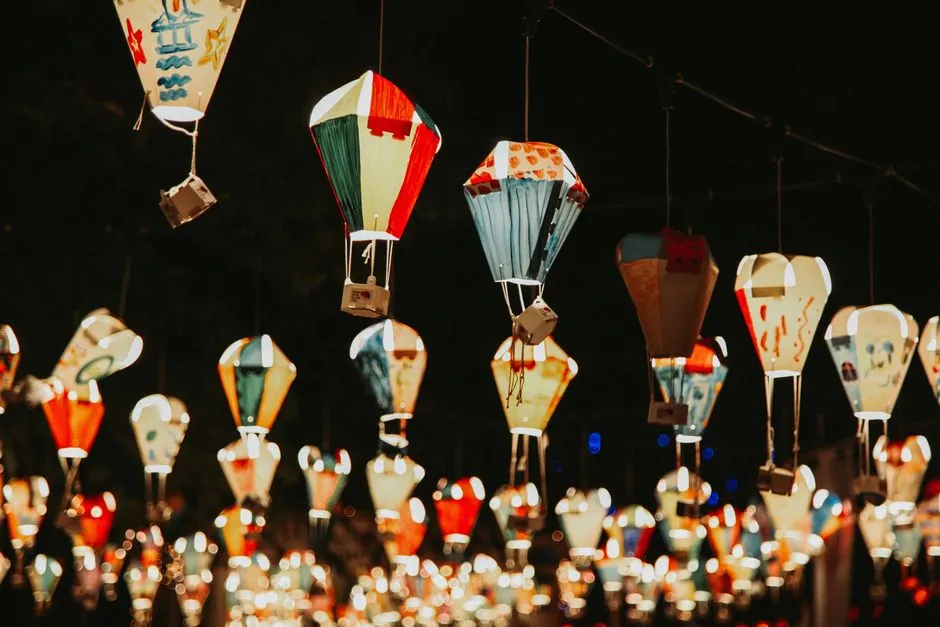
Photo by Nikita Belokhonov on Pexels
What Real People Say
The Tagesspiegel’s 2025 overview of church-organized processions confirms the pattern holds well beyond the handful of well-known spots: Karlshorst, Rheingauviertel, Mariendorf, Schöneberg, and more each run their own version with their own start time, none framed as exclusive. The Prenzlauer Berg Nord parish’s own event page adds a detail newcomers rarely expect: alongside the public procession, the parish separately invites children to a hands-on baking session the day before, and separately recruits volunteer marshals to help manage street closures, a role open to any parent willing to contact the parish directly rather than something limited to church members.
Not every celebration fits the religious mold, and that’s worth knowing before you assume “lantern walk” always means the same thing in Berlin. In the Wrangelkiez, the neighborhood initiative Bizim Kiez has run an annual “Laternendemo gegen Verdrängung” (lantern demo against displacement) every November since 2015, drawing around 300 participants behind a large puppet “Kiez dragon” through Kreuzberg to protest the loss of local shops, Kitas, and long-term residents to rising rents. It borrows the lantern-at-dusk format and the same November slot as the church processions nearby, but it’s a solidarity demonstration built around a different symbol entirely, not a St. Martin’s Day event, so treat it as a separate Berlin tradition rather than a variant of the same one.
Reality also includes cancellations. Britzer Garten’s Neukölln lantern festival, a long-running draw of roughly a thousand participants according to past coverage, simply did not happen in 2025, with no replacement date announced. Nothing in the available sources suggests the tradition has ended there for good, small, often volunteer-run annual events do sometimes skip a year, but it’s a concrete reminder to check a specific location’s current-year status rather than assuming a well-known past event repeats automatically.
Step by Step
- Pick a procession by borough rather than by name recognition. With this many options running the same week, a shorter walk close to home is easier to manage with a young child than crossing the city for one specific well-known event.
- Confirm the current year’s date, time, and status close to late October or early November, on the organizer’s own page or a current listings site like kinderleicht.berlin, since individual parishes shift by a day, and a small number of past favorites (Britzer Garten in 2025) don’t run at all some years.
- Buy or make a lantern in advance, and separately buy a battery-powered lantern light if it doesn’t already include one, sold at drugstores, toy shops, and seasonal markets in the weeks beforehand. Test it the night before.
- Show up around the stated start time with no registration needed for a normal family visit. Volunteering as a marshal or helper is the one role parishes ask you to arrange in advance.
- Bring small cash for Weckmann, Martinshörnchen, Kinderpunsch, or Glühwein, most of which are sold for a donation rather than a fixed ticket price.
- Pack for an outdoor November evening walk: a stroller for younger children, weatherproof layers, and patience for a 45-minute to one-hour walk that often ends in an informal bonfire gathering rather than a hard finish line.
- Plan an early exit if your child tires. Most processions are structured so leaving before the closing bonfire or service doesn’t mean missing the point of the evening.
Compliance Note
This page describes a recurring annual community and church tradition spread across many independent organizers, not a single fixed event, and specific dates, times, and meeting points change from year to year and organizer to organizer; the entries above reflect 2025 dates as researched in mid-2026 and are illustrative of the typical annual pattern rather than a guaranteed calendar. At least one previously well-known procession (Britzer Garten) did not run in 2025, confirming that individual locations can skip a year without notice. Confirm the exact date, time, and location for any specific procession directly on that organizer’s own site or noticeboard in the weeks before November 11.
FAQ & Common Pitfalls
Do I need my child enrolled at a Kita to attend a Martinsumzug?
No. Independent, dated roundups of Berlin's processions describe the large majority as openly inclusive community celebrations rather than events restricted to enrolled Kita children. A parish or Kinderbauernhof often organizes the walk together with its own attached Kita or Jugendfarm, and that Kita's children may lead the procession or perform the Martinsspiel, but the walk itself, plus the bonfire and treats afterward, is announced as a neighborhood event anyone can join. The one thing worth double-checking is an event explicitly labeled as a closed school or Kita celebration, which is rare but does exist, so read the specific organizer's own announcement if you see that wording.
Do I need to register in advance or pay to join?
For almost every procession described here, no. The Berliner Dom's own Museumsinsel listing states its event is free with donations welcome, and none of the parish or Kinderbauernhof processions across Prenzlauer Berg, Kreuzberg, Steglitz, Tempelhof, Spandau, Reinickendorf, or Köpenick require a ticket or sign-up for a family simply showing up to walk. The one place people do register ahead of time is as volunteers: the Prenzlauer Berg Nord parish, for example, actively recruits marshals to help manage street closures and guide the procession, a role you'd contact the parish directly about, not something required to attend.
What if the specific procession I was planning on doesn't run this year?
This genuinely happens, so build in a backup. Britzer Garten's long-running Neukölln lantern festival, historically drawing around a thousand participants, did not take place in 2025, with no announced replacement date. These are small, often volunteer- or parish-run events, and a single year's cancellation doesn't mean the tradition has ended permanently at that location, but it does mean you should confirm a specific procession is actually scheduled that year on the organizer's own site or a current listings page like kinderleicht.berlin, rather than assuming a well-known past event is automatically happening again.
Is Kreuzberg's 'Laternendemo gegen Verdrängung' the same thing as a Martinsumzug?
No, and it's worth knowing the difference so you show up expecting the right thing. Bizim Kiez, a Wrangelkiez neighborhood initiative, has run its own lantern walk every November since 2015, but it's explicitly framed as a protest against the displacement of local shops, Kitas, and residents, built around a large puppet 'Kiez dragon' rather than the St. Martin legend, horse rider, or church service. It shares the lantern-at-dusk format and the same November calendar slot as the religious and Kinderbauernhof processions nearby, but it's a solidarity demonstration, not a St. Martin's Day tradition, so don't expect a Martinsspiel, a bonfire service, or Weckmann at this particular event.
Which procession is easiest for a first-timer or a very young child?
The Berliner Dom procession in Mitte is a reasonable first choice if you're anywhere near the city center: it's well documented, reachable by S-Bahn (S3/S5/S7/S9 to Hackescher Markt) or U-Bahn (U5 to Museumsinsel or Rotes Rathaus), and the route through the Lustgarten to Gendarmenmarkt is short and flat. For a shorter walk with an easier early exit, a neighborhood parish or Kinderbauernhof procession close to home usually beats crossing the city for a specific well-known one, since most of these processions end in an informal gathering rather than a strict finish line.