
Willkommensklassen: Berlin's School Welcome Classes for Newcomer Children
If your child is old enough for compulsory schooling but doesn't speak German yet, Berlin generally doesn't put them straight into an ordinary class. From around age 8 upward, newly arrived children join a Willkommensklasse (welcome class), a small dedicated group focused on intensive German, while already taking part in subjects like art, music and sport alongside regular classmates. Younger children, roughly 6 to 7, skip this step entirely and join a normal first class from day one. Enrollment doesn't go through your local Grundschule the way the October Einschulung process does, it starts with your district's Koordinierungsstelle für Willkommensklassen. Plan for up to a year in the class, though most Grundschule-age children move into a regular class faster than that, and teenagers 16 and older follow a completely different, vocational-focused version at an Oberstufenzentrum.
The Official Rule
Willkommensklassen (literally “welcome classes”) are Berlin’s answer to a specific problem: what happens when a child of compulsory school age arrives in the city and doesn’t speak German yet. Rather than dropping them straight into an ordinary class, the Senate education administration places most newcomers, generally from around age 8, into a small dedicated group focused on intensive German instruction, with the explicit goal of getting them into a regular class as fast as reasonably possible. From the start, students already join the regular class for subjects like art, music and sport, so the separation isn’t total even on day one.
Younger children skip this step entirely. Berlin’s family portal is specific about the age line: children around 6 to 7 go straight into an ordinary first class (the Schulanfangsphase), sitting alongside German-speaking classmates from day one, regardless of how much German they arrive with. There’s no separate newcomer track at that age at all. This is also covered as an FAQ on SettledIn’s guide to Berlin’s school enrollment, which handles the fixed October registration window for that younger group.
This is a different system from the October Einschulung process, not a variation of it. If you’re registering a 6-year-old who’s growing up in Berlin for their first year of school, you want the October window and your assigned catchment Grundschule. If you’re enrolling an 8-to-18-year-old who has just arrived and doesn’t speak German, you want a Willkommensklasse, and you start somewhere completely different: your district’s Koordinierungsstelle für Willkommensklassen, not the local school.
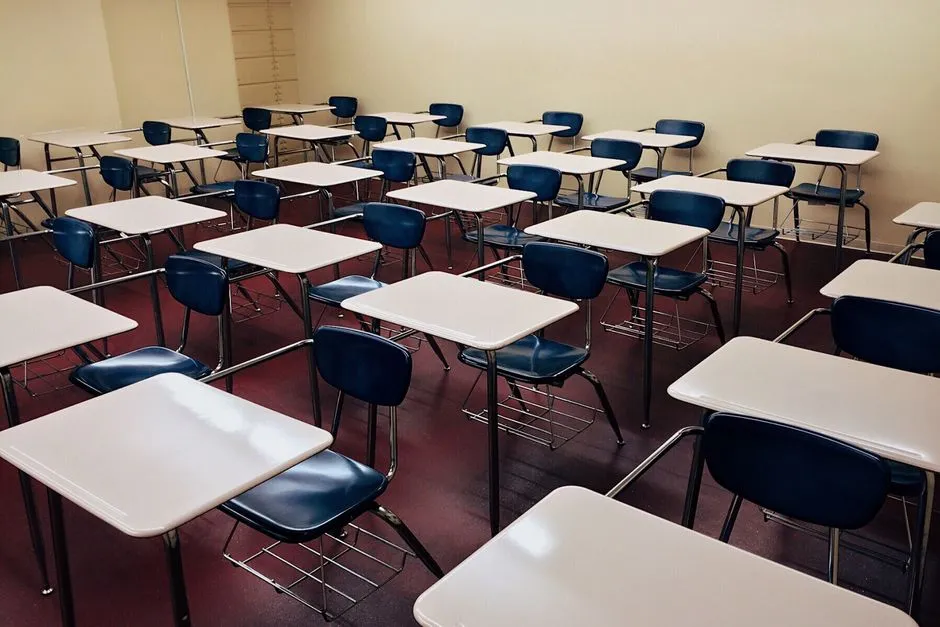
Scale-wise, this isn’t a niche program. The Senate’s own count currently lists 913 Willkommensklassen citywide, teaching close to 9,991 students. Numbers move with arrival patterns, so treat the exact figure as a snapshot rather than a fixed constant, but it gives you a sense of just how much day-to-day infrastructure sits behind what sounds like a small side program.
Which Track, by Age
Berlin splits Willkommensklassen into four practical tiers, and which one applies depends almost entirely on your child’s age, not on how much German they know.
| Roughly this age | Setting | What actually happens |
|---|---|---|
| About 6 to 7 | Schulanfangsphase at a Grundschule | Joins an ordinary first class from day one. No separate Willkommensklasse at this age at all, regardless of German level. |
| About 8 to 11 | Willkommensklasse at a Grundschule | Small dedicated group for intensive German, joins the regular class immediately for subjects like art, music and sport. |
| About 12 to 15 | Willkommensklasse at a Sekundarschule or Gymnasium | Same model as the primary-school version, adapted for a secondary curriculum. |
| 16 and older | Willkommensklasse at an Oberstufenzentrum (OSZ) | Vocational-focused track. Targets CEFR A2 written, B1 spoken German, then moves into vocational-training preparation rather than general secondary school. |
One variant cuts across the middle two tiers: Alpha-Willkommensklassen serve children and teenagers who arrive with no prior schooling at all, or who aren’t yet literate in the Latin alphabet. These groups move at a genuinely different pace and shouldn’t be confused with the standard track when you’re estimating how long your own child might need.
How Enrollment Actually Works
This is the part that trips up families used to the October Einschulung process, because the starting point is entirely different.
You contact your district’s Koordinierungsstelle für Willkommensklassen, not the school. Every Bezirk runs its own coordination office (the Senate publishes a full directory by district), and this is where the process starts regardless of which specific school eventually takes your child. Marzahn-Hellersdorf’s office, for example, asks for your child’s name, birth date and nationality, their grade level from their home country if known, proof of residence (an Anmeldung confirmation or landlord documentation works), and a parent or guardian’s phone number and email, according to its own registration page.
The coordination office assesses and places, it doesn’t just log you. Expect a German language assessment and, where relevant, a school medical examination to be arranged. Based on your child’s age and that assessment, the office (or the regional school authority, depending on the district) decides which specific school actually takes your child, and it isn’t necessarily the nearest one or the one you’d have picked yourself. Both the school and the family get notified once a placement is made.
Only then do you register at the assigned school. Bring your own ID, your child’s birth certificate or identity papers, and any school records you have from before the move. The school itself opens the student file at that point, similar in spirit to how the October Einschulung appointment works, just later in the process and at a school you were assigned to rather than one tied to your address.
How Long It Takes, and Why Your District Matters
There’s no fixed number of weeks written into law here, but there is a general target and real data behind it.
Officially, a Willkommensklasse shouldn’t run longer than about a year. In practice, Berlin’s Senate education administration reports that around 60% of Grundschule-age children transition into a regular class in under 6 months, and another 19% need only 6 to 9 months, putting roughly 4 in 5 children through the process within three quarters of a year. What actually decides the timing is demonstrated German language competency as judged by teachers, not a calendar date. Children in Alpha-Willkommensklassen, without prior schooling or Latin-alphabet literacy, commonly need considerably longer than the typical case.
Where you live changes the wait to even get a spot, sometimes sharply. Tagesspiegel reported that as of 1 June 2025, 633 children citywide were waiting for a Willkommensklasse place out of roughly 11,637 already enrolled, and Pankow led both counts that year, with 1,094 students already in class and 151 more on the waitlist, more of both than any other district. Some Bezirk offices are upfront about this rather than leaving families to find out the hard way: Marzahn-Hellersdorf’s own page states plainly that there’s currently a waitlist with longer waiting times possible, that applications are processed strictly in the order received, and that the office only takes phone calls Tuesdays and Thursdays, 9am to noon. If your district’s line looks similarly limited, getting your documents in as early as possible matters more here than it does elsewhere in Berlin’s school system.
For Teenagers 16 and Older: A Different Track Entirely
Once a newcomer turns 16, the whole model changes. Willkommensklassen at this age run at an Oberstufenzentrum (OSZ), Berlin’s network of vocational school centers, not at a general Gymnasium or Sekundarschule.
The content shifts accordingly. Instead of general subject teaching, the curriculum blends German language instruction with job-related and subject-specific competencies, media literacy, basic maths, and civics, alongside career orientation. The language target is concrete: CEFR level A2 in writing and B1 in speaking. Once a student hits that bar, the typical next step is the Integrierte Berufsausbildungsvorbereitung (IBA), a structured lead-in to an apprenticeship or vocational school place, rather than a route back into general secondary schooling. If your teenager is aiming for the Abitur specifically, it’s worth raising that directly with the OSZ’s Koordinierungsstelle early, since the standard pathway from this track runs toward vocational training rather than academic upper secondary.
What Real People and Researchers Say
The lived experience of going through this process, and the research on how well it works, don’t always point the same direction, and it’s worth knowing both before you form expectations.
On the practical side, guides written from direct experience with Berlin’s refugee-support network describe a process that’s slow-moving but navigable: Berlin hilft!‘s walkthrough stresses getting the Koordinierungsstelle application in as early as possible and having documents ready before you’re asked, since the coordination step is where delays tend to stack up rather than at the school itself. A video explainer aimed at newly arrived families walks through the same basic sequence for anyone who wants to see it laid out conversationally rather than read as a checklist.
On the research side, the picture is more mixed. A study by the RWI Leibniz Institute for Economic Research found that refugee children of primary-school age who went through a Vorbereitungsklasse (preparatory/welcome class) ended up with markedly worse educational outcomes than children placed directly into a regular class instead. Berlin’s own Integration Commissioner made a similar point from personal experience in a widely reported 2024 interview, arguing that as a 12-year-old she couldn’t understand how she was supposed to learn German in a room where none of her classmates spoke it either, at a time when Berlin was also short an estimated 27,000 school places citywide and over 2,000 newly arrived children were waiting for any placement at all. None of this changes how enrollment works today, and the district-level waitlist picture has clearly narrowed since that 2024 high-water mark, but it’s a fair thing to have in mind if you’re weighing whether to push for a faster transition once your own child is placed.
Step by Step
- Confirm your child's age against the track table above This decides which system applies, Schulanfangsphase, Willkommensklasse at Grundschule or Sekundarschule level, or the OSZ vocational track at 16+, before you contact anyone.
- Contact your district's Koordinierungsstelle für Willkommensklassen Not the local school. Use the Senate's district-by-district directory to find the right office for where you live.
- Gather your documents early Your own ID, proof of your Berlin address (Anmeldung confirmation), your child's birth certificate or ID, and any school records from before the move, even informal ones.
- Expect a language assessment and possibly a school medical exam This is what the coordination office uses, alongside age, to decide placement.
- Wait for a specific school assignment It may not be your nearest school. Both you and the assigned school get notified once a decision is made.
- Register at the assigned school once notified This is where the student file actually opens, similar in spirit to the October Einschulung appointment but later in the sequence.
- Track progress toward a regular-class transition The decision point is demonstrated German proficiency, not a fixed date. Ask the Willkommensklasse teacher directly for a timeline estimate once your child has settled in.
FAQ & Common Pitfalls
What age does my child need to be before they're placed in a Willkommensklasse?
Roughly 8 and up. Berlin's own family portal and the Senate's welcome classes page both put the threshold at about age 8, which lines up with children who are joining the school system partway through rather than starting first grade. Younger children, around 6 to 7, are folded directly into a regular first class (the Schulanfangsphase) alongside German-speaking classmates from day one, with no separate language track at all, regardless of how much German they speak walking in.
How is this different from the October Grundschule registration everyone talks about?
They're two different systems built for two different situations. SettledIn's guide to Berlin's school enrollment covers the fixed October window (5 to 16 October 2026 for the school year starting August 2027) where every resident 6-year-old registers in person at their assigned catchment Grundschule. Willkommensklassen exist for a different population entirely: newly arrived children and teenagers, of any age from about 8 to 18, who don't yet speak German and are joining the system mid-stream rather than starting Einschulung. There's no October deadline for this route, and you don't start at your catchment school, you start with your district's Koordinierungsstelle für Willkommensklassen.
How long will my child actually stay in a Willkommensklasse?
Officially, no longer than a year is the general target, but most children move faster than that. Berlin's Senate education administration reports that around 60% of Grundschule-age children transition into a regular class in under 6 months, and another 19% need only 6 to 9 months, so roughly 4 out of 5 are out within three quarters of a year. What decides the timing is demonstrated German proficiency, not a calendar. Children with no prior schooling or who aren't yet literate in the Latin alphabet, taught in separate Alpha-Willkommensklassen, commonly need considerably longer.
What if my district has a waiting list for a Willkommensklasse spot?
It happens, and it varies a lot by Bezirk. Citywide, Tagesspiegel reported 633 children waiting for a Willkommensklasse place as of 1 June 2025, out of roughly 11,637 already enrolled, and Pankow had both the most students enrolled (1,094) and the longest waitlist (151) of any district that year. Some district offices are upfront about it, Marzahn-Hellersdorf's Schul- und Sportamt states plainly on its own page that there's currently a waitlist and applications are handled strictly in the order they arrive, so getting your paperwork in early matters more than it might elsewhere in the system.
My teenager is 16, is it the same process?
No, it's a genuinely different track. At 16 and older, Willkommensklassen run at an Oberstufenzentrum (OSZ), Berlin's vocational school centers, rather than at a general secondary school. The focus shifts from general schooling to vocational preparation, mixing German instruction with job-related and subject-specific content (media literacy, basic maths, civics), aiming for CEFR level A2 in writing and B1 in speaking. Most students then move into the Integrierte Berufsausbildungsvorbereitung (IBA), a step toward an apprenticeship or vocational school place, not back into a general Gymnasium or Sekundarschule track.
Is there criticism of putting newcomer children in a separate class instead of a regular one?
Yes, and it's worth knowing about before you form expectations. A study by the RWI Leibniz Institute for Economic Research found that refugee children of primary-school age who attended a Vorbereitungsklasse (preparatory/welcome class) had markedly worse educational outcomes than those placed directly into a regular class. Berlin's own Integration Commissioner has criticized the model too, arguing from her own childhood experience that it's hard to learn German in a room where nobody else speaks it either. None of this changes how enrollment works today, but it's part of the honest picture if you're deciding how to advocate for your child once they're placed.