
MOIA in Hamburg: What Volkswagen's Shared Ridepooling Shuttle Actually Costs and Where It Runs
MOIA is Volkswagen's ridepooling service: a fleet of electric minibuses, each seating up to six passengers, filled by an algorithm with several riders heading in a similar direction at the same time and picked up or dropped off at nearby 'virtual stops' rather than door to door. It launched in Hamburg in April 2019, and once MOIA shut down its long-running Hannover service on 18 July 2025 to redirect the company toward autonomous-driving technology instead, Hamburg became its only regular ridepooling city; Berlin, for comparison, was never granted permission to run one at all. Coverage is real but not citywide: the last officially announced expansion, effective 1 January 2023, took the licensed service area to about 270 square kilometers by adding outer districts including Wilhelmsburg, Rahlstedt, Billstedt/Billbrook, and Osdorf/Lurup on top of the original launch zone, but the far northern edge and some outlying neighborhoods still sit outside it, so check the live map in the app before assuming your address qualifies. Booking runs entirely through the MOIA app or through Hamburg's own hvv switch app: enter a start point and destination, get up to six ride offers with a guaranteed fare and arrival time, and book as little as about ten minutes ahead; children under 14 ride free with an adult. Pricing is dynamic, a base fare plus a flexible surcharge that rises with demand, and MOIA itself has said an average solo ride runs around 8 to 9 euros; a fare check by a Hamburg news outlet in 2024 found a Hauptbahnhof-to-airport trip costing roughly 16 to 22 euros against a 37-euro taxi for the same route, meaning MOIA typically lands well above a single 4.10-euro HVV ticket but well below a comparable taxi. Since 1 January 2023, MOIA has formally counted as scheduled demand-responsive public transport (Linienbedarfsverkehr) alongside hvv, and holders of an HVV subscription (a Zeitkarte such as the Deutschlandticket, not a single or day ticket) get a flat 1-euro discount per ride once they link their card in the app. Service runs roughly 5am to 1am Monday through Wednesday, then continues without an overnight gap from Thursday morning straight through the weekend into the small hours of Monday, precisely the stretch when Hamburg's night buses thin out, which is where MOIA earns its keep: late-night trips, first- or last-mile connections in the newer outer districts, and routes that would otherwise force several transfers, not an everyday swap for a bus or train ticket.
What MOIA Actually Is (and Isn’t)
MOIA is Volkswagen’s own ridepooling company, running a fleet of purpose-built electric minibuses in Hamburg since April 2019. Each shuttle seats up to six passengers, and MOIA’s booking algorithm actively looks for other riders already heading in roughly the same direction at roughly the same time and combines them into the same vehicle, calculating each person’s route and arrival time individually. That’s the key difference from a taxi or a ride-hailing app like Uber or FreeNow: those give you an exclusive, direct, door-to-door ride, while MOIA is built around sharing the vehicle and, in exchange, pricing itself lower.
Pickup and drop-off happen at virtual stops, points scattered every so often across the service area rather than at your literal front door, typically a short walk away. The vehicles themselves run fully electric with individual seats, onboard WiFi, and USB charging, and children under 14 ride free when traveling with an adult.
Hamburg is now MOIA’s only regular ridepooling city. MOIA also operated for years in Hannover, but shut that service down entirely on 18 July 2025, a move the company and Hannover’s own city administration both confirmed was part of a strategic shift toward autonomous-driving technology rather than continuing to run conventional, human-driven shuttle fleets in two cities. Berlin, for comparison, never received authorization to run a MOIA service at all; regulators there pointed to existing competing ridepooling operators at the time. If you’ve used a MOIA-style shuttle somewhere else in Germany before, don’t assume it’s still there when you get back, and don’t assume Munich or Berlin have a direct equivalent today.
Where MOIA Actually Runs in Hamburg
This is the detail that trips people up most: MOIA does not cover the whole city. The service launched in 2019 across a zone MOIA itself later described as covering roughly two-thirds of Hamburg’s residential area and reaching more than a million residents, and it has grown since through a series of separate expansions rather than one fixed map.
The most recent expansion officially confirmed by the city, effective 1 January 2023, added eight districts to the existing zone:
| District | General area |
|---|---|
| Wilhelmsburg | South of the Elbe |
| Billstedt / Billbrook | East Hamburg |
| Rahlstedt | East Hamburg |
| Meiendorf | East Hamburg |
| Jenfeld | East Hamburg |
| Osdorf | West Hamburg |
| Lurup | West Hamburg |
That expansion took the total licensed area to roughly 270 square kilometers. Even so, real gaps remain, especially toward Hamburg’s far northern edge past the outer ring roads and in a few smaller outlying neighborhoods that simply haven’t been added. Because the boundary has moved more than once since 2019 and can move again, treat any written description, including this one, as a starting point rather than a guarantee. Before you plan a trip around MOIA, open the app, enter your actual pickup address, and confirm it returns a real ride offer.
Booking and Riding: How It Works
Booking happens entirely through an app, either MOIA’s own or Hamburg’s hvv switch app, which bundles MOIA alongside HVV tickets, StadtRAD bikes, Voi scooters, and car-sharing options like SIXT share, Free2move, and MILES in a single account. The steps are the same either way:
- Enter your start point, destination, and number of passengers. You can request extras like an additional rider or a child seat at this stage.
- Review the ride offers. MOIA returns up to six options, each with a guaranteed fare and an estimated arrival time, so you know the price before you commit rather than after.
- Confirm and pay in the app. Accepted methods include a credit card, Apple Pay, or PayPal; through hvv switch specifically, payment runs through PayPal.
- Walk to your virtual stop. It’s usually a short distance from where you booked, not necessarily your exact door.
- Book as little as about ten minutes ahead if a shuttle happens to be nearby, though busier evenings and weekend nights can mean a longer wait for the next available offer.
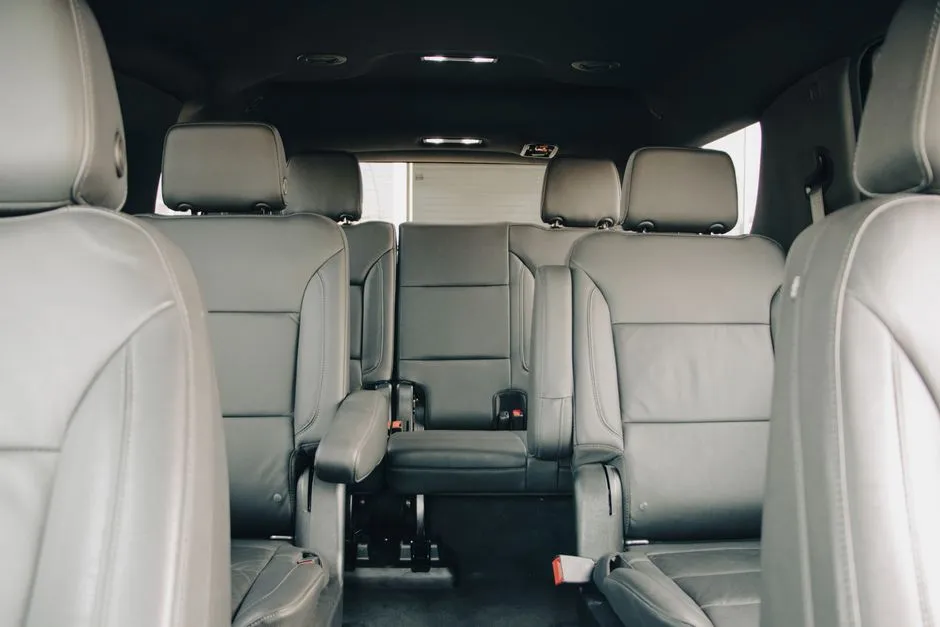
Photo by Dextar Vision on Pexels
What a Ride Actually Costs
MOIA’s fare is dynamic: a base price plus a flexible “comfort surcharge” that hvv switch’s own description says rises when demand is high (weekend nights, typical commuting hours, big events) and eases when demand is lower. That means the same route genuinely can cost different amounts depending on when you book it.
| Option | Typical cost | Notes |
|---|---|---|
| HVV single ticket, Hamburg AB | 4.10 EUR | Fixed price regardless of demand, but tied to a scheduled bus, U-Bahn, or S-Bahn route and timetable |
| MOIA, average solo ride | Roughly 8-9 EUR | Figure stated by MOIA itself; varies by distance, time, and day |
| MOIA, Hauptbahnhof to Airport (2024 fare check) | About 16 EUR standard / 22 EUR Express | One documented example only; confirm the current fare in the app before booking |
| Taxi, Hauptbahnhof to Airport (2024 fare check) | About 37 EUR | Same route and same check, for comparison |
The pattern to take away isn’t the exact numbers, which will have moved by the time you read this, it’s the position. MOIA sits above a single HVV ticket, because you’re paying for a more direct, on-demand ride rather than a scheduled route, but it typically sits meaningfully below a comparable taxi fare for the same trip, because you’re sharing the vehicle’s cost with other riders heading the same way. Riders online have also reported that MOIA’s own prices have climbed noticeably since its first year or two in Hamburg, which the company has attributed to higher staffing and operating costs, so don’t anchor your expectations to an old fare you remember or read about; check the guaranteed price the app shows for your specific trip before you confirm.
The HVV Discount, and What Doesn’t Come With It
Since 1 January 2023, MOIA has formally operated as eigenwirtschaftlicher Linienbedarfsverkehr, scheduled demand-responsive transport, within Hamburg’s public-transport system, a status confirmed by the city’s own transport authority. That’s a real integration, not just a marketing partnership, and it comes with one concrete perk: holders of an ongoing HVV subscription (a Zeitkarte, which includes the Deutschlandticket) get a flat 1-euro discount on every MOIA ride, once they’ve linked that subscription in their MOIA or hvv switch account.
What that integration does not do is make MOIA free or bundle it into the Deutschlandticket price the way, for instance, a Deutschlandticket already covers Hamburg Airport’s S-Bahn line or HADAG’s harbor ferries at no extra cost. MOIA remains a separately priced product you pay for on top of any HVV ticket you hold, and the 1-euro discount applies only to subscription holders, not to anyone using a single ticket or a day ticket.
When MOIA Actually Makes Sense
Given where it runs and what it costs, MOIA earns its keep in a specific set of situations rather than as an everyday transit swap:
- Late nights, especially Thursday through the small hours of Monday. MOIA’s continuous overnight service on those days lines up exactly with the stretch when Hamburg’s night bus frequency drops, making it a realistic alternative to waiting around or paying full taxi fare alone after an evening out.
- First- and last-mile trips in the newer outer districts. Neighborhoods like Wilhelmsburg, Rahlstedt, or Lurup that were added to the service area in 2023 can sit a longer walk from the nearest U-Bahn or S-Bahn station than more central areas, and a shared shuttle can close that gap.
- Routes that would otherwise mean multiple transfers. If a straight-line trip on HVV would force you through two or three connections, a single MOIA ride can beat both the time and, split among a group, sometimes the cost.
- Traveling with a child seat request or as a small group. Extras like a child seat can be requested when booking, and sharing a ride among a few people brings the per-person cost down.
- Airport trips outside of S-Bahn hours or with luggage. Hamburg Airport’s S1 line is already covered by any Hamburg AB ticket, so MOIA isn’t cheaper there, but it can be more convenient late at night or when carrying more than you’d want to manage changing trains with.
Don’t Confuse This With the Free Autonomous Pilot
In mid-July 2026, MOIA began a genuinely different project in Hamburg called ALIKE: self-driving electric ID. Buzz vans, each still carrying a human safety driver during this early phase, offering rides free of charge within a limited pilot zone covering parts of Winterhude, Barmbek, and Wandsbek. It’s a real service, but it is not the everyday paid ridepooling shuttle this guide describes, it doesn’t extend to the roughly 270-square-kilometer area the regular MOIA service covers, and there’s no way to activate free fares within the ordinary MOIA app outside that specific pilot. If your address falls outside Winterhude, Barmbek, or Wandsbek, or you’re reading this after the pilot phase has changed, assume you’re booking the standard paid service described throughout this page.
Step by Step
- Check coverage first. Open the MOIA app or hvv switch, enter your actual address as a pickup point, and confirm it returns a ride offer before planning around it.
- Download the MOIA app, or use hvv switch if you already have it for HVV tickets, StadtRAD, or car-sharing, since MOIA is bundled into the same account there.
- Enter your start point, destination, and passenger count, adding any extras like a child seat if needed.
- Compare the guaranteed fare and arrival time across the up to six offers you're shown before confirming.
- Link an HVV subscription (Zeitkarte) in the app if you have one to claim the 1 EUR per-ride discount; a single or day ticket won't qualify.
- Save it for late nights, outer-district first/last-mile trips, or multi-transfer routes rather than treating it as a like-for-like swap for a bus or train ticket.
Compliance Note
This page describes MOIA’s general service area, pricing model, and hours as reported by Hamburg’s own transport authority, MOIA, hvv switch, and local press current as of mid-2026. Ridepooling coverage, fares, and operating hours change more often than fixed transit routes; confirm your specific address, current price, and current hours directly in the MOIA or hvv switch app before relying on any figure in this guide.
FAQ & Common Pitfalls
Does MOIA actually cover my neighborhood in Hamburg?
Maybe, and it genuinely depends on where you live. MOIA is not a citywide service. The last officially announced expansion, which took effect on 1 January 2023 according to Hamburg's own Behörde für Verkehr und Mobilitätswende, added Rahlstedt, Meiendorf, Jenfeld, Billstedt, Billbrook, Osdorf, Lurup, and Wilhelmsburg on top of the zone MOIA had already been running in since its 2019 launch, bringing the licensed area to roughly 270 square kilometers. That still leaves real gaps, particularly toward Hamburg's far northern edge beyond the outer ring roads and in some smaller outlying neighborhoods. Rather than relying on any single map you find online, including this one, open the MOIA app or hvv switch, enter your actual address as a pickup point, and see whether it returns a ride offer; that live check is the only way to know for certain.
Is MOIA basically the same thing as a taxi or Uber?
No, and mixing the two up is the most common confusion. A taxi or an Uber-style ride-hailing trip is exclusive: one vehicle, your route, door to door. MOIA is ridepooling: its algorithm actively combines several riders heading in a similar direction into the same electric shuttle at the same time, and pickup and drop-off happen at nearby 'virtual stops' that are usually a short walk away rather than at your exact front door. That pooling is also why MOIA can price itself, as hvv switch's own description puts it, somewhere between a public-transport ticket and a taxi fare rather than matching either one directly. If you need a guaranteed private, direct, door-to-door ride, a taxi or a ride-hailing app is the closer fit; if you're comfortable sharing a shuttle with a few strangers on a similar route, MOIA is usually the cheaper option of the two.
I have a Deutschlandticket. Does that mean my MOIA rides are free, or at least bundled in?
Neither, and this is worth being clear about before you book. MOIA is a separate paid product; nothing about holding a Deutschlandticket or any other HVV ticket makes a MOIA ride free the way, for example, a Deutschlandticket already covers Hamburg Airport's S-Bahn or the HADAG harbor ferries. What you do get, since MOIA became part of Hamburg's official public-transport framework on 1 January 2023, is a flat 1-euro discount on each MOIA ride, but only if you hold an ongoing HVV subscription (a Zeitkarte, and the Deutschlandticket counts) and have linked it in your MOIA or hvv switch account; a single ticket or a day ticket does not qualify for this discount at all. You still pay the rest of the dynamic fare yourself, through the app, by card, Apple Pay, or PayPal.
How much should I actually expect a MOIA ride to cost?
Expect a number somewhere between a bus fare and a taxi fare, and expect it to move depending on when you ride. MOIA's own pricing model, confirmed on hvv switch's official pages, combines a base price with a flexible surcharge that climbs when demand is high, weekend nights, typical commuting hours, or big events, and eases off when demand is low. MOIA has said an average solo ride costs around 8 to 9 euros, and a concrete fare check run by a Hamburg news outlet in mid-2024 found a Hauptbahnhof-to-airport trip costing at least 16 euros on the standard option and about 22 euros on the faster 'Express' option, against roughly 37 euros for the same route by taxi. Riders online have also reported fares rising noticeably compared to MOIA's first years in Hamburg, and MOIA has attributed that to higher staffing and operating costs. Always treat the exact fare the app shows you before you confirm as the real number for that specific trip; don't assume a price you paid last month, or a figure in this guide, still holds today.
Can I actually rely on MOIA super late at night, say after a night out near the Reeperbahn?
This is exactly the situation MOIA tends to be genuinely useful for, within its stated hours. According to Hamburg's own tourism authority, MOIA runs roughly from 5am to 1am the following night on Monday through Wednesday, but starting Thursday morning the service continues without an overnight gap straight through the weekend and into the early hours of Monday, covering precisely the stretch of nights when Hamburg's night bus network runs less frequently. That makes a shared shuttle a realistic option for a late Friday or Saturday night trip home when you'd otherwise be waiting a while for a night bus or paying full taxi fare alone. It's still worth checking the app in the moment, since exact hours can shift and a ride still depends on shuttles being available near you when you need one.
I saw news about a free self-driving MOIA in Hamburg. Can I just book that instead?
Not for a normal trip today, and it's worth keeping the two services straight. The service this guide covers is MOIA's everyday, human-driven, paid ridepooling shuttle, the one that's been running across a large part of Hamburg since 2019. What you likely read about is ALIKE, a separate and much smaller pilot project that put self-driving electric ID. Buzz vans, still with a human safety driver on board, into service in mid-July 2026, limited for now to parts of Winterhude, Barmbek, and Wandsbek, with rides offered free of charge during this early pilot phase. It is not a discount code or a special mode inside the regular MOIA app, and it doesn't cover the rest of the city that the paid service does. Unless you specifically live in or are traveling through that pilot zone, the paid ridepooling shuttle described throughout this guide is the one you'll actually be booking.