
The Heel-Prick Test Your Newborn Already Had in Hamburg, and What Changed in 2025
The Neugeborenenscreening, a small blood sample taken from your newborn's heel or vein between the 36th and 72nd hour of life, is a national standard set by the G-BA's Kinder-Richtlinie, not something that varies by state. In Hamburg, the sample is processed at the city's own dedicated lab, Screeningzentrum Nord at the Universitätsklinikum Hamburg-Eppendorf (UKE), separate from your Kinderarzt's practice and the U-Untersuchungen sequence. It screens for a defined panel of rare but serious metabolic, hormonal, blood, immune-system, and neuromuscular conditions, plus cystic fibrosis, where catching a problem early genuinely changes outcomes. A real, recent shift matters here: since a G-BA reform took effect on 14 January 2025, an abnormal (auffällig) finding is now communicated directly to parents by the screening lab's own physician within a maximum of 72 hours, alongside a new reminder-management system that flags missed confirmatory blood draws or specialist appointments, replacing an older process that routed findings through the birth clinic first and could add delay. A normal (unauffällig) result still isn't proactively pushed to you by default, silence remains the designed outcome nationwide, but you can ask the screening lab directly if you specifically want confirmation.
The Official Rule
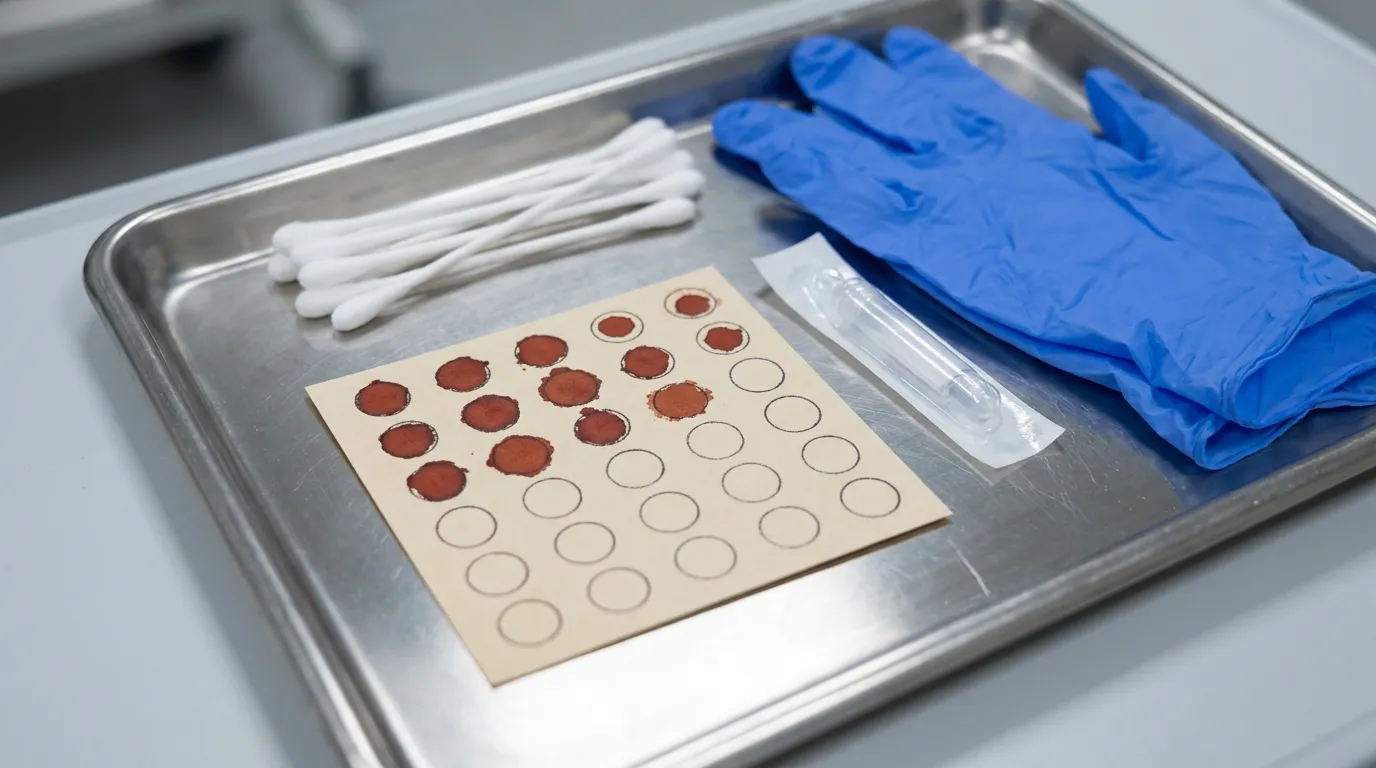
Somewhere in the blur of your baby’s first few days in a Hamburg hospital or Geburtshaus, a doctor or hebamme pricked their heel for a small blood sample, and unless something specific was flagged, you likely never heard about it again. That silence is genuinely by design, not a gap in the system, but it’s worth understanding what actually happened, and what changed recently if something does come up.
The Neugeborenenscreening sample is taken between the 36th and 72nd hour of your baby’s life, a timing window set nationwide by the G-BA’s Kinder-Richtlinie, the federal guideline governing early-detection examinations across Germany. This isn’t a Hamburg-specific rule or a Bavaria-specific one, it applies identically wherever in Germany your baby is born. What does vary locally is which laboratory actually processes the sample: in Hamburg, that’s Screeningzentrum Nord, a dedicated unit inside the Universitätsklinikum Hamburg-Eppendorf’s (UKE) Kinder- und Jugendmedizin department, confirmed as the city’s designated screening lab by the Deutsche Gesellschaft für Neugeborenenscreening’s own registry. This is a genuinely separate process from your Kinderarzt’s practice or the U1-U9 sequence documented in the U-Heft, screening instead for a defined panel of rare but serious metabolic, hormonal, blood, immune-system, and neuromuscular conditions, plus cystic fibrosis, where early detection meaningfully changes the outcome for the child.
| Neugeborenenscreening | U-Untersuchungen (U1-U9) | |
|---|---|---|
| Run by | Screeningzentrum Nord (UKE), Hamburg's dedicated lab | Your Kinderarzt's practice |
| When | Once, 36-72 hours after birth | Ongoing sequence through age 5 |
| Abnormal result | Lab physician contacts you directly within 72 hours (since 14 Jan 2025) | Discussed directly at the relevant visit |
| Normal result | Only shared if you ask | Documented directly with you at each visit |
The detail that catches a lot of parents off guard, newcomers especially: a normal result still generally isn’t proactively communicated to you at all. This remains the case nationwide under the Kinder-Richtlinie, silence is the expected, intentional outcome of a normal screening, not a sign that something was lost or overlooked. It runs counter to how most other medical results work, where you’d typically expect to be told either way, which is exactly why it surprises people.
What has genuinely changed, and recently, is how an abnormal finding reaches you. According to the G-BA’s own press release on its new Mitteilungskonzept, a reform that took effect on 14 January 2025 means that if a screening result is suspicious, the screening lab’s physician now contacts parents directly, within a maximum of 72 hours of the finding, rather than the older process of notifying the birth clinic first, a step that could add real delay before a family ever heard anything. The same reform introduced a reminder-management system: if parents miss a scheduled confirmatory blood draw, the lab follows up, and if a referred specialist appointment is missed, the lab is notified and reaches out again to stress how time-sensitive the follow-up is. The G-BA’s official parent information document confirms this faster, more direct contact model is now the standard nationwide, Hamburg families included.
What Real People Say
The recurring pattern in how parents describe this is genuine, if brief, confusion: a heel-prick happened at some point in the newborn blur, and then nothing, no call, no letter, no mention at the next Kinderarzt visit. Once parents learn that silence is the actual designed outcome for a normal result, rather than an oversight, the confusion tends to resolve quickly, though it’s a detail that would be genuinely useful to know upfront rather than discovering after searching for an answer.
Parents who specifically wanted confirmation of a normal result describe simply asking their birth clinic, hebamme, or Screeningzentrum Nord directly and getting a straightforward answer, the information isn’t hidden, it’s just not pushed to you automatically the way other results are. Since the January 2025 reform, parents who did receive a follow-up call about an abnormal finding describe the direct contact from the lab physician itself, rather than a delayed message relayed through the birth clinic, as a genuine improvement over how the process used to work.
Step by Step
- Know that the heel-prick test your newborn had is processed by Screeningzentrum Nord (UKE), a separate process from your Kinderarzt’s regular U-checkups.
- Don’t interpret silence about the result as something going wrong, a normal result generally isn’t proactively communicated at all.
- If you want explicit confirmation of a normal result, ask your birth clinic, hebamme, or Screeningzentrum Nord directly, this information is available on request.
- If a finding is abnormal, expect the lab’s own physician to contact you directly within 72 hours, since the January 2025 reform, rather than waiting to hear it secondhand through your birth clinic.
- If a confirmatory test or specialist appointment gets referred, don’t assume you can let it slide, the new reminder-management system will follow up, but treating it as time-sensitive from the start is the safer read.
Compliance Note
This page explains the general national framework for newborn screening (Neugeborenenscreening) and Hamburg’s own designated screening lab, current as of mid-2026. It is not medical advice. For questions about your specific child’s screening or results, contact your birth clinic, hebamme, Kinderarzt, or Screeningzentrum Nord directly.
FAQ & Common Pitfalls
We never heard anything back about our baby's heel-prick test. Does that mean it didn't happen, or got lost?
Almost certainly neither. Under the G-BA's national Kinder-Richtlinie, an unremarkable (normal) result generally isn't proactively communicated to parents at all, this is the designed default nationwide, not a Hamburg-specific gap. Silence is the expected outcome for a normal screening, not a sign that the sample was lost or the test skipped, and Hamburg's Screeningzentrum Nord at UKE processes and tracks every sample it receives as a matter of course.
Is this the same thing as the U-Untersuchungen or the U-Heft?
No, and this is exactly the confusion worth clearing up. The Neugeborenenscreening is processed by Screeningzentrum Nord, a dedicated laboratory unit within the Universitätsklinikum Hamburg-Eppendorf (UKE), as its own distinct process, separate from your Kinderarzt's practice and the U1-U9 checkup sequence documented in the U-Heft. It happens once, very early, using a heel-prick or vein blood sample, rather than being part of the ongoing U-checkup schedule.
What actually changed with the January 2025 reform, and does it affect a normal result too?
The reform specifically targets abnormal (auffällig) findings. Since 14 January 2025, if a screening result is suspicious, the lab physician now contacts parents directly, within a maximum of 72 hours, rather than the older process of notifying the birth clinic first and hoping the message reached the family without delay. A new reminder-management system also follows up automatically if parents miss a scheduled confirmatory blood draw or a referred specialist appointment. Normal results aren't the focus of this specific reform, the existing rule that unremarkable findings are only shared on request still applies, though the same guidance confirms parents can actively ask the screening lab for confirmation if they want it.
Which lab actually handles Hamburg's newborn screening, and can we contact them directly?
Screeningzentrum Nord, part of the Universitätsklinikum Hamburg-Eppendorf's Kinder- und Jugendmedizin department, is Hamburg's dedicated regional screening lab, located at Gebäude N22, Erdgeschoss, Martinistr. 52, 20246 Hamburg. If you want to ask about a specific result, your birth clinic or hebamme is usually the fastest first contact, since they typically hold the referral details, but the lab itself is reachable directly if you need to follow up.