
A Noise Dispute With Your Neighbor in Hamburg: Who to Actually Contact, and in What Order
Hamburg's noise-dispute ladder runs through fewer, more centralized institutions than Munich's, but skipping a rung still costs you time or leverage. Start with a calm, direct conversation, most disputes end there. If it continues, Hamburg's own city guidance (hamburg.de) recommends documenting every incident yourself from that point on: date, start and end time, the specific type of noise, and the name, address, and phone number of any neighbor who witnessed it too. Put your landlord or Hausverwaltung on written notice next, attaching your log, and ask for a formal Abmahnung if the neighbor doesn't stop. For an acute disturbance happening right now, call your local Polizeirevier through Hamburg police's non-emergency switchboard, +49 40 4286-50, not the 110 emergency line, which official guidance reserves for genuine emergencies. Here's where Hamburg genuinely differs from Munich: there's no separate, citizen-facing Bußgeldstelle you report a documented pattern to. The police remain the channel for both tonight's call-out and any Ordnungswidrigkeit that follows under the Hamburgisches Gesetz zum Schutz gegen Lärm (HmbLärmSchG), which caps fines at 5,000 EUR. Only noise from a business or industrial source gets routed elsewhere, to your district's Bezirksamt (Fachamt Verbraucherschutz, Gewerbe und Umwelt) or the citywide BUKEA. If your landlord still isn't acting on a well-documented pattern, Hamburg actually has two separate, unrelated tenant associations you can approach, Mieterverein zu Hamburg (established 1890, roughly 79,000 member households) and Mieter helfen Mietern (MhM, founded 1980, about 18,500 members), either can advise on a Mietminderung claim. And once a dispute has moved past noise into insult, threat, or property damage, Hamburg's ÖRA (Öffentliche Rechtsauskunft- und Vergleichsstelle) on Dammtorstraße runs both a mandatory Sühneverfahren and a voluntary Güteverfahren from a single citywide office.
Hamburg’s Own Order of Steps
Hamburg doesn’t leave the sequence to guesswork. Reading hamburg.de’s own Nachbarschaft and Ansprechpartner Nachbarschaft pages together with the underlying state statute and Mieterverein zu Hamburg’s practical guidance produces a clear, practical ladder, and it’s a noticeably shorter one than Munich’s, because Hamburg concentrates a step Munich splits across two separate offices.
The legal foundation is Hamburg’s own state noise law, not a federal catch-all borrowed from another city. The Hamburgisches Gesetz zum Schutz gegen Lärm (HmbLärmSchG) bans noisy tool and machine work on weekdays from 20:00 to 07:00 and on Sundays and public holidays whenever it would significantly disturb neighbors, and separately caps audio devices and musical instruments at a volume that doesn’t substantially disturb anyone from 21:00 to 07:00. A genuine violation is an Ordnungswidrigkeit, finable up to 5,000 EUR. This site’s separate guide to Hamburg’s Mittagsruhe covers those exact windows in full detail; what matters here is what happens once you decide the noise itself is a problem worth escalating.
| Situation | Contact | What actually happens |
|---|---|---|
| First occurrence, ongoing but not urgent | The neighbor directly | Resolves the large majority of disputes without any authority involved |
| Continues after a direct conversation | Your own written log, then landlord or Hausverwaltung in writing | Log becomes your evidence base; landlord can issue an Abmahnung and start a documented paper trail |
| Acute disturbance happening right now | Local Polizeirevier, +49 40 4286-50 (not 110) | Officers can respond on-site, de-escalate, and document the incident; a persistent pattern can lead to an HmbLärmSchG Ordnungswidrigkeit referral |
| Commercial or industrial noise source only | District Bezirksamt (Fachamt Verbraucherschutz, Gewerbe und Umwelt) or citywide BUKEA | The one situation where Hamburg does route away from the police, but it doesn't apply to a neighbor's apartment |
| Landlord not acting on a documented pattern | Mieterverein zu Hamburg or Mieter helfen Mietern (MhM) | Advises on a Mietminderung claim and further tenancy-law options |
| Escalated into insult, threat, or property damage | ÖRA, Dammtorstraße (citywide) | Mandatory Sühneverfahren before a private criminal complaint; voluntary Güteverfahren for a stuck civil dispute |
The gap where Munich has a whole separate office is genuinely the most Hamburg-specific thing about this ladder. Munich’s Kreisverwaltungsreferat runs a dedicated, citizen-facing Bußgeldstelle: you file a report against a documented pattern, and the office investigates, hears both sides, and can issue a formal fine, provided you name the responsible person and produce a witness who was also disturbed. Search Hamburg’s own noise pages for the equivalent, the general Nachbarschaft overview or the dedicated Lärmbeschwerden page, and there isn’t one for a residential dispute. Both pages route apartment-to-apartment noise to the police and reserve the district Bezirksamt or BUKEA route specifically for commercial and industrial sources. In practice, that means the officers who respond to tonight’s call-out are also the front door for any formal consequence that follows, there’s no separate citywide desk to escalate to afterward the way there is in Munich.
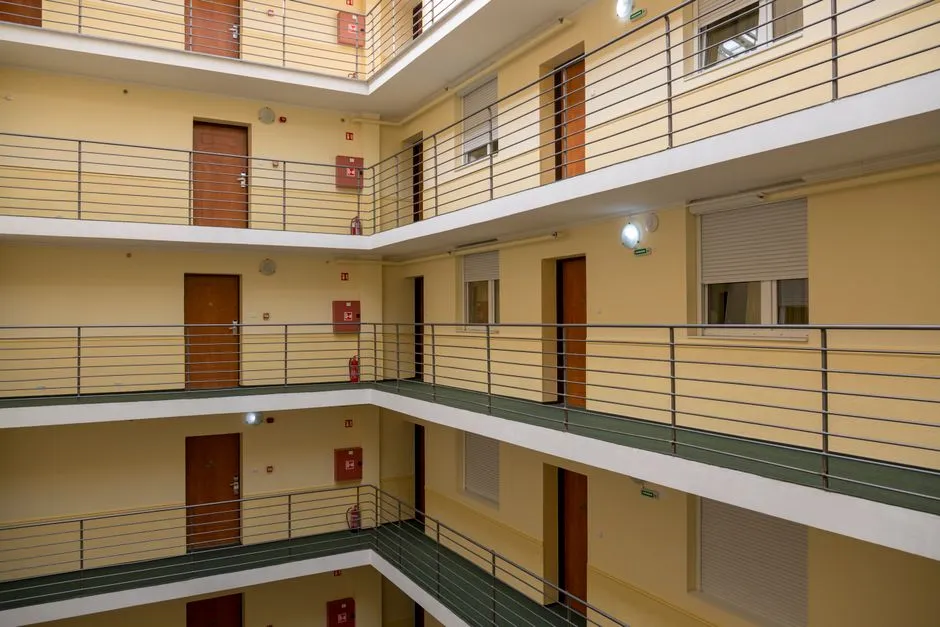
Photo by Valentin Ivantsov on Pexels
Documenting It Is Official Advice Here, Not Just Folk Wisdom
Hamburg’s own city government tells you what to write down, before you’ve decided whether you’ll ever need it. hamburg.de’s Ansprechpartner Nachbarschaft page recommends gathering evidence as a standing practice once a direct conversation hasn’t ended the problem: the date, the time, the type and duration of the disturbance, and, notably, the name, address, and phone number of any other resident who witnessed the same incident. That witness detail is easy to skip in the moment, but it’s specifically what turns a private log into something a landlord, a tenant association, or the police can act on with more confidence than your account alone.
Mieterverein zu Hamburg’s own noise guidance reinforces the same practice from the tenant-advocacy side, framing documentation as the difference between a complaint that leads somewhere and one that doesn’t. Neither source frames this as optional paperwork. It’s the evidence base for every rung above it on this ladder, from a landlord’s Abmahnung to a Mietminderung claim to a formal Ordnungswidrigkeit referral.
Two Tenant Associations, Not One
Newcomers searching for “the Hamburg tenant association” usually land on one of two genuinely separate organizations, and conflating them wastes time. Mieterverein zu Hamburg, founded in 1890, is the larger by membership, roughly 79,000 member households, with a monthly fee around 7.50 EUR covering legal consultation from tenancy-law specialists and, where needed, correspondence directly with your landlord. Mieter helfen Mietern (MhM), founded in 1980 with about 18,500 members, runs its own open, no-appointment consultation hours from its Schanzenviertel headquarters plus eight branch offices spread across the city.
Both can advise on a documented noise dispute, and both can weigh in on whether a landlord’s continued inaction, once you’ve given them a genuine, written chance to act, supports a Mietminderung claim. Neither is a substitute for the other; picking whichever has a consultation slot that fits your schedule, or joining the one whose office is closer to home, is a perfectly reasonable way to decide between them.
When the Ladder Ends Somewhere Other Than the Police
Not every stuck Hamburg noise dispute belongs to the police forever. Once a conflict has moved past the noise itself into insult, a threat, minor property damage, or trespass, Hamburg concentrates pre-court resolution in a single citywide office: the ÖRA, Öffentliche Rechtsauskunft- und Vergleichsstelle Hamburg, on Dammtorstraße. Its Sühneverfahren is the mandatory step before a private criminal complaint whenever the other party also lives in Hamburg. Separately, its voluntary Güteverfahren offers confidential civil mediation for a rental or neighbor dispute that has simply stalled, with neutral chairs and fees scaled to income. This site’s separate guide to Hamburg’s neighbor-conflict note culture covers both procedures, their cost structure, and how Hamburg’s single-office model compares to Berlin’s twelve district Schiedsämter, in far more depth than fits here.
Step by Step
- Try a direct, calm conversation firstMost disputes resolve here, and it's the only rung on this ladder that doesn't cost anyone time filing paperwork.
- Start a written log the same day it continuesDate, start and end time, type and duration, plus the name, address, and phone number of any neighbor who witnessed the same incident, exactly what hamburg.de's own guidance recommends.
- Notify your landlord or Hausverwaltung in writingAttach your log and ask them to issue a formal Abmahnung to the disturbing neighbor if the pattern continues.
- For an acute disturbance right now, call your local Polizeirevier at +49 40 4286-50Not 110, which official guidance reserves for genuine emergencies, not an ongoing noise problem.
- Don't expect a separate Bußgeldstelle to report a persistent pattern toUnlike Munich's KVR, Hamburg routes both the acute call-out and any resulting HmbLärmSchG fine through the same police channel; keep documenting and keep your landlord and tenant association looped in instead.
- If your landlord still isn't acting, contact Mieterverein zu Hamburg or MhMEither can advise on whether your documented pattern supports a Mietminderung claim.
- If the conflict has moved past noise into insult, threat, or property damage, contact ÖRA directlyIts Sühneverfahren and Güteverfahren, run from a single Dammtorstraße office, are Hamburg's own path once a dispute outgrows what a landlord or the police can resolve.
Compliance Note
This page explains the general escalation process for noise disputes under Hamburg and German administrative law, current as of mid-2026, but this is not legal advice, and outcomes depend on the specific facts of your situation. For your specific case, consult a Mietrecht attorney, Mieterverein zu Hamburg, Mieter helfen Mietern, or contact ÖRA directly.
FAQ & Common Pitfalls
Is there a Hamburg equivalent of Munich's KVR Bußgeldstelle that I can report a noisy neighbor to directly?
No, and this is the single biggest structural difference between the two cities' ladders. Munich's Kreisverwaltungsreferat runs a dedicated Bußgeldstelle that processes citizen complaints against a documented, persistent noise pattern, provided you can name the responsible person and produce a disturbed witness. Hamburg's own official noise pages, both its general Nachbarschaft overview and its Lärmbeschwerden page, route residential, apartment-to-apartment noise to exactly one place: your local Polizeirevier. There's no separate public-facing office you file a residential noise report into. The police are both the ones who show up tonight and the channel through which any resulting Ordnungswidrigkeit under HmbLärmSchG gets referred forward. The only complaints that go to a district Bezirksamt or the citywide BUKEA are ones with a commercial or industrial source, a bar, a workshop, a construction site, not a neighbor's apartment.
What number do I actually call for an ongoing noise problem in Hamburg, and how is that different from 110?
Call +49 40 4286-50, Hamburg police's central switchboard, which both hamburg.de's own Ansprechpartner Nachbarschaft page and Mieterverein zu Hamburg's noise guidance cite for exactly this situation, party noise, loud music, or noisy work during evening or night hours or on Sundays and holidays. The 110 emergency line is the nationwide police emergency number, staffed around the clock and connected directly to dispatch, but hamburg.de's own general guidance on the emergency line is explicit that a noise disturbance isn't the kind of urgent situation 110 exists for. Reserve 110 for something genuinely dangerous unfolding right now. For a loud party at 11pm that a conversation hasn't resolved, 4286-50 is the realistic number, and it reaches the Polizeirevier actually responsible for your address.
Do I really need to write down a witness's name, address, and phone number, not just the date and time?
That's what hamburg.de's own Ansprechpartner Nachbarschaft page specifically recommends before you escalate beyond a direct conversation, and it's a more demanding standard than a lot of generic 'keep a noise diary' advice implies. The reasoning is practical rather than bureaucratic: a log with a date and a duration is your account alone, while a log that also names another resident who can confirm the same incident becomes real corroborating evidence if you ever need your landlord, a tenant association, or the police to take the pattern seriously. You don't need a witness for every single entry, but if a neighbor mentions being disturbed by the same incident, getting their name and contact details into your log while it's fresh is worth the slightly awkward ask.
My landlord isn't doing anything after I reported a noisy neighbor. Which Hamburg tenant association should I actually contact?
Either, and it's worth knowing upfront that Mieterverein zu Hamburg and Mieter helfen Mietern (MhM) are two separate organizations, not two names for the same one, a mix-up that trips up a fair number of newcomers searching for 'the Hamburg tenant association.' Mieterverein zu Hamburg, founded in 1890, is the larger of the two by membership, roughly 79,000 member households, with a monthly fee around 7.50 EUR that includes legal consultation and correspondence with your landlord. MhM, founded in 1980 with about 18,500 members, runs open, no-appointment consultation hours from its Schanzenviertel headquarters plus eight branch offices citywide. Both specialize in exactly this kind of dispute and can advise on whether your landlord's inaction, once properly documented and notified in writing, supports a Mietminderung (rent reduction) claim.
At what point does a Hamburg noise dispute stop being a police matter and become an ÖRA matter?
When it stops being purely about noise. ÖRA, the Öffentliche Rechtsauskunft- und Vergleichsstelle Hamburg on Dammtorstraße, runs two distinct procedures. Its Sühneverfahren is the mandatory pre-court step for Privatklagedelikte, insult (Beleidigung), minor assault (leichte Körperverletzung), and trespass (Hausfriedensbruch), whenever the other person lives in Hamburg, so if a noise argument has escalated into a threat or a shove, this is where it goes before any private criminal complaint can proceed. Its separate, voluntary Güteverfahren covers ordinary civil disputes, including rental and neighbor conflicts that are simply stuck, not criminal. A purely noise-based dispute that hasn't tipped into either category generally stays on the police-and-landlord track described above; this site's guide to Hamburg's neighbor-conflict note culture covers ÖRA's two procedures, their fees, and how they compare to Berlin's district Schiedsämter in more depth.
How long do I actually need to keep a noise log running before it carries real weight?
There's no fixed legal minimum specific to Hamburg, but general German tenant-law guidance converges on a similar range regardless of city: at least two to four weeks to show a genuine pattern rather than one bad night, and for anything you expect to actually escalate, whether that's a landlord dispute, a Mietminderung claim, or a police report that leads to a formal Ordnungswidrigkeit referral, several weeks up to around three months of consistent entries reads as noticeably stronger evidence than a short log. Record the date, start and end time, and the specific type and source of the disturbance for each entry, and keep it running for as long as the disturbance itself continues rather than stopping the moment you've hit some notional minimum.