
Cologne's Fiber Provider Is Partly Owned by the City Itself, Check Your Address Before You Sign Anyway
Cologne sits comfortably ahead of both the state and national fiber averages: federal Breitbandatlas data put the city at roughly 66 percent household fiber (FTTH/B) coverage as of December 2025, against about 39 percent for North Rhine-Westphalia as a whole and roughly 50 percent nationally, with coverage in the inner city running 75 to 95 percent. What's genuinely Cologne's own is that its dominant local fiber provider, NetCologne, isn't just another private company, it's wholly owned by GEW Köln AG, a holding company itself fully owned by the City of Cologne, which also holds a 75.8 percent majority stake in RheinEnergie, the city's energy utility. NetCologne serves roughly 705,000 households and businesses across greater Cologne, Düsseldorf, Bonn, and Leverkusen, invests about 15 million euros a year expanding fiber within Cologne alone, and reached an open-access cooperation agreement with Deutsche Telekom in 2021 so the two networks can share infrastructure rather than duplicate it street by street. Telekom itself is separately building toward 100,000 FTTH connections in Cologne, starting with Lövenich and Bayenthal in 2022, and a federally subsidized Weiße-Flecken program has connected more than 17,000 previously underserved residential and commercial units across the city with about 220 kilometers of new cable and roughly 33 million euros in funded investment. None of that guarantees your specific address is covered, or covered by the provider whose tariff you actually want, so checking before signing a lease still matters. If you're renting, your landlord or Hausverwaltung has to consent to the installation before any of this happens.
The Official Rule
Cologne’s fiber numbers look genuinely strong compared with most other German cities, and that’s backed by federal, not marketing, data. According to the latest federal Breitbandatlas data (Gigabitbüro des Bundes, figures as of December 2025), Cologne’s citywide fiber (FTTH/B) coverage reached roughly 66 percent of households, comfortably ahead of North Rhine-Westphalia’s own average of about 39 percent and Germany’s national average of roughly 50 percent. The inner city runs even further ahead, with coverage in the 75 to 95 percent range on the same dataset.
| Fiber coverage | |
|---|---|
| Germany, national average | ~50% |
| North Rhine-Westphalia, statewide | ~39% |
| Cologne, citywide | ~66% |
| Cologne, inner city (Innenstadt) | 75-95% |
That leading number is genuinely good news, but a citywide average always hides which specific street you’re actually moving to. Cologne’s genuinely local wrinkle isn’t the percentage itself, it’s who’s building the network behind it.
The Fiber Provider the City Itself Owns
NetCologne isn’t simply a well-established regional company, it’s structurally part of Cologne’s own municipal utility family. NetCologne Gesellschaft für Telekommunikation mbH is wholly owned by GEW Köln AG, a pure holding company. That same holding company holds a 75.8 percent majority stake in RheinEnergie AG, Cologne’s energy and water utility (Westenergie AG owns the remaining 24.2 percent), and GEW Köln AG itself is fully owned, directly and indirectly, by the City of Cologne. In practice, that makes NetCologne’s ownership structure genuinely comparable to how Cologne’s energy and water utilities work, a city-owned company competing in an open market, rather than the fully private national players most German cities depend on for fiber.
NetCologne’s own figures put its network at reaching three out of four Cologne households, with roughly 90 percent coverage already achieved in the city center, and the wider NetCologne Group serving approximately 705,000 households and businesses across the greater Cologne, Düsseldorf, Bonn, and Leverkusen region. The company invests roughly 15 million euros a year specifically expanding fiber within Cologne, continuing to build out additional districts independently of any subsidized program.
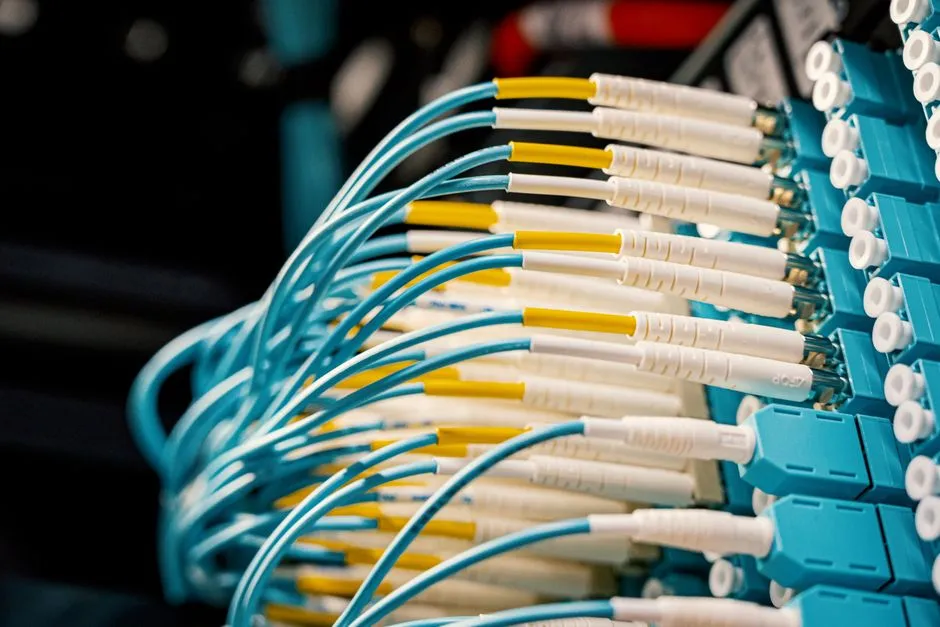
Photo by Brett Sayles on Pexels
A Second Major Network, Increasingly Shared Rather Than Duplicated
Deutsche Telekom is building its own, separate fiber network in Cologne, and it isn’t a purely competing effort anymore. Telekom has announced plans to connect roughly 100,000 households and business locations in Cologne with FTTH, offering download speeds up to 1 Gbit/s, with the rollout beginning in 2022 in the Lövenich and Bayenthal districts under an open-access model that lets competing providers use the same infrastructure. That open-access approach follows directly from an agreement Telekom reached with NetCologne in spring 2021 to allow mutual network usage in some areas, rather than each company independently digging up the same streets. For a renter, the practical effect is that a “not available” result from one provider’s own checker doesn’t necessarily rule out the other, both are worth checking independently for your specific address.
The Federally Subsidized Push Into Cologne’s Remaining Gaps
Beyond what NetCologne and Telekom build on their own commercial timelines, a federally subsidized program has targeted addresses the market wasn’t reaching fast enough. The City of Cologne’s own Weiße-Flecken program page confirms more than 17,000 previously underserved residential and commercial units, addresses that had internet speeds below roughly 30 Mbit/s, have been connected through this initiative, with approximately 220 kilometers of new fiber cable laid across the city and roughly 33 million euros in funded investment. If a building was stuck on slow DSL for years and recently got fiber, this program is a plausible explanation, and it’s a reminder that Cologne’s overall coverage gains aren’t purely a story of private companies chasing the most profitable streets first.
Before You Sign: The Landlord Step Nobody Mentions
Even where a provider confirms fiber is technically available on your street, a rented flat adds a step that’s easy to overlook until it becomes a delay. As a tenant, your first move is contacting your landlord or Hausverwaltung (property management), not the provider, since fiber installation into an existing building genuinely requires their consent. Landlords can decline, but not without limits. Federal telecommunications law reform (the 2021 TKMoG and its later amendments) restricts a landlord’s ability to refuse consent to genuinely valid reasons rather than simple preference or inertia, and in a building governed by a Wohnungseigentümergemeinschaft (owners’ association), a single owner’s request for a connection generally cannot simply be rejected outright by the group.
Contract terms follow a fairly consistent pattern across providers active in Cologne: installation itself is commonly free or discounted, bundled with a minimum contract term, often around two years. After that initial term, the same federal consumer-protection rules that apply to energy contracts mean fiber contracts can no longer silently auto-renew for another full year, they extend on an indefinite, monthly-cancellable basis instead. On timing, realistic rather than optimistic expectations matter: from initial planning to a completed street-level build typically takes one to two years, though the physical cable-laying phase itself, once construction crews actually arrive, can move fast, several hundred meters can be laid in a single day. The slow part is the paperwork and permitting that precedes it, not the digging.
Step by Step
- Check your specific address on both NetCologne’s own site and Deutsche Telekom’s fiber checker, since neither provider’s footprint fully overlaps the other despite their 2021 open-access agreement.
- Don’t stop at one “no.” Run the address through a cross-provider comparison portal like Verivox as a second check, especially since the two dominant networks continue building independently in different districts.
- If you’re renting, contact your landlord or Hausverwaltung before assuming anything will happen automatically. Ask whether fiber has already been requested or installed in the building, since consent, not just technical availability, is the actual gating step.
- If the building is governed by a Wohnungseigentümergemeinschaft, ask whether a single owner’s fiber request has already been raised, since the owners’ association generally can’t simply refuse it outright under current federal rules.
- Budget realistically on timing, not optimistically. Even a confirmed “yes” on availability can still mean a one-to-two-year wait from initial request to a working connection if the street-level infrastructure isn’t in place yet, though an already-wired building can often be connected in weeks.
- If fiber genuinely isn’t available yet at your target address, ask what non-fiber speeds are realistically achievable there before ruling the location out, a cable or VDSL connection can still be workable depending on your household’s actual needs.
Compliance Note
This page explains general patterns in Cologne’s fiber infrastructure coverage and provider landscape as of mid-2026. It is not a guarantee of availability, installation timing, or pricing at any specific address, and provider footprints and partnerships in Cologne’s fiber market are changing quickly. Before signing a lease, confirm current, address-specific fiber availability directly with NetCologne, Deutsche Telekom, or another provider serving Cologne.
FAQ & Common Pitfalls
If NetCologne is owned by the city, does that make it the default or exclusive fiber provider in Cologne?
No, and it's worth being precise about the ownership structure here. NetCologne Gesellschaft für Telekommunikation mbH is wholly owned by GEW Köln AG, a pure holding company that is itself fully owned, directly and indirectly, by the City of Cologne. That same holding company also owns a 75.8 percent majority stake in RheinEnergie AG, Cologne's energy utility (the remaining 24.2 percent belongs to Westenergie AG). That municipal ownership makes NetCologne structurally similar to how Cologne's water and energy utilities work, but it still competes directly on price and coverage against Deutsche Telekom and other national providers active in the city, rather than holding any exclusive or default position.
NetCologne and Deutsche Telekom are both building fiber in Cologne. Does that mean I need to check both separately?
It used to matter more than it does now, and the 2021 change is worth knowing. NetCologne and Deutsche Telekom reached an open-access cooperation agreement in spring 2021, allowing the two networks to share infrastructure in some areas rather than each digging up the same street independently. That said, Telekom is separately pursuing its own FTTH buildout toward roughly 100,000 Cologne connections, starting in the Lövenich and Bayenthal districts from 2022, so checking availability through both NetCologne's own site and Telekom's address checker, or a cross-provider comparison portal like Verivox, is still the reliable way to confirm your specific address rather than assuming one covers everywhere the other does.
How much of Cologne actually has fiber right now, and is the inner city really that far ahead of the rest?
According to federal Breitbandatlas data as of December 2025, Cologne's citywide fiber (FTTH/B) coverage sits at roughly 66 percent of households, well above North Rhine-Westphalia's own average of about 39 percent and Germany's national average of roughly 50 percent. The inner city specifically shows coverage in the 75 to 95 percent range on the same Breitbandatlas data, meaningfully ahead of the citywide figure, which is a genuine reminder that a citywide average can understate how built-out central districts already are, and equally understate how much further out districts still have to go.
What's the Weiße-Flecken program, and does it affect me if I'm renting rather than building?
It's a federally subsidized initiative aimed at connecting addresses that previously had internet speeds below roughly 30 Mbit/s, the kind of gap that private providers weren't finding commercially viable to fill on their own. The City of Cologne's own program page confirms more than 17,000 residential and commercial units across the city have been connected this way, with roughly 220 kilometers of new fiber cable laid and about 33 million euros in funded investment. If your building was previously stuck on slow DSL and has recently been connected, this program is a plausible reason why, worth mentioning if you're trying to understand a sudden change in what's available at an address.
We're renting, not buying. Can our landlord just refuse to let a provider install fiber in our building?
Not without limits, though the landlord or Hausverwaltung genuinely has to be involved before anything happens. As a tenant, your first step is contacting your landlord or property management company, not a provider, since fiber installation into an existing building requires their agreement. Federal telecommunications law reform (the 2021 TKMoG and its later amendments) limits a landlord's ability to refuse consent to genuinely valid reasons rather than simple preference, and in a multi-unit building governed by a Wohnungseigentümergemeinschaft (owners' association), a single owner's request generally can't just be rejected outright by the group. In practice, most providers active in Cologne bundle the installation itself for free or at a discount, tied to a minimum contract term, after which German consumer-protection rules mean it can only auto-extend on a monthly, freely cancellable basis rather than silently locking in another full year.
How long does it actually take to get connected if fiber isn't available at my address yet?
Realistically, longer than the headline coverage percentage might suggest. Planning-to-completion for a new street-level fiber build typically runs one to two years, though the physical cable-laying phase itself, once construction crews actually arrive, can move fast, several hundred meters can be laid in a single day. The slow part is the paperwork and permitting that precedes it, not the digging, so a confirmed 'not yet available' result at your address is worth budgeting around realistically rather than assuming a quick fix.