
Rheinpark Cologne With Kids: The 1957 Garden Show Park, Minigolf, and the Family Park
Rheinpark stretches along the Rhine's right bank between the Deutz and Mülheim districts, and its origin story is dramatic: in 1957, the city rebuilt 48 hectares of wartime rubble into Cologne's site for the Bundesgartenschau (Federal Garden Show), the first ever held in North Rhine-Westphalia, drawing 4.3 million visitors between 29 April and 24 October that year. The park hosted a second Federal Garden Show in 1971, and its historically significant grounds, first developed from former Prussian fortress land starting in 1907 and host to the influential 1914 Werkbund Exhibition, have been under monument protection since 1989. It was named Germany's Most Beautiful Park in 2007. Entry to the park itself and its Tanzbrunnen open-air venue is always free, and it's open with no fixed hours. Families should head for the Familienpark beneath the Zoobrücke, which runs its minigolf course (18 holes) seasonally from March through mid-November: children up to 14 pay 3 EUR a round, teens 15 and up pay 3.50 EUR, and adults 28 and older pay 4.50 EUR, while the minicar track costs 1.50 EUR per ride or 5 EUR for four chip tokens for children up to age 10. The same Familienpark area has a free playground, climbing wall, basketball courts, and skating areas year-round. The Rheinparkbahn miniature train runs a 2km loop through the grounds, and the park connects directly to the Kölner Zoo across the Rhine via the Kölner Seilbahn cable car, built for the 1957 garden show.
Built Twice for National Garden Shows
Rheinpark stretches along the Rhine’s right bank between the Deutz and Mülheim districts, and its history is genuinely more dramatic than most city parks can claim. According to German Wikipedia’s sourced account, the grounds were first developed from former Prussian fortress land starting in 1907, and gained early architectural prominence hosting the influential 1914 Werkbund Exhibition, with work by architects Bruno Taut and Walter Gropius among the exhibits.
The park’s real transformation came in 1957. The city rebuilt 48 hectares of wartime rubble into Cologne’s site for the Bundesgartenschau (Federal Garden Show), running 29 April to 24 October 1957, the first Federal Garden Show ever held in North Rhine-Westphalia, which drew 4.3 million visitors across the season. A second Federal Garden Show followed in 1971, adding sculptures and a Mediterranean garden section. The grounds have been under monument protection since 1989, and the park was named Germany’s Most Beautiful Park in 2007.
| Location | Right bank of the Rhine, between Deutz and Mülheim |
| First developed | 1907 (former Prussian fortress land) |
| Rebuilt for BUGA 1957 | 48 hectares of wartime rubble, 4.3 million visitors |
| Second garden show | BUGA 1971 |
| Monument protection | Since 1989 |
| Entry | Always free, no fixed hours |
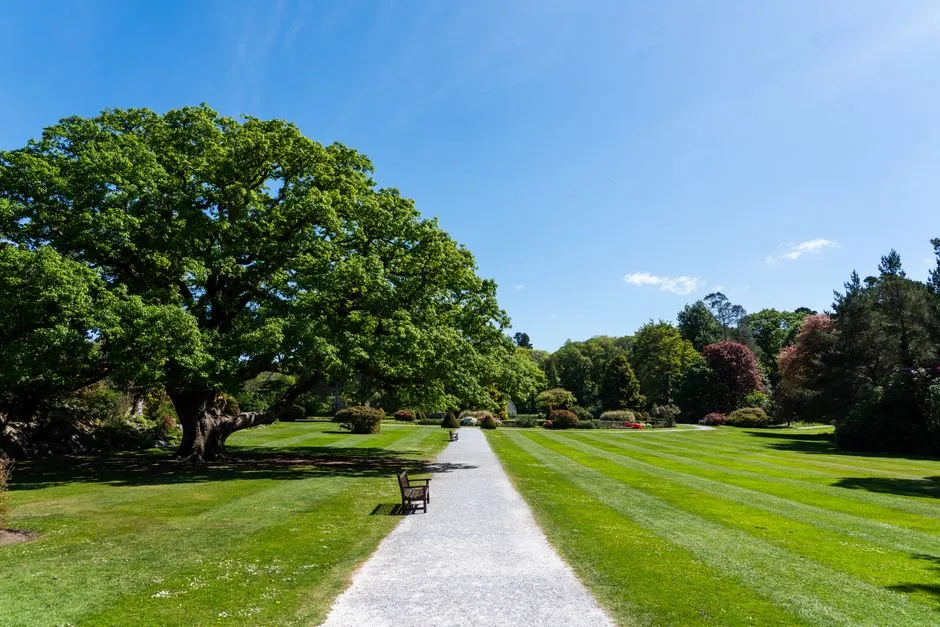
Photo by Donovan Kelly on Pexels
What’s Free: Fountains, the Tanzbrunnen, and Open Lawns
The park’s two national garden shows left it with 14 protected historic ornamental fountains scattered across the grounds, along with wide-open lawns, tree-lined paths, and flower beds that give it a genuinely more designed feel than an average city park. The Tanzbrunnen, with its distinctive Sternwellenzelt tent-shaped roof, is a working open-air concert venue holding up to 12,500 guests. Both the park and the Tanzbrunnen grounds are free to enter, according to the City of Cologne’s own page, though the Tanzbrunnen can be temporarily closed to casual visitors during ticketed event setup, teardown, or a performance itself.
The Familienpark: Minigolf, Minicars, and a Free Playground
For families specifically, the Familienpark, located under the Zoobrücke, is the main draw. Per its own official pricing page:
| Attraction | Price |
|---|---|
| Minigolf (18 holes), child up to 14 | 3.00 EUR/round |
| Minigolf, teen 15+ | 3.50 EUR/round |
| Minigolf, adult 28+ | 4.50 EUR/round |
| Minicar, child up to 10 (per ride) | 1.50 EUR |
| Minicar, 4 chip tokens | 5.00 EUR |
Both attractions run seasonally, roughly March through mid-November, closed from mid-November through March. Hours are extended daily 11am-6:30pm during school holidays, with a reduced regular-season schedule (Wednesday-Sunday, Fridays starting at 3pm) the rest of the season, and weekends only in November. Alongside the paid attractions, the same Familienpark area has a free playground, climbing wall, basketball courts, and skating areas available year-round at no cost.
The Rheinparkbahn and the Cable Car to the Zoo
A miniature train, the Rheinparkbahn, runs a roughly 2-kilometer loop through the grounds, a genuinely easy way to cover the park’s full length with tired kids. And in one of the park’s most distinctive features, the Kölner Seilbahn cable car, originally built for the 1957 garden show, connects Rheinpark directly across the Rhine to the entrance of Kölner Zoo, running March through October. See our separate guide to Kölner Zoo for current cable car and zoo pricing, since combining the two makes for a genuinely full day out without needing a car.
Getting There
Rheinpark sits along the Rhine's right bank between Deutz and Mülheim, reachable via KVB Stadtbahn stops in the Deutz area, with the Kölner Seilbahn station providing a direct link to Kölner Zoo across the river.
Step by Step
- Just show up, the park and Tanzbrunnen grounds are always free with no fixed opening hours.
- Head to the Familienpark under the Zoobrücke for minigolf and the minicar track, both seasonal (March-mid November).
- Use the free playground, climbing wall, and basketball courts in the same Familienpark area if you'd rather skip the paid attractions.
- Ride the Rheinparkbahn miniature train for an easy 2km loop through the grounds with tired legs.
- Cross the Rhine on the Kölner Seilbahn to combine a Rheinpark visit with Kölner Zoo (March-October only).
- Check current Tanzbrunnen event listings before planning around it specifically, since it closes to casual visitors during ticketed shows.
Compliance Note
This page reflects publicly available information from German Wikipedia’s sourced history, the City of Cologne’s own Rheinpark page, and the Familienpark’s own official pricing page, current as of mid-2026. Attraction prices, seasonal hours, and event schedules can change; confirm current details directly at stadt-koeln.de and jugendzentrum.digital before planning a visit.
FAQ & Common Pitfalls
Why does Rheinpark look so different from a typical city park?
Because of how it was built. Per [German Wikipedia's sourced history](https://de.wikipedia.org/wiki/Rheinpark_(K%C3%B6ln)), the grounds were first developed from former Prussian fortress land starting in 1907, and gained early prominence hosting the influential 1914 Werkbund Exhibition, featuring work by architects Bruno Taut and Walter Gropius. Then in 1957, the city rebuilt 48 hectares of wartime rubble into Cologne's site for the Bundesgartenschau, [the first Federal Garden Show ever held in North Rhine-Westphalia](https://de.wikipedia.org/wiki/Bundesgartenschau_1957), which drew 4.3 million visitors over the 1957 season. A second Federal Garden Show followed in 1971, adding sculptures and a Mediterranean garden area. That layered history of two national garden exhibitions is why the park has genuinely distinctive design elements most city parks don't, including 14 protected historic ornamental fountains.
Is there actually an entry fee for the park or the Tanzbrunnen?
No, per [the City of Cologne's own Rheinpark page](https://www.stadt-koeln.de/artikel/05321/index.html), the park has no fixed opening hours and access is always free, and simply visiting the Tanzbrunnen grounds is free too. The one exception is when the Tanzbrunnen is hosting a ticketed event, its Sternwellenzelt stage holds up to 12,500 guests for open-air concerts, so the venue can be temporarily closed to casual visitors during setup, teardown, or an actual performance.
What does minigolf and the minicar track actually cost for a family?
Per [the Familienpark's own official pricing](https://jugendzentrum.digital/familienpark/), minigolf (18 holes) is tiered by age: children up to 14 pay 3 EUR a round, teens 15 and older pay 3.50 EUR, and adults 28 and up pay 4.50 EUR. The minicar track, for children up to age 10, costs 1.50 EUR per ride or 5 EUR for four chip tokens. Both run seasonally, generally March through mid-November, with reduced hours outside school holidays (closed Mondays and Tuesdays, Friday afternoons only during the regular season) and fully closed from mid-November through March.
Is anything in the park free besides just walking around?
Yes, genuinely. Alongside the paid minigolf and minicar attractions, the same Familienpark area under the Zoobrücke has a free playground, a climbing wall, basketball courts, and skating areas available year-round at no cost. Combined with the park's large open lawns and its 14 protected historic fountains scattered throughout the grounds, there's a genuine amount to do without spending anything.
Can we combine a Rheinpark visit with the zoo across the river?
Yes, and it's one of the more distinctive things about this park. The Kölner Seilbahn cable car, originally built for the 1957 garden show, connects Rheinpark directly across the Rhine to the entrance of Kölner Zoo, running March through October. See our separate guide to Kölner Zoo for current cable car and zoo pricing, since pairing the two makes for a genuinely full family day out without needing a car.