
Bavaria's Holidays and Sunday Closing in Munich: What Catches New Families Off Guard
Bavaria has 13 public holidays a year, more than any other German state, and Munich observes all of them, including Mariä Himmelfahrt (August 15), which many other Bavarian towns skip entirely. On top of that, nearly every regular shop in the city closes completely on Sundays and on every one of those holidays, by law, with real but narrow exceptions: supermarkets inside Hauptbahnhof, unstaffed mini-markets, gas stations for travel basics, and a handful of city kiosks. Munich itself rarely opens shops for a verkaufsoffener Sonntag the way many other German cities do, so don't count on one without checking the current year's announcement first. Nine additional silent days (Stille Feiertage), including Karfreitag and Totensonntag, ban public dancing and loud music entirely, and the same quiet-day logic extends to a year-round Sunday noise rule (Ruhezeit) that covers lawn mowers and vacuum cleaners, not just shops. Exact holiday dates shift every year, some are tied to Easter, so always confirm the current year's calendar rather than assuming last year's dates still apply.
The Official Rule
Bavaria observes 13 legal public holidays a year, more than any other German state, and several of them (Heilige Drei Könige on January 6, Fronleichnam, and Mariä Himmelfahrt) don’t exist as holidays anywhere else in the country. For 2026, the dates are: January 1 (Neujahr), January 6 (Heilige Drei Könige), April 3 (Karfreitag), April 6 (Ostermontag), May 1 (Tag der Arbeit), May 14 (Christi Himmelfahrt), May 25 (Pfingstmontag), June 4 (Fronleichnam), August 15 (Mariä Himmelfahrt), October 3 (Tag der Deutschen Einheit), November 1 (Allerheiligen), and December 25 and 26 (Weihnachten). For 2027, several of these shift because Easter moves: Karfreitag falls on March 26, Ostermontag on March 29, Christi Himmelfahrt on May 6, Pfingstmontag on May 17, and Fronleichnam on May 27. Mariä Himmelfahrt, German Unity Day, and both Christmas holidays also land on different weekdays. Treat every date above as a snapshot rather than a permanent fixture: several of these holidays are tied to the moving date of Easter, and the source calendar gets republished each year, so it’s worth a quick check before you plan around any of them.
| Holiday | 2026 | 2027 |
|---|---|---|
| Neujahr | Jan 1 | Jan 1 |
| Heilige Drei Könige | Jan 6 | Jan 6 |
| Karfreitag | Apr 3 | Mar 26 |
| Ostermontag | Apr 6 | Mar 29 |
| Tag der Arbeit | May 1 | May 1 |
| Christi Himmelfahrt | May 14 | May 6 |
| Pfingstmontag | May 25 | May 17 |
| Fronleichnam | Jun 4 | May 27 |
| Mariä Himmelfahrt | Aug 15 | Aug 15 |
| Tag der Deutschen Einheit | Oct 3 | Oct 3 |
| Allerheiligen | Nov 1 | Nov 1 |
| Weihnachten (1st day) | Dec 25 | Dec 25 |
| Weihnachten (2nd day) | Dec 26 | Dec 26 |
Mariä Himmelfahrt is the one that actually surprises people, because it isn’t a blanket Bavaria-wide holiday the way the others are. Bavarian law only grants it to municipalities with a historically Catholic majority, a status the state’s own statistics office (Bayerisches Landesamt für Statistik) tracks and updates using census data, most recently the 2022 Zensus. Right now that covers 1,708 of Bavaria’s 2,056 municipalities, and Munich’s city government confirms directly that Munich is one of them: “Wie in allen überwiegend katholischen Gemeinden ist Mariä Himmelfahrt in München ein gesetzlicher Feiertag” (as in all predominantly Catholic municipalities, Mariä Himmelfahrt is a statutory holiday in Munich). So if you live and work in Munich, August 15 is a real day off, full stop. What trips people up is assuming this applies everywhere in Bavaria uniformly. It doesn’t: cross into a municipality with a Protestant-majority history and shops and offices there may be open as normal. Augsburg goes the other direction entirely and adds a 14th holiday nobody else gets, Friedensfest on August 8, a local peace-treaty commemoration unique to that city.
Underneath the holiday calendar sits a separate, stricter rule: shops close completely on every Sunday and every one of the holidays above, no partial hours, no “just for a few essentials” carve-out for a regular supermarket or clothing store. This is set by Bavaria’s own store-closing law, the Bayerisches Ladenschlussgesetz (BayLadSchlG), which was rewritten and took effect on August 1, 2025, so it’s genuinely new. On ordinary weekdays, Monday through Saturday, general retail can stay open until 20:00 and reopen from 06:00 the next day (05:30 for bakeries).
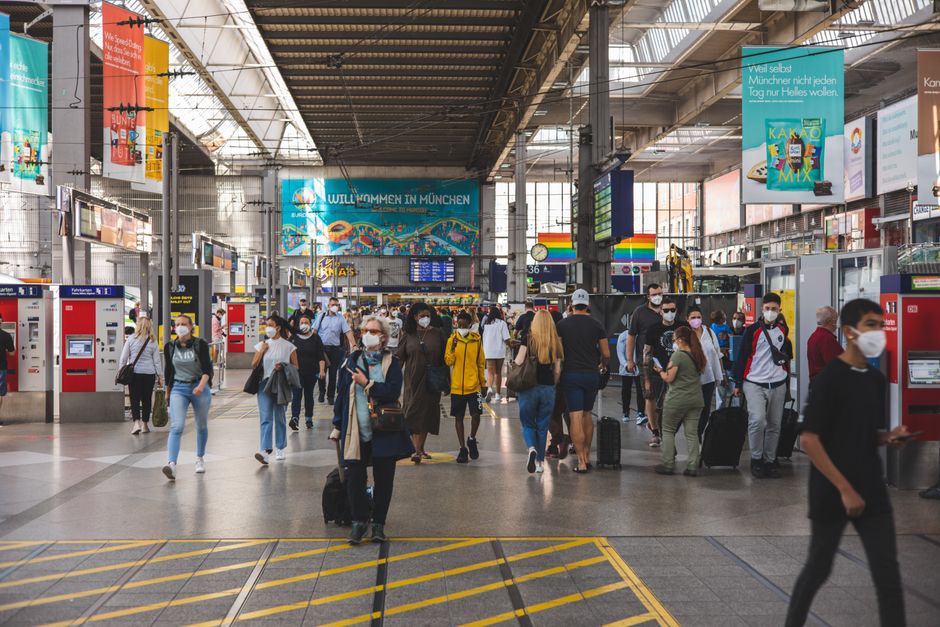
The exceptions are narrow but genuinely useful once you know them. Unstaffed mini-markets under 150 square meters, a category the 2025 law specifically opened up, can run around the clock, including Sundays and holidays, with self-checkout only. Gas stations can open 24/7 every day of the year, but outside normal shopping hours they’re only allowed to sell fuel, car-related items, and travel essentials, not a full grocery run. Bakeries can sell for up to three hours on a Sunday or holiday, typically scheduled within an 8:00 to 17:00 window so as not to clash with main church service times, and flower shops get a similarly narrow window (extending to four hours on Valentine’s Day and Mother’s Day, and six hours around All Saints’ Day, Volkstrauertag, and the four Advent Sundays). In Munich specifically, the two most reliable Sunday backups sit inside and around Hauptbahnhof: the Edeka Ernst supermarket, whose hours are listed directly on Deutsche Bahn’s own station page as 08:00 to 23:00 including Sundays and public holidays, and a Rewe on the S-Bahn mezzanine level that the city’s own tourism portal describes as open around the clock, plus a small organic supermarket in the station that the same city page lists as open until 21:00 every day. Munich Airport has two Edeka branches open daily, Sundays included, and a couple of city kiosks (Münchner Freiheit, Reichenbachbrücke) run close to 24/7. None of this is a real substitute for a normal Saturday grocery run: expect higher prices, real crowds, and slow checkout lines at all of them.
- 1 Hauptbahnhof: Edeka Ernst (08:00 to 23:00), the Rewe on the S-Bahn mezzanine, and a small organic market
- 2 Munich Airport: two Edeka branches, open Sundays
- 3 Münchner Freiheit kiosk, open close to 24/7
- 4 Reichenbachbrücke kiosk, open close to 24/7
Beyond those built-in exceptions, Bavarian municipalities can also authorize up to four verkaufsoffene Sonntage (open Sundays) a year, tied to a specific occasion like a market or festival, capped at five hours and never later than 18:00. The decision sits entirely with the municipality, not the state, and Munich uses this option far less than most other Bavarian towns: crowdsourced listing sites that track these dates nationally describe Munich as close to a genuine exception in how rarely the city center itself holds one, more often pointing shoppers toward neighboring municipalities such as Unterhaching, Neubiberg, Grünwald, or Taufkirchen instead. Don’t plan around a specific date for Munich itself without checking that year’s actual announcement first, since even the one loosely tracked date for 2026 was still listed as unconfirmed at the time of writing.
On top of the shopping rules, Bavaria protects nine additional stille Feiertage (silent holidays) with their own restrictions that have nothing to do with retail: Aschermittwoch, Gründonnerstag, Karfreitag, Karsamstag, Allerheiligen, Volkstrauertag, Buß- und Bettag, Totensonntag, and Heiliger Abend. On these days, Munich enforces a Tanzverbot: public dancing and loud music are banned in clubs, bars, and discos, starting at 02:00 (00:00 on Karfreitag and Karsamstag, 14:00 on Heiliger Abend) and running until midnight. It only touches public events, not private ones: a wedding or birthday party held as a genuinely closed, invited gathering is unaffected. Sports events go ahead as normal except on Karfreitag and Buß- und Bettag, and cabaret, variety, and circus shows are exempt since the rule specifically targets dancing to loud music rather than live performance in general. If you’re organizing anything public around one of these dates, Munich’s Kreisverwaltungsreferat (KVR) reviews permit requests case by case.
What Real People Say
This section draws on established expat publications and blogs covering the same experience.
The “everything is shut” reaction shows up constantly in general culture-shock writing about Germany, not just Bavaria specifically. One widely shared expat account puts it bluntly: “Everything is shut on a Sunday in Germany. Everything. At first, I hated this, but you soon get used to it, and come summer, it’s actually quite refreshing to be forced to do something active,” while another describes small towns on a Sunday as looking like “post-apocalyptic ghost towns.” The advice that follows is consistent across sources: do your real grocery shopping on Saturday, and treat Sunday as a day built around parks, museums, or a walk rather than errands.
Munich-specific expat blogs land on the same practical advice with more local detail. One Munich-focused guide is direct about it: don’t plan Sunday as a shopping day, buy water, snacks, toiletries, and anything for a baby before Sunday arrives, and treat Hauptbahnhof and airport shops as emergency backups rather than a real option, warning specifically about long checkout queues once people catch on that a given spot is open. The same guide flags a genuine upside worth knowing: several major Bavarian state museums charge just 1 euro on Sundays, enough of a draw that arriving early matters.
The Sunday rules turn out to be only half the story. The Munich Eye, a Munich-focused English-language publication, covers a separate but related rule called Ruhezeit (quiet hours), which bans loud noise, not just open shops, for the entire day on Sundays and public holidays: lawn mowers, vacuum cleaners in shared buildings, construction work, and power tools are all off-limits, and a neighbor’s complaint to the local Ordnungsamt can escalate from a warning note to an actual fine, commonly starting around 50 euros. It’s framed less as an obscure technicality and more as a genuine cultural norm that gets enforced socially as much as legally.
On YouTube, this is well-trodden territory: the channel Germany Made Simple has a Munich-specific explainer, “Is Everything Closed On Sunday In Munich?”, and other creators cover the same adjustment more personally, including a February 2026 video from an American expat titled “Learning to Slow Down on Sundays” that frames the whole thing less as a restriction and more as an enforced, and eventually welcome, pause.
Step by Step
- Pull up the current year’s official Bavarian holiday calendar before you plan around any date, since several holidays move with Easter and the reference source gets republished annually.
- Know that Mariä Himmelfahrt (August 15) is a real day off in Munich specifically, confirmed by the city itself, even though it isn’t observed everywhere in Bavaria.
- Do your actual grocery shopping on Saturday. Assume every regular shop is closed on Sunday and on every holiday above, no exceptions for a “quick errand.”
- If you genuinely need something on a Sunday, go to Hauptbahnhof (Edeka Ernst, the Rewe on the S-Bahn mezzanine, or the organic supermarket in the station), the airport, an unstaffed mini-market, or a gas station for travel basics. Expect higher prices and longer lines.
- Don’t count on a verkaufsoffener Sonntag in central Munich. Check that specific year’s IHK or city announcement before assuming one exists, and consider a neighboring municipality if you really need one.
- If you’re planning a public event, check whether the date falls on one of the nine stille Feiertage. Public dancing and loud music are banned; private, invitation-only gatherings are not affected.
- Respect Ruhezeit on Sundays and holidays even at home: lawn mowing, vacuuming in shared buildings, and power tools can draw a real complaint and a fine, not just an annoyed look.
- If you have a child in Kita or school, ask early for that year’s collective closure and Brückentag calendar so you’re not caught planning childcare at the last minute.
FAQ & Common Pitfalls
Does every town in Bavaria observe Mariä Himmelfahrt on August 15?
No, and this is the detail that trips up the most people. Bavarian law only grants Mariä Himmelfahrt as a public holiday to municipalities with a historically Catholic majority, a status the Bayerisches Landesamt für Statistik determines from census data. Munich is confirmed as one of those municipalities, so August 15 is a genuine day off here, but drive into a Protestant-majority town nearby and shops and offices there may be running as normal. Don't assume a colleague or neighbor in a different Bavarian municipality has the same day off you do.
What actually happens if I plan an event on Karfreitag or another silent holiday?
Munich's Tanzverbot kicks in on nine specific dates each year (Aschermittwoch, Gründonnerstag, Karfreitag, Karsamstag, Allerheiligen, Volkstrauertag, Buß- und Bettag, Totensonntag, and Heiliger Abend), banning public dancing and loud music in clubs, bars, and discos, typically from 02:00 until midnight, with earlier start times on Karfreitag, Karsamstag, and Heiliger Abend. It only applies to public events, so a private wedding or birthday held as a genuinely closed, invited gathering isn't affected. If you're organizing anything public, Munich's Kreisverwaltungsreferat (KVR) reviews the request case by case.
My child's Kita or school keeps mentioning Brückentage, what does that mean for us?
Brückentage are the single working days sitting between a public holiday and a weekend, most commonly the Friday after Christi Himmelfahrt or Fronleichnam, both Thursday holidays in Bavaria. Many Kitas and schools schedule collective closure days around these bridges rather than staying open for a handful of children, on top of a few other fixed closure days set independently each year. There's no single citywide calendar for this: each facility sets and publishes its own closure dates, so ask your child's Kita or school directly for the current year's list as early as you can, ideally right after enrollment.
If I really need to shop on a Sunday, is there any part of central Munich that reliably has something open?
Hauptbahnhof is the most dependable option: the Edeka Ernst supermarket runs 08:00 to 23:00 including Sundays and holidays, a Rewe on the S-Bahn mezzanine level is generally open around the clock, and a small organic supermarket in the station stays open until 21:00 every day. Munich Airport has two Edeka branches open Sundays as well, and a couple of city kiosks (Münchner Freiheit, Reichenbachbrücke) stay open nearly 24/7. None of these are a substitute for a real grocery run: go early if you can, since checkout lines get long fast once people realize a spot is open.