
Your Kid Wants Their Own Phone Number: What's Actually Legal at Each Age
Full legal capacity to sign a contract independently in Germany doesn't arrive until age 18, so a mobile phone contract signed by a minor without parental consent is legally 'pending invalid,' meaning in practice that the contract always effectively runs on a parent or guardian, even for a child's own additional line. Prepaid is where the age threshold actually starts mattering in practice: teenagers 16 and older can buy a prepaid SIM independently, while a younger child needs a parent's involvement to get one at all. Data protection law adds a second, related age line: under the GDPR, only from age 16 can a minor independently consent to their own data being processed by an information society service provider, for anyone younger, a parent or guardian has to give that consent instead. eSIMs make the practical side easier regardless of the legal specifics: they activate by scanning a QR code, can't be physically lost the way a SIM card can, and some providers, Deutsche Telekom's PlusKarte among them, add an eSIM to an existing family plan at no extra cost. The genuinely practical route most families land on for a younger child: an additional card (Zusatzkarte) tied to a parent's own contract, which keeps legal responsibility automatically with the parent and bills everything to one shared account, rather than attempting a standalone contract in the child's name.
The Official Rule
Getting a child their own phone number runs into two separate legal thresholds in Germany, one about contracts generally, and one specifically about data protection, and understanding both helps you pick the actually workable option rather than running into an invalid contract or an unexpected consent requirement.
Full legal capacity to sign a contract independently doesn’t arrive until age 18, and mobile phone contracts are treated no differently. A contract signed by a minor without parental consent is legally described as “schwebend unwirksam,” pending invalid, which in practice means the arrangement doesn’t stand on its own, a parent or guardian effectively remains behind it regardless of whose name appears on the paperwork or which line the child actually uses day to day.
| Threshold | What changes at this age |
|---|---|
| Under 16 | Parent must purchase/consent to a prepaid SIM; parental consent required for data processing consent (GDPR) |
| 16 | Can independently buy a prepaid SIM; can independently consent to data processing under GDPR |
| 18 | Full independent contract capacity, including standard mobile contracts |
Prepaid is where the age line actually changes what a child can do on their own. From age 16, a teenager can independently purchase a prepaid SIM card, no parent needs to be part of that specific transaction. Below that age, a parent’s involvement is genuinely required to get a prepaid SIM at all, this isn’t a formality that gets waved through, it’s a real requirement providers apply.
Data protection law adds a second, related but distinct age threshold worth knowing separately from the contract question. Under the GDPR, a minor can only independently consent to their own personal data being processed by an information society service provider from age 16 onward. For anyone younger, a parent or guardian has to provide that consent instead, this matters for app accounts, online services, and anything requiring data-processing consent, not specifically for the SIM or phone contract itself, but it’s worth keeping in mind as a related consideration when a younger child starts using their own device.
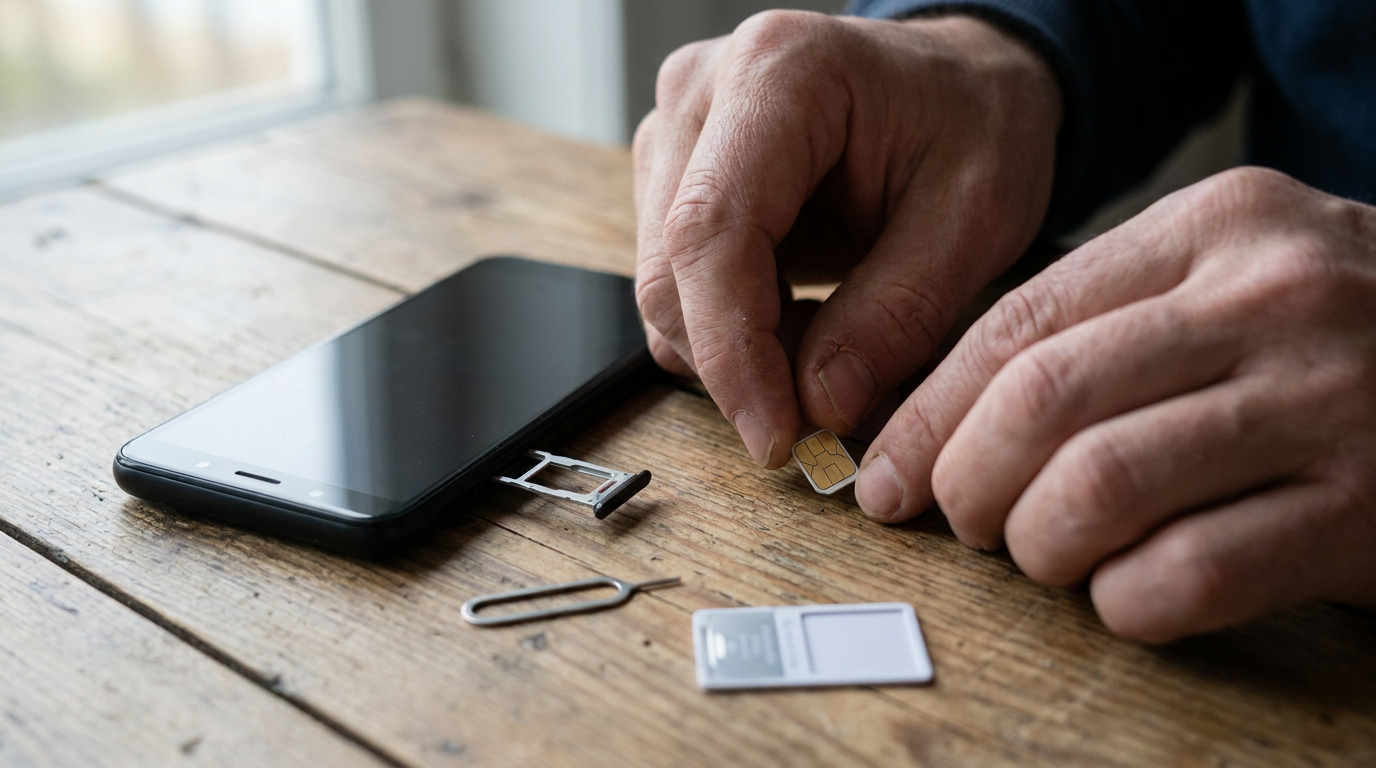
eSIMs simplify the practical side of all this regardless of which legal threshold applies. Activation happens by scanning a QR code rather than physically inserting a card, which also means there’s nothing small and easy to lose the way a physical SIM can be. Some providers make this genuinely convenient for families specifically, Deutsche Telekom’s PlusKarte is a commonly cited example, adding an eSIM to an existing family plan at no additional cost.
Given all of this, the practical route most families actually land on for a younger child is an additional card (Zusatzkarte) tied to a parent’s own existing contract, rather than attempting any kind of standalone arrangement in the child’s name. This keeps legal responsibility automatically and clearly with the parent, avoids the “pending invalid” contract question entirely, and bills everything to one shared account rather than creating a separate billing relationship for a child who can’t yet independently hold one anyway.
What Real People Say
Parents setting up a first phone line for a younger child consistently describe the Zusatzkarte approach as the option that actually made sense once they understood the underlying legal picture, rather than something they’d have chosen by default without knowing a standalone contract wouldn’t be valid without their consent anyway.
The eSIM-and-family-plan combination comes up often in practical discussion as removing a genuine point of friction, a lost or damaged physical SIM used to mean an actual trip to a shop or a wait for a replacement, and providers offering free eSIM addition to an existing family plan have made this meaningfully simpler for families managing multiple children’s lines.
Step by Step
- For a child under 16, plan on an additional card (Zusatzkarte) tied to your own contract, rather than attempting a standalone plan in their name.
- For a teenager 16 or older who wants more independence, prepaid is genuinely available to them directly, they can purchase it without a parent present for that specific transaction.
- Remember the GDPR consent threshold is also 16, and separate from the SIM question, younger children need your consent for data processing on apps and services they use.
- Ask your provider specifically about eSIM options for family plans, several add this at no extra cost and it removes the physical-SIM loss risk entirely.
- Don’t attempt a standalone contract in a minor’s name expecting it to stand on its own, without parental consent it’s legally pending invalid regardless of the provider’s willingness to issue it.
Compliance Note
This page explains the general legal framework for minors and mobile contracts, SIM cards, and related data protection consent in Germany, but this is not legal advice, and specific provider policies can vary. For your specific situation, confirm current requirements directly with your chosen provider.
FAQ & Common Pitfalls
Our 14-year-old wants a prepaid SIM. Can they walk into a shop and buy one themselves?
Not independently, no, the commonly cited threshold for buying a prepaid SIM on your own is 16. For a 14-year-old, a parent needs to be involved in the purchase, though prepaid itself remains the simpler, lower-commitment path compared to attempting any kind of contract plan, which wouldn't be valid without parental consent regardless of the child's age under 18.
If we get our child their own SIM, are we as parents actually on the hook for what they do with it?
Legally and practically, yes, in most real setups. Since a minor's own contract is 'pending invalid' without parental consent, and even a consented-to arrangement typically runs through a parent's own account structure, a parent generally retains legal responsibility for a child's line, this is exactly why an additional card (Zusatzkarte) on your own contract is the common practical choice, it makes that responsibility explicit and simple rather than ambiguous.
Does the age-16 GDPR consent rule mean our 15-year-old can't use any apps that require creating an account?
It means specifically that for information society services processing a minor's personal data, a parent or guardian's consent is required under 16, rather than the minor being able to consent on their own. In practice, this affects account creation and data processing consent for many apps and online services, not phone or SIM functionality itself, so it's a separate but related consideration from the SIM/contract question, worth being aware of for whatever apps or services your child wants to use on their own device.