
Finding an Emergency Pharmacy (Apotheken-Notdienst) in Munich, and the Fee
Munich doesn't have one permanent 24-hour pharmacy, instead a rotating duty roster (Notdienst) guarantees at least one pharmacy is open somewhere nearby every night, Sunday, and public holiday, and which one changes daily. The most reliable way to find tonight's duty pharmacy is the official search at aponet.de by postal code, or the free nationwide hotline 0800 00 22 833 from any German landline (22833 works from a mobile at 69 cents per minute, and any closed pharmacy's door is legally required to post the current duty pharmacy's address). Physically, an after-hours visit looks different from a normal one: the main doors are locked, and you ring a bell beside a small secure hatch (Notdienstklappe), where a pharmacist takes your prescription or symptoms and passes the medication back through the drawer. Using the service costs a legally standardized Notdienstgebühr of 2.50 Euros per visit, charged weekdays 8pm to 6am, all day Sunday, and on public holidays, though this fee is waived and covered by statutory insurance if a prescription from an emergency medical practice is marked 'noctu'.
The Official Rule
Munich doesn’t keep one pharmacy open around the clock, and expecting a familiar all-night pharmacy the way some other cities work is a common first mistake. Instead, a rotating duty roster, the Notdienst, guarantees that at least one pharmacy somewhere in the area is staffed and open at any given moment, and which specific one it is changes daily.
Finding tonight’s duty pharmacy has several reliable paths, and it’s worth knowing more than one. The official aponet.de search, run by the German pharmacists’ association, lets you enter your postal code for a real-time list. Without internet access, the free nationwide hotline, 0800 00 22 833, works from any German landline, and the shortcode 22833 works from a mobile phone at 69 cents per minute, connecting you to a voice system that asks for your location. Bavaria’s own chamber, the Bayerische Landesapothekerkammer (BLAK), runs a parallel official locator. As a reliable low-tech backup, any pharmacy that’s currently closed is legally required to post the current duty pharmacy’s address directly on its own door.
| Time | Fee applies? |
|---|---|
| Weekdays, 8pm to 6am | Yes |
| Sundays, all day and night | Yes |
| Public holidays | Yes |
| Prescription marked "noctu" from an emergency doctor | No, statutory insurance covers it |
| Normal daytime pharmacy hours | Not applicable, no Notdienst involved |
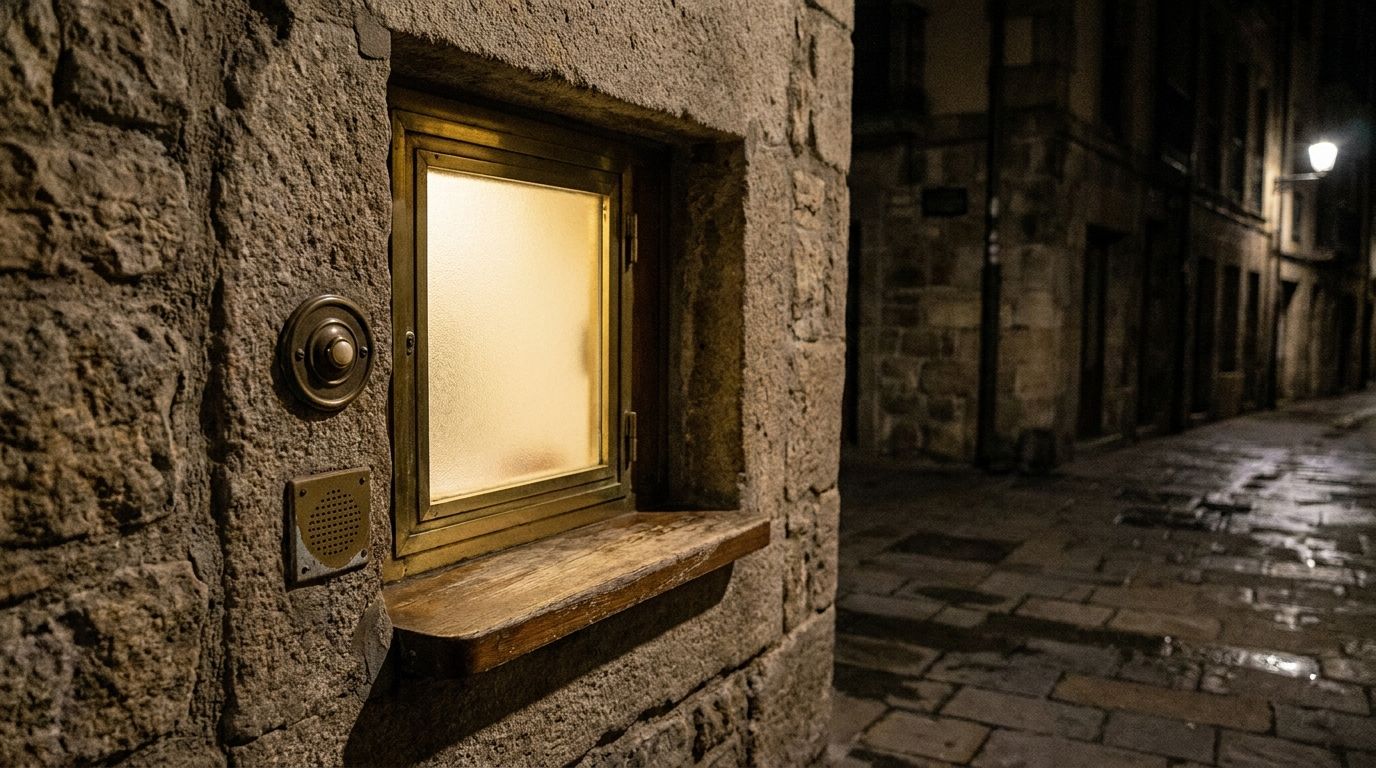
The visit itself works differently from a daytime pharmacy trip, and it’s worth knowing what to expect before you’re standing outside a locked door at midnight. The main entrance is locked for security. What you’re looking for instead is a small, usually illuminated hatch or window, the Notdienstklappe, with a doorbell beside it. Ring it, and a pharmacist comes to the window to speak with you through an intercom system. You explain your prescription or symptoms, and they retrieve the medication and pass it, along with a payment terminal, back through the secure drawer.
The 2.50 Euro Notdienstgebühr, per the national pharmacists’ association ABDA, is a legally standardized, once-per-visit charge, functioning as a protective mechanism rather than a profit margin, since pharmacists working the on-call shift are paid tariff wages with night and holiday surcharges. There’s one specific, useful exception: if your prescription comes from an emergency medical practice and is marked “noctu”, statutory health insurance covers the fee directly, and you pay nothing extra.
What Real People Say
Practical newcomer guidance consistently frames the first after-hours visit as the part that catches people off guard. Germany Handbook’s expat-focused guide describes the experience plainly: the locked main entrance, the search for the Notdienstklappe marked with a red cross or the word “Notdienst,” and the intercom exchange, then adds a practical tip that comes up repeatedly in similar guidance, keeping a small home medical kit with basics like ibuprofen, paracetamol, and first-aid supplies specifically to avoid late-night trips for genuinely minor issues.
The trade press covering the hotline rollout, apotheke-adhoc.de, confirms the free number works consistently nationwide, a detail worth knowing if you’re used to region-specific hotlines from elsewhere and assume this one might only cover part of the country.
Step by Step
- Check aponet.de or BLAK’s official search by postal code first, if you have internet access, this is the fastest route to a real-time answer.
- No internet? Call the free hotline 0800 00 22 833 (landline) or dial the mobile shortcode 22833 (69 cents per minute) and follow the voice prompts.
- No phone signal either? Walk to your nearest usual pharmacy anyway, its door is legally required to display the current duty pharmacy’s address.
- At the duty pharmacy, look for the Notdienstklappe, not the main door, ring the bell and wait for the pharmacist to respond through the intercom.
- Have your prescription (if any) and payment ready, and expect the standard 2.50 Euro fee unless your prescription is specifically marked “noctu.”
Compliance Note
This page explains the general structure of Munich’s emergency pharmacy system, but which specific pharmacy is on duty changes daily and exact fees can be adjusted by law. For a genuine medical emergency, call 112 or your nearest emergency room rather than relying on a pharmacy visit alone, and confirm current details directly with aponet.de, BLAK, or the hotline.
FAQ & Common Pitfalls
How much does an emergency pharmacy visit actually cost on top of my medication?
A flat Notdienstgebühr of 2.50 Euros, including VAT, added once per visit regardless of how much you buy. It applies weekday evenings from 8pm to 6am, all day and night on Sundays, and on public holidays. It's a legally standardized surcharge meant to cover paying pharmacists tariff wages with after-hours surcharges, not a profit margin.
Is there any way to avoid paying the fee?
Yes, one specific case: if you're coming from an emergency medical practice (Bereitschaftsdienst) and your prescription is marked 'noctu', Latin for 'at night', statutory health insurance covers the Notdienstgebühr directly, and you pay nothing extra at the counter. Outside that specific situation, the fee applies to everyone using the after-hours service.
What actually happens when I show up, do I just walk in?
No, and this surprises a lot of newcomers the first time. The main doors are locked for security. Instead, you look for a small illuminated hatch or window, the Notdienstklappe, usually marked clearly, ring the bell beside it, and a pharmacist comes to speak with you through an intercom. You explain your prescription or symptoms, and they pass the medication and payment terminal back through the secure drawer.
How do I actually find which pharmacy is on duty tonight, right now, in Munich?
The most reliable option is aponet.de's own search tool, entering your postal code for real-time results. If you don't have internet access, call the free nationwide hotline 0800 00 22 833 from a landline (22833 works from a mobile at 69 cents per minute), a voice system asks for your location and tells you the nearest options. As a backup, any pharmacy that's currently closed is legally required to post the address of the current duty pharmacy on its door.
Can I just order the medication online instead of going anywhere at night?
For a genuine after-hours emergency, no, the point of the Notdienst system is same-night, in-person access, and online pharmacy delivery isn't built for that timeline. Online ordering works well for planned, non-urgent prescriptions, but if you need something tonight, the duty pharmacy system is the actual answer.