
Why You Can Only Buy 2-3 Tins of Formula: Germany's Purchase Limits Explained
If a Drogerie or Apotheke limits you to two or three tins of formula per visit, with a sign reading 'Abgabe nur in haushaltsüblichen Mengen' (sale only in household-typical quantities), or keeps formula behind the counter instead of on open shelves, it isn't random rationing, it's a recurring pattern tied to export demand rather than a general domestic shortage. Chinese consumer trust in domestically produced formula dropped sharply after a 2008 melamine contamination scandal and a further 2011-2012 mercury scare, driving strong, sustained demand for German brands like Hipp, Aptamil, and Milupa, both through resellers and direct bulk purchasing that can empty a store's shelf faster than it restocks. Chains including dm, Rossmann, and Budnikowski have documented this same household-quantity cap during multiple episodes since at least 2015, so it isn't a one-time event, it resurfaces periodically depending on demand. If your regular store is out, online retailers and direct manufacturer ordering, plus manufacturer parent-service hotlines, are usually a more reliable route than checking multiple physical stores in person.
The Official Rule
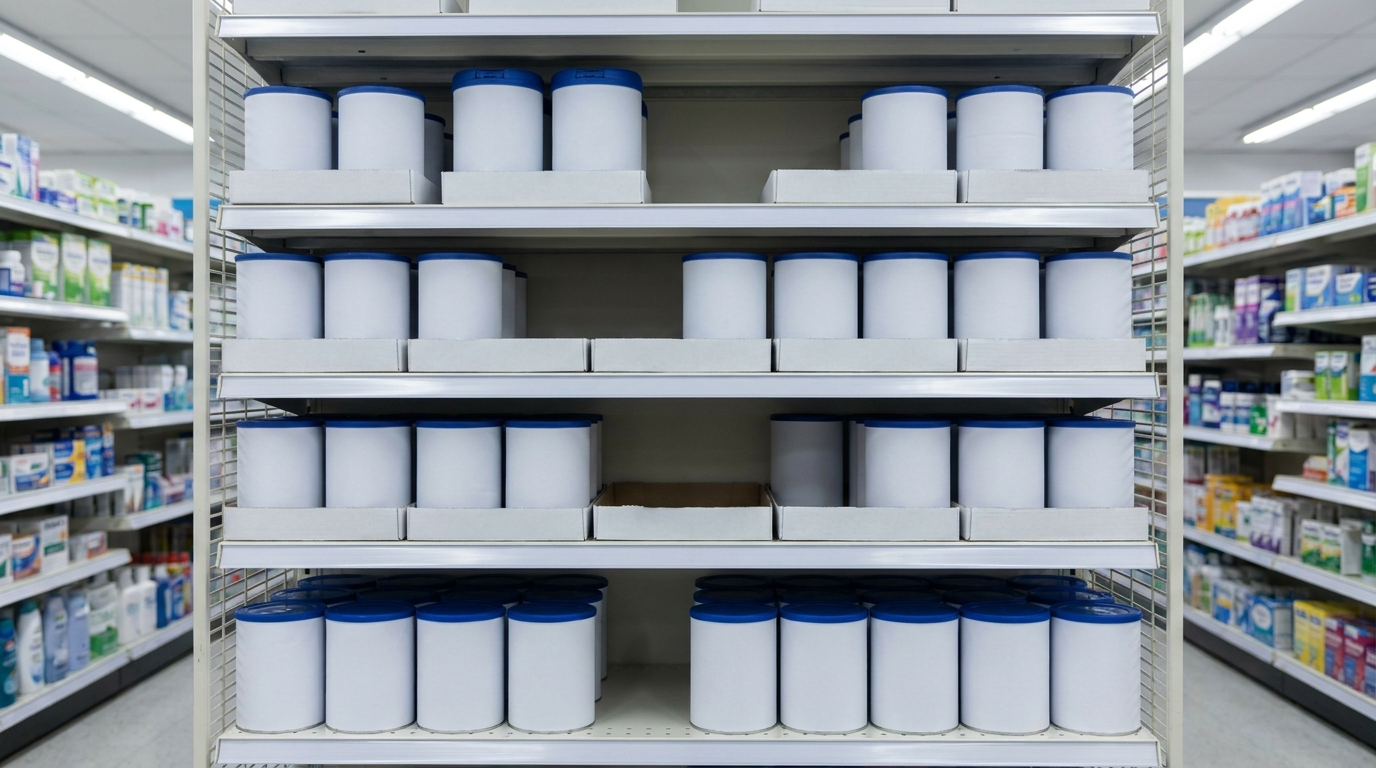
If you’ve walked into a Drogerie or Apotheke expecting to buy a few weeks’ worth of formula and instead found a sign limiting you to two or three tins, or discovered the formula isn’t even on the shelf and you have to ask a staff member for it, there’s a specific, well-documented reason behind it.
The root cause traces back to a series of food-safety scandals in China: a 2008 melamine contamination case and a further mercury scare in 2011-2012, according to an account of the resulting purchase limits. Those events badly damaged consumer trust in domestically produced Chinese infant formula, and German brands, particularly Hipp, Aptamil, and Milupa, became strongly preferred alternatives, both for personal use by Chinese families and for resale through informal export channels. That demand is what periodically empties shelves faster than stores can restock, not a general problem producing enough formula for the German market itself.
| What you see | What it means |
|---|---|
| "Abgabe nur in haushaltsüblichen Mengen" sign | Purchases capped at a normal single-household quantity, often 2-3 tins |
| Formula kept behind the counter | Easier for staff to enforce the quantity cap and slow shelf clearouts |
| Empty shelves at one store, stock at another | Localized export/resale demand, not a nationwide production shortfall |
Chains including dm, Rossmann, and Budnikowski have all documented this same household-quantity cap, and it isn’t limited to a single historical moment. The pattern has recurred across multiple separate episodes since at least 2015, meaning it’s worth treating as an occasional, demand-driven fluctuation rather than something permanently fixed or permanently absent. Practical parent guidance from a documented 2016 shortage still applies today: online retailers and direct manufacturer ordering generally aren’t subject to the same in-person quantity restrictions, making them a more dependable backup than driving between multiple physical stores.
What Real People Say
The detail that’s easy to miss is that this isn’t targeted at ordinary parents buying formula for their own child at a normal pace, it’s a blunt tool aimed at bulk buyers and resellers that happens to inconvenience everyone shopping in person during a high-demand period. If you’re simply restocking as you normally would, the household-quantity cap shouldn’t meaningfully affect you, it mainly changes how often you need to shop rather than whether you can get formula at all.
When a specific brand or store does run low, manufacturer parent-service hotlines have historically been a genuinely useful resource, not just for complaints, but for practical help locating stock or understanding what’s happening with a specific product line.
Step by Step
- Don’t assume an empty or limited shelf means a nationwide shortage, it’s usually localized to specific stores, brands, and demand cycles.
- If a sign limits you to 2-3 tins, that’s the household-quantity cap, not a sign you’re doing something wrong.
- Ask staff directly if formula isn’t visible on the shelf, some stores keep it behind the counter specifically to manage the limit.
- If your regular store is out, check online ordering before driving to multiple physical stores, online purchases generally aren’t subject to the same in-person caps.
- For a specific brand that’s hard to find, contact the manufacturer’s parent-service hotline directly, they can often help locate stock or explain the situation.
- Consider keeping a modest buffer stock rather than buying at the last minute, given that availability can fluctuate periodically rather than staying constant.
Compliance Note
This page explains the general, historically documented pattern behind formula purchase limits in Germany, current as of mid-2026. It is not medical advice, and current availability can vary by store, brand, and season. Check with your specific Drogerie or Apotheke, or the manufacturer directly, for up-to-date stock information.
FAQ & Common Pitfalls
Is this a nationwide shortage of baby formula in Germany?
Not in the sense of an overall production shortfall. The underlying driver is unusually strong export and resale demand for specific German brands, concentrated around particular products and stores rather than a general failure to produce enough formula for the domestic market. That's part of why availability can look very different from one store, or one week, to the next.
What does 'Abgabe nur in haushaltsüblichen Mengen' actually mean for me as a shopper?
It means the store is capping how much you can buy in a single visit, commonly two or three tins, to a quantity considered normal for one household's own use rather than for resale or bulk export. It's not aimed at ordinary parents restocking normally, but it does mean you can't stock up heavily in one trip.
Why is formula sometimes kept behind the counter instead of on the shelf?
Some stores choose to keep formula, particularly the brands most affected by export demand, behind the counter specifically to enforce the household-quantity limit more easily and to reduce the chance of the shelf being cleared out quickly. You'll usually need to ask staff directly for it rather than finding it displayed openly.
What's the most reliable way to make sure I have formula on hand?
Online ordering, whether directly from a retailer's website or through the manufacturer, has historically been a more consistent option than checking multiple physical stores, since in-store quantity limits generally don't apply the same way online. Manufacturer parent-service hotlines can also help locate stock or answer supply questions directly if a specific brand is hard to find.