
Finding Your Home Country's Groceries: Munich's International Market Scene
The question 'which supermarket chain is cheapest' and the question 'where do I find the ingredients my own cooking actually needs' have completely different answers in Munich, and REWE or Edeka rarely solve the second one. Munich has a genuine, longstanding network of independent international grocers organized by cuisine rather than by chain: Turkish markets concentrated around Sendling, Giesing, and Pasing for halal meat, fresh flatbread, and produce; Middle Eastern and Persian shops around Dachauer Straße and Landwehrstraße; at least two Indian grocers, one of them the small but well-stocked Bollywood on Augustenstraße; Asian supermarkets spread across Sendlinger Tor, Hauptbahnhof, and Bogenhausen covering Vietnamese, Thai, Japanese, Korean, and Chinese staples separately rather than as one blended 'Asia' aisle; Eastern European shops for Russian, Polish, Bosnian, and Armenian products; and a small Latin American 'feinkost' stall inside the Viktualienmarkt itself. None of this shows up reliably on a generic Google Maps search for 'supermarket', the names and neighborhoods below are the actual starting point.
The Lay of the Land
Ask “where’s the cheapest supermarket in Munich” and Edeka, REWE, Aldi, and Lidl cover most of the answer. Ask “where do I find the specific ingredients my own cooking actually needs” and the honest answer is a different map entirely, one built from independent, often family-run shops organized by cuisine and community rather than by chain. Mit Vergnügen München, a long-running local culture magazine, has tracked this scene for years, and it holds up: Munich’s international grocery infrastructure is real, established, and worth learning by neighborhood rather than hoping a single search turns it up.
Turkish groceries are the deepest and most established layer, reflecting Munich’s large Turkish community, and they cluster in a few recognizable areas rather than being evenly spread. Güney Cavusoglu in Sendling has run for more than 30 years and carries Turkish staples alongside Bulgarian, Greek, and Middle Eastern products, fresh green almonds among the more surprising seasonal items. Burak Supermarkt in Giesing and branches of Istanbul Supermarkt in Pasing and near Harras round out the picture, all sharing the same core strengths: a halal meat counter, fresh Yufka pastry sheets and flatbread baked on site or delivered daily, and a produce section that goes well beyond what a standard supermarket stocks.
Middle Eastern and Persian groceries sit mainly along Dachauer Straße and Landwehrstraße. Verdi on Landwehrstraße stocks fresh vegetables, herbs, olives, Arabic bread, and a working kebab counter. Jordan Supermarkt on Dachauer Straße leans specifically Persian, halva, tea, jars of pickled vegetables by the kilo, Iranian rice cookers, and, according to local reviewers, genuinely good Persian ice cream.
Indian groceries are the thinnest category relative to demand. City Starlings, an expat blog that reviewed Munich’s international shops in detail, describes Bollywood on Augustenstraße as small but the clear standout, with a friendly owner who will special-order items that aren’t currently in stock. The same account flags a real practical tradeoff: some items don’t carry individual price tags and the shop doesn’t always provide itemized receipts, so a first visit takes a bit more patience than a chain supermarket checkout.
Asian groceries split cleanly by country rather than blending into one aisle. Go Asia has expanded to three Munich locations, including a newer one directly at Hauptbahnhof, and comes closest to a broad, multi-country selection. For something more specific, Mikado Feinkost on Baaderstrasse focuses on Japanese staples and sushi ingredients, Asia Lebensmittel on Mozartstraße is Korean-run with a small daily-dish food counter, and Tran Soan is built around Vietnamese, Thai, and broader Southeast Asian cooking. An Asia-Markt directly at Sendlinger Tor (Oberanger 47) is one of the more central, easy-to-reach options if you’re not sure yet which specific shop you need.
Eastern European groceries cover a genuinely broad range under that one label. Russischer Standard in Haidhausen stocks Russian, Polish, Armenian, and Ukrainian products side by side, pelmeli dumplings, Russian beer, and birch-sap juice among the more distinctive items. Polonika on Heßstraße leans specifically Polish, with pierogi sold by weight, and Deja Markt on Bayerstrasse focuses on Bosnian products, finely ground coffee, lokum, and smoked dried beef.
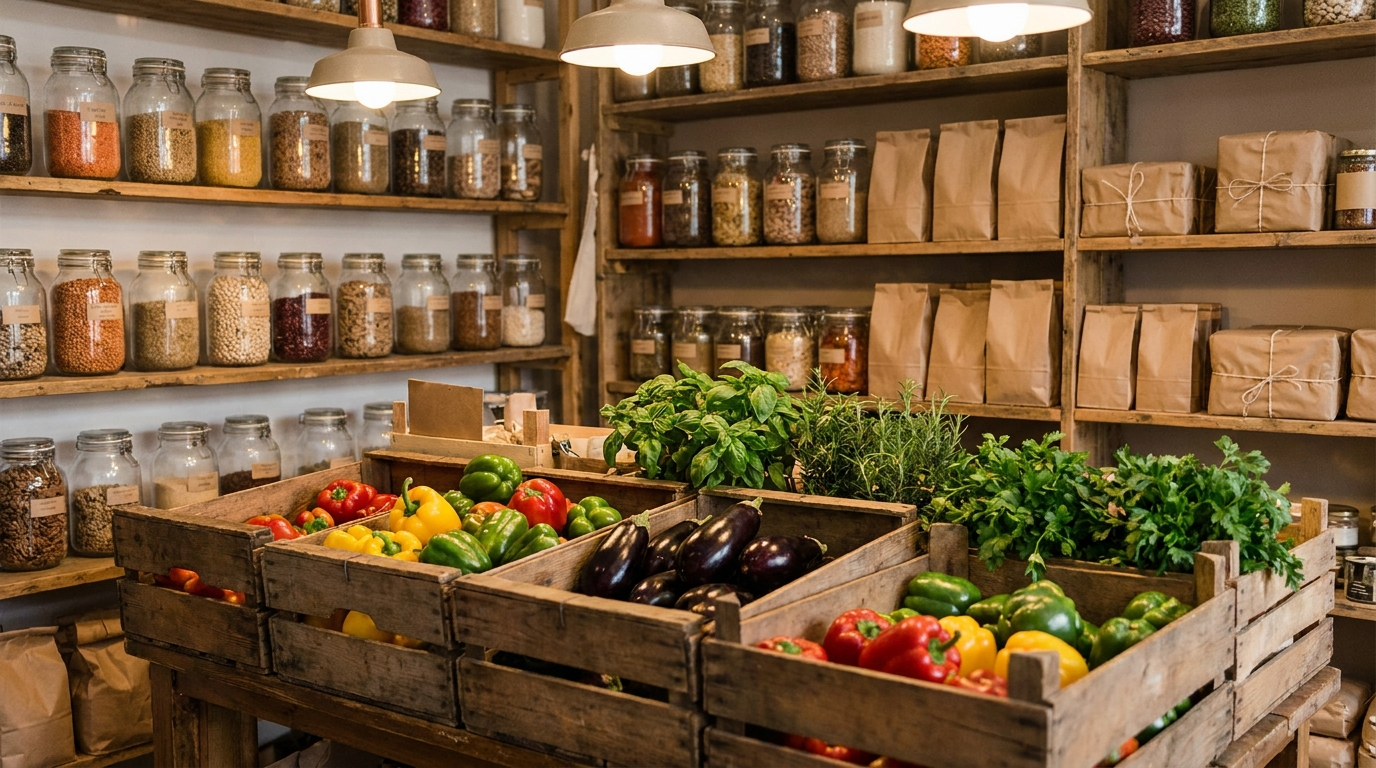
Latin American groceries have one small but genuine anchor right in the city center. Mercado Latino, confirmed on the city’s own Viktualienmarkt vendor directory as a registered stall in Abteilung III, stocks products from across South America and the Caribbean, wine, Argentine empanadas, and Yerba Mate among them, and functions as something of an informal meeting point for the city’s Latin American community.
- 1 Güney Cavusoglu Supermarkt, Turkish groceries, halal meat, fresh Yufka, Sendling
- 2 Verdi, Middle Eastern groceries and a kebab counter, Landwehrstraße
- 3 Bollywood Store, Indian groceries, small but well-stocked, Augustenstraße
- 4 Asia-Markt am Sendlinger Tor, East Asian groceries, central location, Oberanger
- 5 Russischer Standard, Russian, Polish, Armenian and Ukrainian products, Haidhausen
- 6 Mercado Latino, Latin American stall inside the Viktualienmarkt itself
What Real People Say
The Toytown Germany forum thread on international grocery stores has run for years precisely because this is a recurring question for new arrivals, and the pattern in expat write-ups is consistent: people don’t discover this network from a single source, they piece it together neighborhood by neighborhood, often after a friend or coworker from the same background points them to their own regular shop. City Starlings’ two-part guide to Munich’s international grocers reads the same way, framed explicitly as the kind of list a longer-term resident wishes someone had handed them in their first month rather than their third year.
A theme that comes up repeatedly in these accounts: smaller, family-run shops reward a bit of relationship-building. Asking the owner directly whether they can get a specific product, rather than assuming it’s simply unavailable because it isn’t on the shelf that day, is described often enough across different shops and cuisines to be a genuine pattern rather than a one-off.
Step by Step
- Start from your specific cuisine, not from “international grocery” as a generic search, the neighborhoods above are grouped by what they specialize in, and a Turkish market won’t necessarily carry Vietnamese staples any better than REWE does.
- For Turkish groceries, try Sendling, Giesing, or Pasing first, these are the most established clusters with the widest halal meat and fresh bread selection.
- For Asian groceries, decide which country’s cuisine you actually need before picking a shop, Go Asia’s multiple locations are the safer general bet, a country-specific shop is better for a precise, harder-to-find item.
- For Indian groceries, go to Bollywood on Augustenstraße first, it’s small, so call ahead or expect to ask the owner directly if a specific item isn’t visible on the shelf.
- For Latin American products, check the Viktualienmarkt’s Mercado Latino stall before assuming you need to order online, it’s easy to miss among the market’s more famous Bavarian food stalls.
- Bring small bills and expect a more informal checkout experience at the smallest shops, not all of them provide itemized receipts or accept cards for small purchases.
Compliance Note
This page reflects a snapshot of independent, often small, family-run businesses, and details like exact addresses, opening hours, and product ranges can change without much notice. Confirm current hours directly with a shop before making a special trip, especially outside central neighborhoods.
FAQ & Common Pitfalls
Is there one store that covers most 'Asian' cooking, or do I need several?
Expect several, not one. Munich's Asian grocery scene is organized by country rather than by a single blended aisle, so a Vietnamese-focused shop, a Korean one, and a Japanese one like Mikado Feinkost on Baaderstrasse genuinely stock different core items and brands. Go Asia, which has grown to three Munich locations including one at Hauptbahnhof, comes closest to a broad pan-Asian selection under one roof, but for a specific regional staple, a specialized shop is usually the better first stop.
Are these shops noticeably more expensive than a regular supermarket?
Not as a rule, and for the specific product they specialize in, they're often cheaper than paying supermarket prices for an imported specialty version of the same item. Where independent shops can run higher is on packaged imports with a longer supply chain, spices, snacks, and drinks brought in specifically for one community. Fresh items, bread, and produce are frequently priced competitively with, or below, standard supermarket prices.
What if a store doesn't carry the specific product I need?
Ask directly before giving up on a shop entirely. Expat accounts of stores like Bollywood describe the owner special-ordering items on request, and this is common practice among the smaller, family-run international grocers rather than an unusual favor. The tradeoff worth knowing about at the smallest shops is that some don't provide itemized receipts and a few items may not be individually price-tagged, so budgeting takes a little more attention than at a chain supermarket.
Do I need to speak German to shop at these stores?
Rarely a real barrier. Many of these shops are run by and for communities where German is also a second language, and owners are used to switching between German, English, and their community's language depending on the customer. Product labels are often in the origin country's language rather than German anyway, so recognizing packaging and brand names matters more than fluent German.