
Noise From a Nearby Kita or School Playground: What Are Your Rights as a Neighbor?
If you live near a Kita, school playground, or similar children's facility, the legal protection for that noise is genuinely stronger than for an individual neighbor's child, and it comes from a different law entirely. Since a 2011 amendment, § 22 Abs. 1a BImSchG states that noise from children at childcare facilities, playgrounds, and similar institutions like ball courts is, as a rule, not a harmful environmental impact at all, and standard noise limit values can't even be applied to measure it. A 2023 Bavarian administrative court ruling (Verwaltungsgericht München, Az. 28 K 22.414) put this in stark terms: a homeowner living next to a primary school, all-day care, Kita, and a play area with a sledding hill and ping-pong table, all within 30 to 60 meters, lost every single claim, including a request for nighttime silence and a 50 dB(A) daytime cap. The court called it a near-absolute duty to tolerate. What isn't covered by this privilege: parking chaos from drop-off and pickup, which real residents consistently report as the bigger actual friction point, and genuinely reckless behavior that goes beyond play, like vandalism.
The Official Rule
Living near a Kita, a school playground, or a similar children’s facility puts you under a genuinely different, and stronger, legal framework than the one that applies to an individual family’s noise in the apartment next door.
Since a 2011 amendment, § 22 Abs. 1a BImSchG states plainly that noise caused by children at childcare facilities, playgrounds, and similar institutions such as ball courts is, as a rule, not a harmful environmental impact at all. The law goes a meaningful step further than simply saying this noise is tolerable: it specifies that the usual noise limit and guideline values, the decibel-based thresholds used to regulate other noise-emitting facilities, cannot even be applied to measure it. That’s a structurally different, and stronger, form of protection than the general “socially adequate” doctrine covering an individual neighbor’s child.
A 2023 Bavarian administrative court ruling shows exactly how far this extends in practice. In a case before the Verwaltungsgericht München (Az. 28 K 22.414, 19 July 2023), a homeowner lived in a row house directly adjacent to a primary school with all-day care, a Kita, a children’s house, and a play area featuring a sledding hill and a ping-pong table, all within roughly 30 to 60 meters. He asked the court to prohibit non-school uses of the facility, close the grounds after hours, remove the ping-pong table, cap daytime noise at 50 dB(A) during specific rest periods, and impose complete nighttime silence. The court rejected every single claim, stating that the sounds of playing children represent an expression of childhood development and are fundamentally tolerable, describing it as a near-absolute duty to tolerate for residents.
| Source of disruption | Covered by the children's-noise privilege? |
|---|---|
| Children playing, shouting, running in a Kita or school playground | Yes, near-absolute tolerance requirement, no standard decibel limits apply |
| A sledding hill, ball court, or similar play equipment used by children | Yes, the 2023 Munich-area ruling addressed this directly |
| Genuinely reckless behavior going beyond ordinary play (closer to vandalism) | No, this falls outside the specific privilege |
| Parking chaos and traffic during drop-off and pickup | No, this is a separate traffic and parking question entirely |
What the privilege doesn’t cover is worth knowing precisely, because it’s where any real, narrow options actually exist. Behavior that genuinely crosses from play into something closer to vandalism isn’t shielded by this rule, and a facility’s building-law approval process does still weigh general planning classification and siting when it’s first built. But once a Kita or school is properly operating, the children’s noise itself sits largely outside the kind of legal challenge that might work against, say, an industrial or commercial noise source.
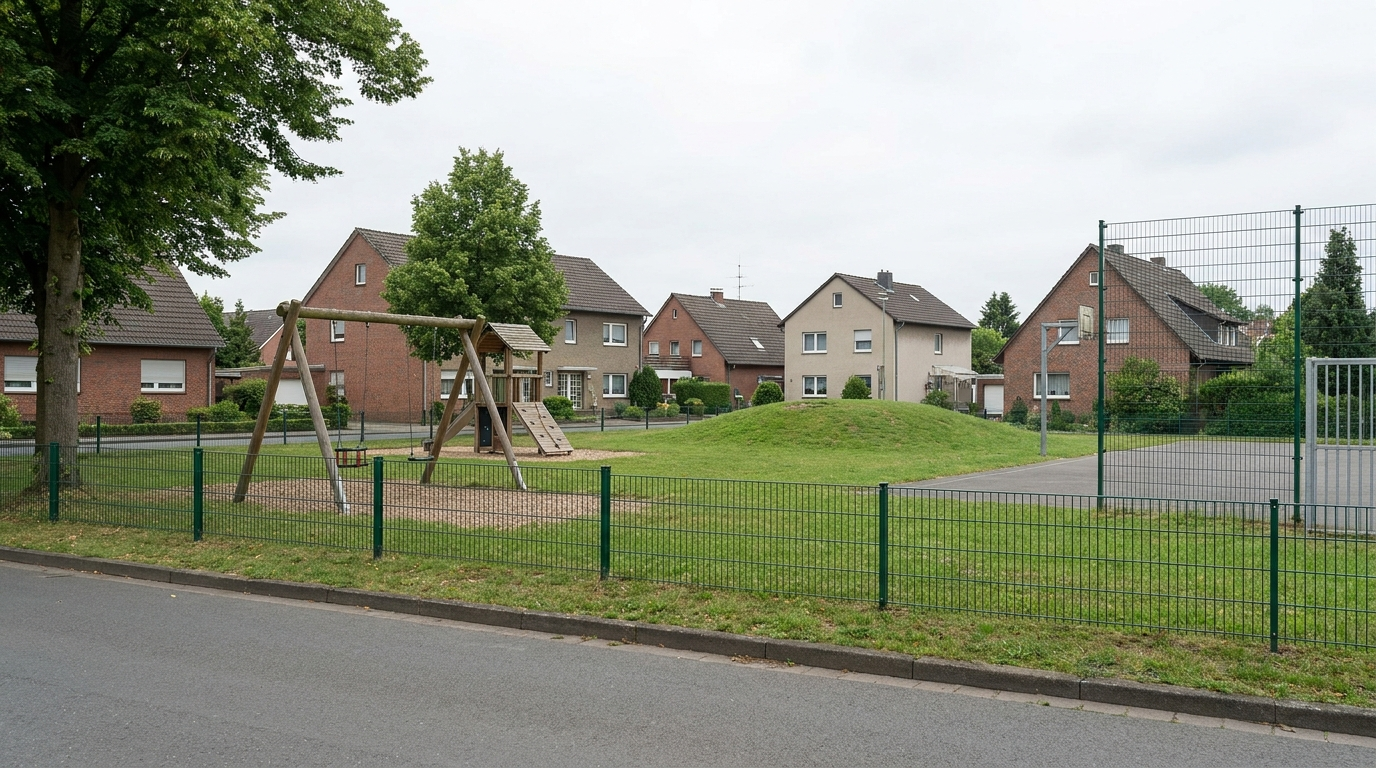
What Real People Say
A forum thread specifically about living near a kindergarten in Munich offers a genuinely useful, concrete picture beyond the legal theory. Residents described outdoor play concentrated in two windows, roughly 9:30 to 11:45 in the morning and 2:00 to 4:30 in the afternoon, with evenings and weekends staying quiet, and several noted they stopped consciously noticing the noise after a while, describing it as comparable to or quieter than a playground, an ice cream shop, or a beer garden. The recurring practical complaint wasn’t the children’s noise at all, it was parking chaos during drop-off and pickup, parents blocking driveways, along with occasional balls or toys landing in adjacent yards. Opinions on the noise itself varied meaningfully between residents, which lines up with the advice several gave: visit at different times of day before deciding on an apartment near one of these facilities.
Legal explainer content covering what neighbors must tolerate from children’s noise consistently frames the 2011 legal change as a deliberate policy choice, prioritizing children’s access to play space and childcare over individual noise-sensitivity complaints, which is precisely why the administrative court rulings in this area read as so one-sided compared to ordinary neighbor-to-neighbor tenancy disputes.
Step by Step
- Understand that this is a genuinely stronger protection than an individual neighbor’s child noise, it runs through environmental law (§ 22 Abs. 1a BImSchG), not tenancy law, and standard decibel limits don’t apply to it at all.
- If you’re considering an apartment near a Kita or school, visit at different times of day, real accounts show a fairly predictable, concentrated outdoor play window rather than constant all-day noise.
- Ask specifically about parking arrangements during drop-off and pickup, this is consistently the more disruptive daily issue in real accounts, not the children’s noise itself.
- Don’t expect a decibel-based legal complaint to work against ordinary play noise, the 2023 Munich-area ruling rejected exactly this kind of request, even for nighttime hours.
- If genuinely reckless behavior beyond ordinary play occurs, closer to vandalism than noise, that’s a narrower situation where you may have more standing, distinct from the noise privilege itself.
Compliance Note
This page explains the general legal framework around noise from childcare facilities and school playgrounds under German environmental law, but this is not legal advice, and specific situations can vary. For your specific situation, consult a lawyer specializing in Baurecht or Umweltrecht, or contact your local Kreisverwaltungsreferat.
FAQ & Common Pitfalls
Is this really a stronger protection than the rule for a neighbor's own child noise in an apartment?
Yes, genuinely, and the mechanism is different too, not just the strength. The apartment-neighbor situation runs through tenancy law and civil case law built around a 'socially adequate' standard that still, in rare documented cases, has real limits. The Kita and playground situation runs through § 22 Abs. 1a BImSchG, environmental law, which doesn't just say the noise is generally tolerable, it says standard noise limit values can't even be used to measure it in the first place. That's a structurally stronger form of protection, and the 2023 Munich-area ruling describing it as a 'near-absolute' duty to tolerate reflects that.
Is there any noise limit at all that applies to a Kita or school playground?
Not in the way you'd expect from other noise sources. The whole point of § 22 Abs. 1a is that the usual decibel-based limit and guideline values used for other facilities don't apply to children's noise from these institutions. What can still matter is whether the facility itself was properly approved under building law in the first place, that process does consider siting and general planning law classification, but this affects how a facility gets built, not whether children can be loud once it's operating.
What actually isn't protected under this rule?
The privilege is specifically about noise from children playing, not everything associated with the facility's existence. Genuinely reckless behavior that goes beyond ordinary play, more like vandalism than noise, falls outside the protection, and residents may have a narrow path to act on that specifically. Separately, and this comes up constantly in real accounts from people actually living near these facilities, parking chaos during drop-off and pickup times is a completely different legal question, traffic and parking rules, not child-noise privilege, and it's often the more genuinely disruptive daily issue.
How loud does it actually get, realistically, living near one of these facilities?
Real accounts from Munich residents living next to kindergartens describe a narrower window than you might expect, outdoor play concentrated roughly between 9:30 and 11:45 in the morning and 2:00 to 4:30 in the afternoon, with evenings and weekends genuinely quiet. Several described it as comparable to or quieter than a playground, ice cream shop, or beer garden, and noted that people tend to stop consciously noticing it after a while. That said, opinions varied meaningfully, sound sensitivity and specific building acoustics matter, and visiting at different times of day before committing to an apartment is genuinely worthwhile advice.
If I'm actually considering an apartment near a school or Kita, what should I check?
Beyond visiting at different times of day, ask specifically about the facility's outdoor play schedule and whether there's a larger shared play area (a sledding hill or a ball court, for instance) versus a smaller courtyard, since the two produce meaningfully different noise patterns. It's also worth checking on-site or asking a future neighbor directly about parking during drop-off and pickup windows, since that's the friction point that shows up more consistently in real accounts than the children's noise itself.