
The Rundfunkbeitrag: Germany's Mandatory Broadcasting Fee, Explained for Munich Families
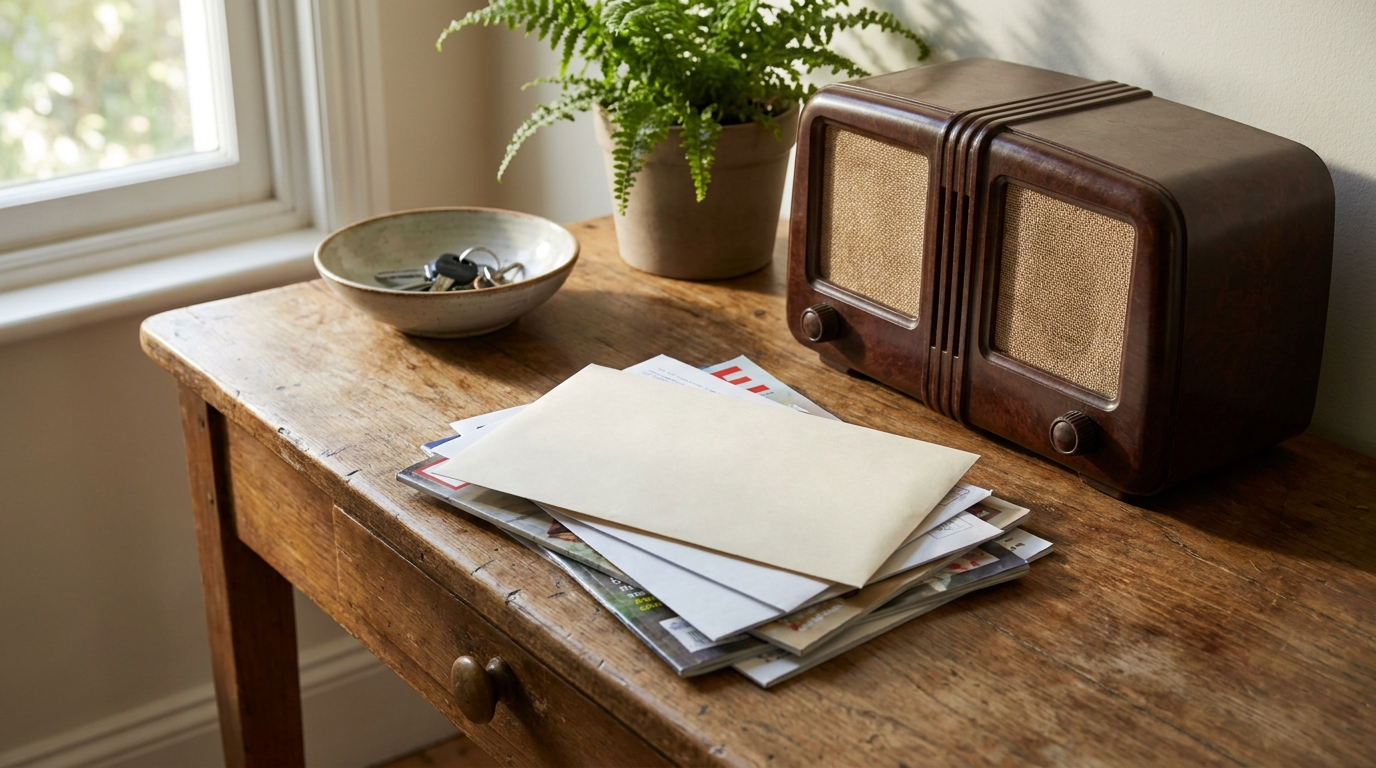
Every household in Germany owes the Rundfunkbeitrag, a mandatory fee that funds public broadcasting (ARD, ZDF, Deutschlandradio), and it applies whether or not anyone in the home owns a television, radio, or streaming setup. Most newly arrived families never fill out a form to start paying it: the Beitragsservice periodically compares its own records against the address data your Bürgeramt already holds, and if your household doesn't show up as an existing payer, a letter arrives asking you to confirm your situation within two weeks. Ignore it, and you get registered automatically, backdated to the date you moved in. The current rate is 18.36 euros a month, but it's actually billed quarterly (55.08 euros every three months) rather than month by month, and it's charged once per household no matter how many people, including children, live there. Families on Bürgergeld or a handful of other social benefits can apply for a full exemption, though Wohngeld alone usually doesn't qualify on its own. The one thing worth knowing before that gray envelope shows up: it isn't spam, and answering it costs far less than ignoring it.
The Official Rule
The Rundfunkbeitrag is a mandatory household fee that finances Germany’s public broadcasters, ARD, ZDF, and Deutschlandradio, covering everything from national news and children’s programming to regional culture and radio. It replaced the older GEZ system in 2013, and that switch matters more than it sounds: under GEZ, the fee was tied to owning a television or radio, so people without a set could opt out. Since 2013, the fee is tied to the dwelling itself, not the equipment inside it. Whether you own three televisions or none at all, if you have a registered residence in Germany, you owe the fee.
The current rate is 18.36 euros a month, unchanged since July 2021. It hasn’t gone up despite a recommendation from the KEF (the commission that assesses public broadcasters’ funding needs) to raise it to 18.94 euros, because the federal states never passed the legal change needed to implement that increase, and the matter is now with the Bundesverfassungsgericht (Federal Constitutional Court) at ARD and ZDF’s request. Until that’s resolved, 18.36 euros stands. Given that a court decision could move this number, it’s worth checking rundfunkbeitrag.de directly rather than trusting any figure, including this one, as permanently fixed.
The fee is charged once per household, not per person. A couple with three kids pays the same 18.36 euros a month as someone living alone, and a shared flat (WG) pays it once total, split however the flatmates agree, not once per resident. If you move into a WG where someone is already registered and paying, you don’t need to register separately: you apply for an exemption citing your flatmate’s Beitragsnummer (contribution number), and once approved, your own file gets closed. This mechanism catches a lot of newcomers off guard when they assume, reasonably, that a household bill works like a personal subscription.
Where things get genuinely surprising for new arrivals is how the fee finds you in the first place. Most families never sign up. Instead, the Beitragsservice runs a Meldedatenabgleich, a legally mandated data comparison between its own payer records and the resident registration data every Bürgeramt in the country already holds, including Munich’s KVR and district Bürgerbüros. This runs on a multi-year cycle rather than continuously, but it’s thorough: if an adult in your household can’t be matched to an apartment already registered as paying, the Beitragsservice sends a letter asking you to confirm your situation, either by returning a signed form or answering online, within two weeks. If you’re already covered, because a partner or flatmate pays, you report that and your personal data gets deleted from the process immediately. If you don’t respond at all, the Beitragsservice registers your household automatically, and backdates the charge to the date you actually moved in, not the date of the letter.
Registering yourself, rather than waiting to be caught by the Meldedatenabgleich, takes a few minutes on the “Wohnung anmelden” form at rundfunkbeitrag.de and avoids the anxiety of an unexpected letter arriving months into your new life in Munich. For payment, SEPA direct debit is what the Beitragsservice itself recommends, since it’s automatic and needs no attention once set up; bank transfer and standing orders (Dauerauftrag) work too. One detail that surprises people used to monthly subscriptions elsewhere: German law doesn’t actually offer monthly billing for the Rundfunkbeitrag. The default is quarterly in advance, 55.08 euros every three months, with semi-annual (110.16 euros) or annual (220.32 euros) as the other legal options.
| Billing frequency | Amount |
|---|---|
| Quarterly (default) | 55.08 € |
| Semi-annual | 110.16 € |
| Annual | 220.32 € |
Exemptions exist, but none of them are automatic, you have to apply. Families receiving Bürgergeld, Sozialhilfe, Grundsicherung im Alter und bei Erwerbsminderung, BAföG, or asylum-seeker benefits, among a few other categories, can apply for a full exemption with a copy of the relevant benefit notice, and it can be backdated up to three years from your application date. Wohngeld is a common source of confusion here: receiving it alone does not qualify you for exemption, only a separate hardship application does, and that only succeeds if your income clears the Bürgergeld threshold by less than the monthly fee itself. Separately, anyone with the “RF” mark on a disability certificate, indicating a qualifying degree of disability, pays a reduced rate of one-third, 6.12 euros a month, rather than a full exemption.
| Situation | Outcome |
|---|---|
| Bürgergeld / Grundsicherungsgeld | Full exemption, apply with your benefit notice, backdated up to 3 years |
| Sozialhilfe, Grundsicherung im Alter, BAföG, asylum-seeker benefits | Full exemption, apply with your benefit notice |
| Wohngeld alone | No automatic exemption, only a hardship application, and only if income clears the Bürgergeld threshold by less than 18.36 € |
| "RF" mark on a disability certificate | Reduced rate, 6.12 € a month, not a full exemption |
Two more situations worth knowing about even if they don’t apply to you yet. If you keep a second residence in Germany, a Nebenwohnung, while already paying at your main address, you can apply for an exemption on the second one, and applying within three months of moving in gets you a full backdated exemption rather than one starting the following month. And when a family eventually leaves Germany for good, deregistering your address at the Bürgeramt does not automatically close your Rundfunkbeitrag account, that requires a separate step through rundfunkbeitrag.de’s own “Abmelden” process, with proof of your Meldeamt deregistration attached.
What Real People Say
This section draws on established English-language expat guides and a shared-flat explainer covering the same experience.
The most consistent story across these guides is the letter itself. It arrives in a plain, official-looking envelope, often not long after a family completes their Anmeldung in Munich, and it looks enough like generic government mail that newly arrived families who don’t yet read German bureaucratic formatting sometimes assume it’s spam or a scam and throw it out. That’s described repeatedly as one of the more expensive mistakes a newcomer can make, since ignoring it doesn’t make the obligation disappear, it just adds reminder letters and eventually late fees on top of what you owed from the start.
The shared-flat mechanics come up often too, and for good reason: a lot of people moving to Munich for the first time land in a WG before finding their own place. The guides agree with the official rule here, one household pays once, and the practical advice is to sort out with flatmates early who’s the registered payer and to get that person’s Beitragsnummer in hand before applying for your own exemption, rather than assuming it happens automatically just because someone else in the flat is already paying.
Step by Step
- Understand that this applies to your household regardless of whether you own a TV, radio, or streaming device. The fee is tied to having a registered residence in Germany, not to any specific equipment.
- Register proactively at rundfunkbeitrag.de’s “Wohnung anmelden” form once your Munich Anmeldung is done, rather than waiting to see if a letter shows up later.
- If a Meldedatenabgleich letter does arrive, respond within two weeks. If someone in your household already pays, report their Beitragsnummer and your own file gets closed. If you ignore the letter, you’ll be registered automatically and billed retroactively to your move-in date.
- Set up SEPA direct debit if you want to stop thinking about it. The Beitragsservice recommends it, and it avoids the reminder letters that come with missed manual payments. Remember billing is quarterly (55.08 euros) by default, not monthly.
- If your family receives Bürgergeld or another qualifying benefit, apply for a full exemption with your benefit notice attached. It’s not automatic, and it can be backdated up to three years, so apply even if you’ve already been paying.
- If you only receive Wohngeld, check whether you qualify for the hardship exemption instead, which applies only if your income clears the Bürgergeld threshold by less than 18.36 euros a month.
- If you’re keeping a second home in Germany, apply for the Nebenwohnung exemption within three months of moving in to get it backdated rather than starting from the following month.
- When you eventually leave Germany for good, deregister with the Beitragsservice separately from your Bürgeramt Abmeldung, using the online “Abmelden” form and your deregistration proof, so any overpaid months get refunded.
FAQ & Common Pitfalls
Do we have to pay if we don't own a television or radio?
Yes. Until 2013 the fee was tied to owning a receiving device, which is why older expats and their German relatives still sometimes call it by the old name, GEZ. That system was scrapped: the Rundfunkbeitrag is now charged per dwelling, regardless of how many television sets, radios, smartphones, or laptops are actually inside it, and regardless of whether anyone in the household ever watches ARD or ZDF. Rundfunkbeitrag.de addresses this directly as one of the most common myths about the fee, and the answer is unambiguous: not owning a device is not grounds for exemption. The only way out is one of the specific exemption or reduction categories, not a lack of equipment.
We receive Bürgergeld, does that mean we're automatically exempt?
No, and this trips people up because the exemption is real but not automatic. You have to apply for it yourself, with documentation, through rundfunkbeitrag.de or by post, attaching a copy of your benefit notice showing your name, the type of benefit, and the period it covers. Bürgergeld (technically Grundsicherungsgeld now) qualifies, along with Sozialhilfe, Grundsicherung im Alter und bei Erwerbsminderung, BAföG, and asylum-seeker benefits, among others. Once approved, it can be backdated up to three years from when you apply, so it's worth applying even if you've already been paying for a while. Wohngeld is the one that catches people out: on its own, receiving Wohngeld does not qualify you for exemption. The only route for Wohngeld recipients is a hardship application, and that only works if your income exceeds the Bürgergeld income threshold by less than the monthly fee itself, 18.36 euros. If you're not sure which category you fall into, it's worth reading rundfunkbeitrag.de's own list before assuming either way.
We're keeping a second address in Germany, do we pay for both?
Not if you handle the paperwork. Since a 2020 change to the law, someone who already pays the Rundfunkbeitrag on their main residence (Hauptwohnung) can apply for an exemption on a secondary residence (Nebenwohnung), and the same applies to a spouse or registered partner if the couple pays jointly on the shared main home. The application needs either a Meldebescheinigung showing both addresses and their move-in dates, or a Zweitwohnungssteuer assessment as proof. Timing matters here: apply within three months of moving into the second home and the exemption is backdated to your actual move-in date; apply later and it only starts from the month after you submit it, meaning you'll have paid for months you didn't need to.
How do we close our Rundfunkbeitrag account when we leave Germany for good?
Deregistering your address at the Bürgeramt does not automatically close your Rundfunkbeitrag account, which surprises a lot of departing families. The two are separate systems. You need to go to rundfunkbeitrag.de, use the 'Abmelden' form, and select that you're moving permanently abroad, then provide your contribution number, your previous address, and your move-out date, along with proof of deregistration from your local Meldeamt (in Munich, that's the KVR or your district Bürgerbüro). Doing this by phone doesn't count, it has to go through the online form or a written submission by post. Once it's processed and backdated to your actual move-out date, any months you overpaid get refunded. One exception worth knowing: if someone else is staying behind in the apartment, that person needs to take over the registration in their own name instead, since the household itself still owes the fee as long as it's occupied.