
Finding an Apartment in Munich Without a Schufa History
Every newly arrived family starts with zero Schufa credit history, since it only builds once you register an address, open a bank account, and hold contracts like utilities or a phone plan, a process that takes 3 to 6 months to produce a usable score. That's a real problem in Munich specifically, where the market-active vacancy rate sits around 0.1 percent, one of the lowest of any German city, so most listings simply don't wait for you to build one. The realistic path in the meantime is a strong non-Schufa application packet: employment contract, recent payslips, bank statements, and a landlord reference if you have one, aimed at private landlords and furnished or short-term rentals, which are typically more flexible than large property management companies. Worth knowing directly: documented studies also show landlords respond less often to applicants with foreign-sounding names, a real headwind on top of the Schufa gap that's worth planning around rather than being blindsided by.
The Official Rule
There’s no way around the basic math: Schufa, Germany’s dominant credit bureau, has no history on you when you arrive, and it can’t have one, since a Schufa record only starts once you have the pieces that generate it: a registered address (Anmeldung), a German bank account, and ongoing contracts like a phone plan or utilities held in your own name. Once those are in place, a usable score typically takes 3 to 6 months to build, since Schufa is tracking your real payment behavior over time, not running a one-off check. Since 17 March 2026, you can register at meineschufa.de to check your own current score for free at any point, but checking a score you don’t have yet doesn’t create one faster.
This collides directly with how tight Munich’s rental market actually is. According to the CBRE-empirica-Leerstandsindex, a long-running, widely cited German vacancy-rate index, Munich’s market-active vacancy rate sits around 0.1 percent, one of the lowest of any city in the country alongside Freiburg and Frankfurt am Main, down from roughly 2 percent in the mid-2000s. In a market that tight, most listings simply don’t have the slack to wait for an applicant to build a credit history, which means the practical question isn’t how to get a Schufa report faster, it’s what you can substitute for one while you don’t have it.
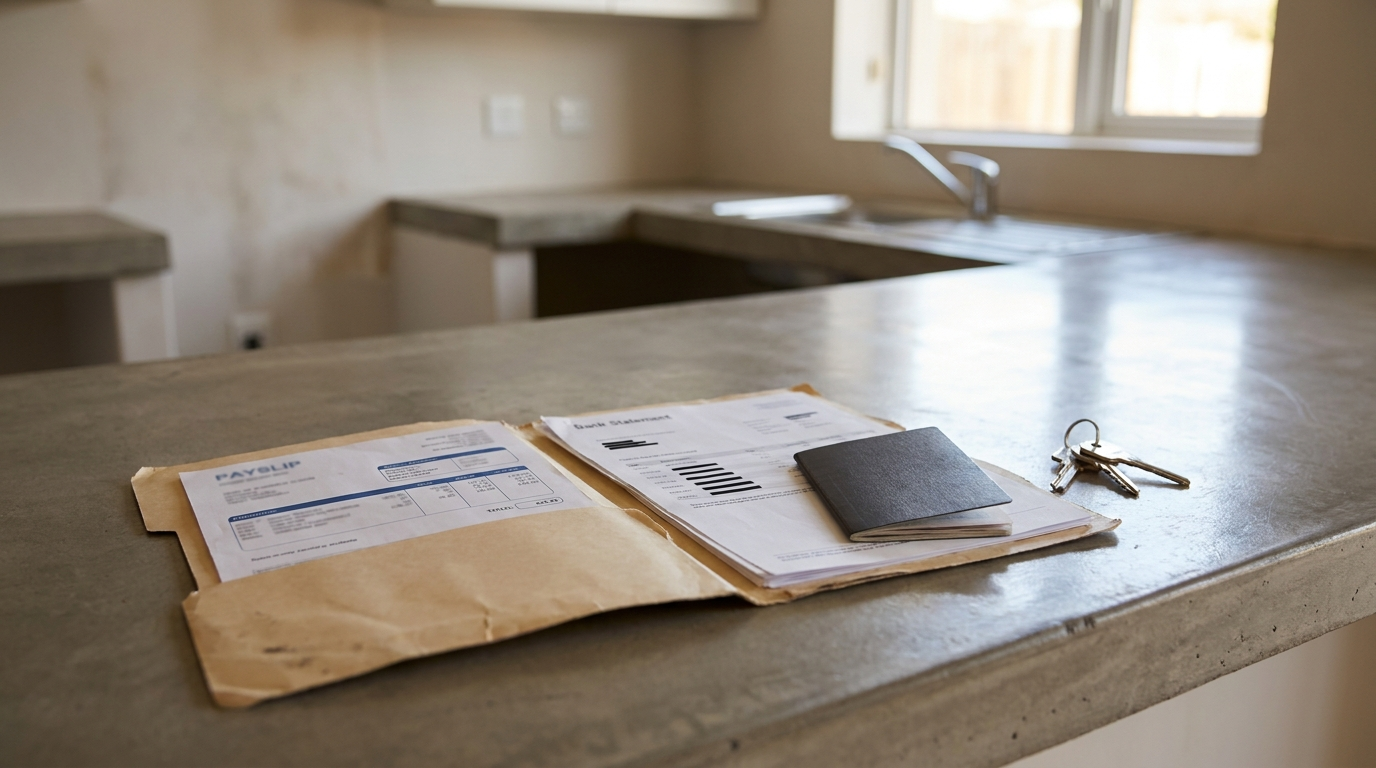
A strong non-Schufa application packet is the realistic path. Guides covering this consistently recommend the same core documents: your employment contract or a job offer letter, your most recent payslips, recent bank statements showing you can cover rent, your passport or visa, and a reference from a previous landlord if you have one anywhere in the world. Private landlords tend to be more flexible than large property management companies, since they’re evaluating you personally rather than running a standardized checklist. Furnished apartments and short-term rental platforms are also worth prioritizing early on, since their operators are generally used to housing people who haven’t built up German paperwork yet, and WG (shared flat) rooms can be more flexible than single-landlord apartment contracts for the same reason.
Worth knowing directly, not discovered the hard way: documented studies show landlords respond less often to applicants with foreign-sounding names. This isn’t a side issue for many SettledIn readers, it’s a real headwind that compounds the Schufa problem rather than a separate concern.
| Study | Comparison | Response/invitation rate |
|---|---|---|
| DeZIM Rassismusmonitor (2025) | German-sounding vs. MENA-origin names | 22% vs. 16% |
| DeZIM Rassismusmonitor (2025) | German-sounding vs. African-origin names | 22% vs. 17% |
| ADS study, Berlin/Leipzig/Nuremberg (2015) | No perceived migration background vs. perceived | 45.8% vs. 25.4% |
| ADS study, Berlin/Leipzig/Nuremberg (2015) | No visible Muslim/Jewish markers vs. visible | ~60% vs. ~18% |
What Real People Say
This section draws on established expat guides covering the same search.
The guides are consistent on one point: treating “no Schufa history” as functionally the same problem as “bad Schufa history” when it comes to a landlord’s first reaction, even though the two are legally and practically different. The advice that comes up repeatedly is to lead with the strongest available proof of income and stability rather than waiting to be asked, since a complete packet handed over proactively reads very differently to a landlord than an applicant who shows up with nothing and explains the gap only when questioned. Multiple guides also specifically flag WG rooms and furnished short-term rentals as the realistic entry point for a family’s first few months, with a move to a standard unfurnished lease once a Schufa history and local references exist.
Step by Step
- Get your Anmeldung, a German bank account, and at least one contract (phone or utilities) set up as early as possible. This is what starts your Schufa history building, even though it won’t help your very first search.
- Build a non-Schufa application packet before you start viewing apartments: employment contract or job offer, recent payslips, bank statements, passport or visa, and any landlord reference you can get, even from abroad.
- Prioritize private landlords over large property management companies when you can identify which is which, they tend to have more room to evaluate an application personally.
- Consider furnished apartments, short-term rental platforms, or WG rooms as your first Munich home, they’re generally more flexible about missing Schufa history than a standard long-term unfurnished lease.
- If it’s realistic for your budget, ask directly whether a few months’ rent paid upfront or a guarantor (Bürge) could substitute for a Schufa check. Not every landlord will accept this, but it’s worth asking rather than assuming.
- Once you have 3 to 6 months of German bank, phone, and utility history, check your score for free at meineschufa.de before your next application, so you know what a landlord will actually see.
FAQ & Common Pitfalls
Is it true landlords respond less to applicants with foreign-sounding names, or is that just a feeling people have?
It's documented, not just a perception. The 2025 DeZIM Rassismusmonitor, a real testing study using matched applications that differ only by applicant name, found German-sounding names received invitations to view a listing 22 percent of the time, compared to 16 percent for Middle Eastern and North African (MENA) names and 17 percent for African-origin names. An earlier 2015 study by the Antidiskriminierungsstelle des Bundes in Berlin, Leipzig, and Nuremberg found an even sharper gap using a different method: applicants without a perceived migration background received confirmations about 45.8 percent of the time, versus 25.4 percent for applicants with one, and roughly 18 percent for applicants with visibly Muslim or Jewish markers in their profile. The exact numbers vary by study and city, but the direction is consistent across all of them.
How exactly does a Schufa history start building, and is there anything I can do to speed it up?
It starts automatically the moment you have the basic building blocks in place: a registered address (Anmeldung), a German bank account, and ongoing contracts like a phone plan or utilities in your own name. There's no application to fill out to start it, and no real way to speed up the underlying 3 to 6 month timeline it typically takes to build a usable score, since Schufa is reporting on your actual payment history as it accumulates, not a one-time check. The most useful thing you can do isn't acceleration, it's sequencing: get your Anmeldung, bank account, and a phone contract set up as early as possible so the clock starts running while you're still searching for a place.
Can I just pay a few months' rent up front to skip the Schufa requirement entirely?
Some landlords will accept this as a substitute, especially private landlords rather than large management companies, but it isn't a universal workaround and depends entirely on what the individual landlord is willing to negotiate. It's more realistic as one part of a broader non-Schufa application packet (employment contract, payslips, bank statements, a guarantor if you have one) than as a single silver bullet, and it's worth raising directly rather than assuming it will be accepted.