
Berlin's 53 Percent Fiber Coverage Number Hides a Bigger Gap: Check Before You Sign a Lease
Berlin's own Senate reported 53.4 percent fiber (Glasfaser) coverage at the end of 2025, comfortably ahead of the national average of 42.9 percent, but that headline number measures cable laid within about 30 to 100 meters of a building, not how many people are actually online over fiber, and the Senate doesn't publish the real connection rate. Coverage is also sharply uneven by district: Mitte sits at 73 percent while Spandau trails at just 32.7 percent, according to the Senate's own December 2025 figures, and Treptow-Köpenick lags as well. New construction (Neubau) gets fiber as standard practice now, while an older Altbau building next door can still be stuck on VDSL depending on whether a provider has judged the retrofit worth the cost. The practical fix before signing a lease: check the free official Gigabit-Monitor Berlin map for the general area, then confirm the exact address directly with Deutsche Telekom, Vodafone, and 1&1, since all three run separate networks and separate address checkers. Even where a provider confirms fiber is technically available, Berlin's population density means actual technician appointments for the in-home installation commonly run months behind the paperwork, not weeks, so budget for that gap too.
The Official Rule
Berlin’s own government reports real, measurable progress on fiber. According to a 2026 press release from the Berlin Senate, fiber (Glasfaser) coverage reached 53.4 percent of households and business premises by the end of 2025, up 12.6 percentage points in a single year and comfortably ahead of the national average of 42.9 percent. Roughly 1.2 million locations across the city now have a fiber connection available, with more than 270,000 added in 2025 alone, and the Senate’s stated target is complete coverage by 2028.
That headline number is real, but it measures something narrower than most newcomers assume. Independent reporting from the Berliner Zeitung points out that the 53.4 percent figure describes “homes passed”, meaning fiber cable has been laid within roughly 30 to 100 meters of a building, not that any specific apartment is wired inside, and certainly not that its residents are actually online over fiber. The Senate doesn’t publish the real connection rate (Buchungsquote), and the same reporting notes that actual active usage almost certainly represents only a fraction of what’s technically possible nearby. In other words: a district being “covered” on the map doesn’t tell you whether your specific building has a live connection you can order today.
| District | Fiber coverage (homes passed) |
|---|---|
| Mitte | 73%, one of the highest in the city |
| Lichtenberg | Also among the leading districts |
| Citywide average | 53.4% |
| Treptow-Köpenick | Lagging significantly behind the average |
| Spandau | 32.7%, the lowest reported |
This unevenness is exactly why checking a district’s general reputation is a poor substitute for checking the exact address. Berlin’s own Gigabit-Monitor, a free tool run directly by the Senate, maps gigabit and fiber coverage down to individual neighborhoods (Planungsräume) using combined data from the providers actually doing the building. It’s the right first stop for a general sense of an area, showing separate maps for overall gigabit-capable coverage (already above 96 percent citywide) and fiber-specific coverage (the much lower, more uneven number). But because it aggregates provider data at a neighborhood level, it’s not a substitute for an address-specific check once you have a real apartment in mind.
For that, you need to check the providers directly, and Berlin genuinely has three of them building separate, non-identical networks. Deutsche Telekom’s own Berlin fiber page states a target of more than 1.167 million households in Berlin and links to its own address-based availability check. Vodafone runs a separate Berlin-specific expansion page with its own checker, and as of mid-2026 a given Berlin address might come back with DSL up to 250 Mbit, cable internet up to 1,000 Mbit, or genuine fiber up to 1,000 Mbit from Vodafone specifically, depending entirely on that address, not the general area. 1&1 Versatel maintains its own Berlin rollout page and availability check as well, with fiber currently live in specific pockets like parts of Buckow, Charlottenburg, Gesundbrunnen, and Lankwitz, again address by address. None of the three networks fully overlaps, so a “no” from one provider genuinely doesn’t mean “no” from the others, and checking only one is how people end up assuming a building has no fiber option when a competitor’s network actually reaches it.
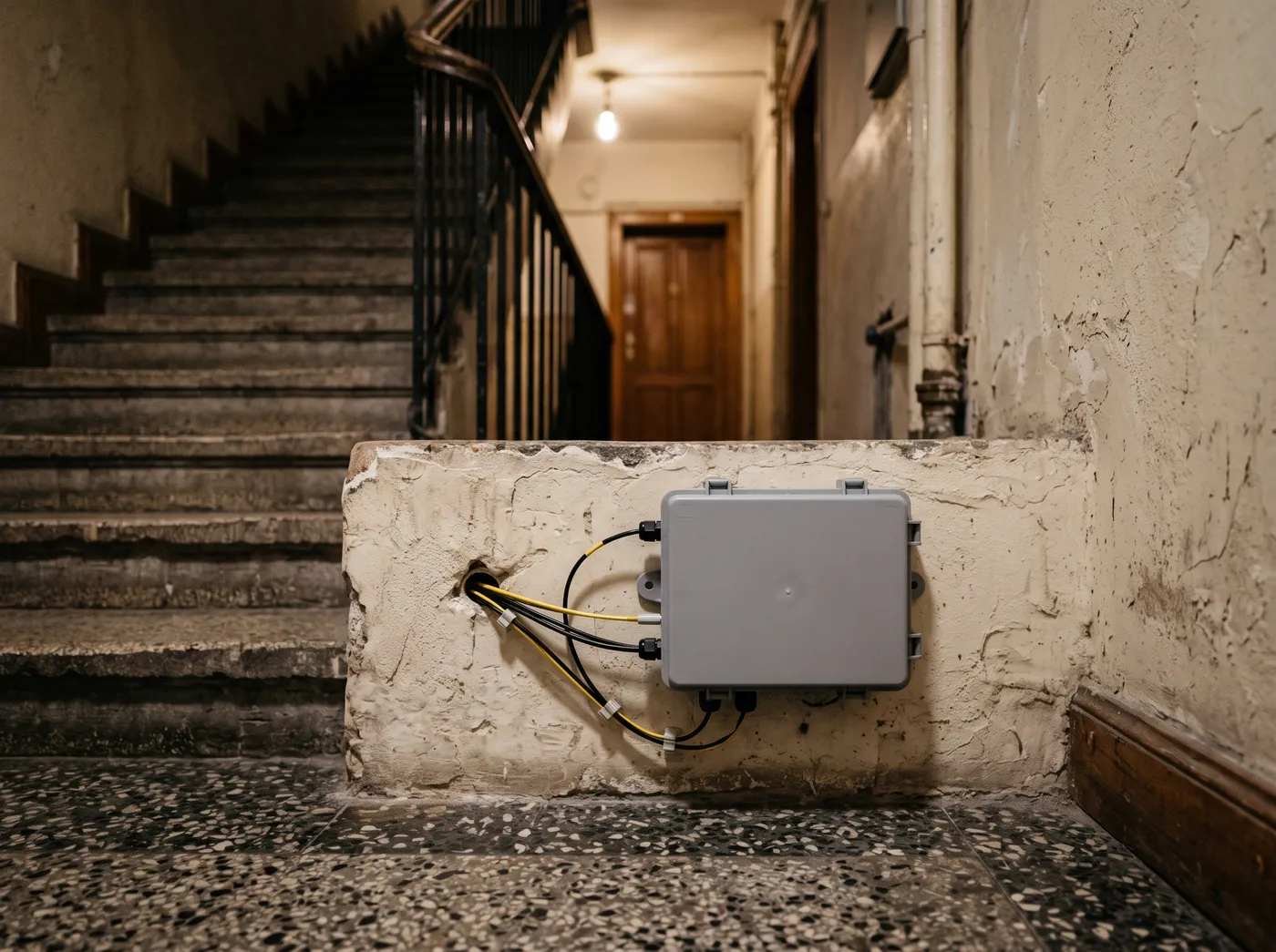
Whether the building itself is old or new genuinely changes the odds, though it’s not an absolute rule. New construction (Neubau) gets fiber built in as standard practice now, effectively a given from day one. Older Altbau buildings depend on a retrofit decision instead, and the legal ground has shifted in tenants’ favor: since Germany’s 2021 telecommunications law reform (TKMoG), a landlord can only refuse consent for fiber installation for a genuinely valid reason, not simply out of preference or inertia. A more recent 2026 amendment to the TKG goes further, introducing a Vollausbaurecht (full building-wiring right) under the new §144 TKG, letting a network operator wire an entire building at once from basement to individual unit, with the tenant-facing provisioning fee capped at 60 euros a year and 540 euros total for buildings wired by the end of 2027. In practice, though, whether a provider actually commits to a specific Altbau building still comes down to its physical conditions (existing conduit space, distance from the nearest street cabinet) and whether enough neighbors in the same building or street have pre-signed up, which is exactly why an Altbau apartment can sit directly next to a fully wired Neubau block and still be stuck on VDSL for now.
Even a confirmed “yes” on availability doesn’t mean a fast connection, and Berlin’s density makes this a real, recurring problem rather than an edge case. Providers commonly only commit to building out a given street once a demand-bundling threshold is reached, often cited around 30 to 40 percent of addresses pre-signing up before construction starts. Once the street-level infrastructure exists, getting an actual technician appointment for the in-home portion, running the line into the unit and installing the terminal box (ONT), is where real delays tend to show up: documented waits of two and a half months or more after ordering are common in online provider-support communities, and in problem cases the wait has stretched toward a year, often because contractor capacity in a high-demand, densely built city like Berlin simply can’t keep pace with order volume.
What Real People Say
The recurring pattern in provider-support forums (Telekom Hilft, O2’s community, and independent fiber forums) isn’t that fiber orders get rejected. It’s that they get accepted, confirmed as technically available, and then sit for weeks or months without a technician appointment, often because the on-the-ground construction contractor hasn’t properly logged the street-level work as complete in the provider’s own system, so the provider genuinely doesn’t know your specific address is ready yet even though the cable outside is already in the ground.
The advice that comes up again and again from people who’ve been through it: order as early as possible relative to your move-in date, don’t assume “available” on a checker means “installed within weeks”, and if the appointment goes quiet for more than a few weeks, call and ask specifically whether the street-level construction has been marked complete in their system, since that’s the step that most often gets stuck.
Step by Step
- Start with the free official Gigabit-Monitor Berlin to get a general sense of whether your target neighborhood is well served or a known lagging area, understanding it shows aggregated, neighborhood-level data, not a single-address answer.
- Check the exact address separately with Deutsche Telekom, Vodafone, and 1&1, since all three run different networks in Berlin with different footprints, and a “no” from one doesn’t mean “no” from the others.
- If the building is Altbau, ask the landlord directly whether a fiber retrofit has already happened or been requested, since landlord consent can generally only be refused for a valid reason, but physical building conditions still decide whether a provider will actually commit.
- Don’t treat a confirmed “yes” on availability as a guarantee of a fast connection, ask the specific provider for a realistic installation timeline, not just a coverage confirmation, especially if you have a fixed move-in date.
- If fiber genuinely isn’t available yet at your target address, ask what non-fiber speeds are realistically achievable there (VDSL or cable) before ruling the location out entirely, since a non-fiber connection can still be workable depending on your household’s actual needs.
Compliance Note
This page explains general patterns in Berlin’s fiber infrastructure coverage and provider rollout as of mid-2026. It is not a guarantee of availability, installation timing, or pricing at any specific address. Before signing a lease, confirm current, address-specific fiber availability and realistic installation timelines directly with Deutsche Telekom, Vodafone, 1&1, or another provider serving Berlin.
FAQ & Common Pitfalls
Berlin says 53.4 percent fiber coverage. Does that mean my building already has it?
Not necessarily. That Senate figure describes homes passed, meaning fiber cable has been laid within roughly 30 to 100 meters of the building, not that any specific unit is wired inside or that anyone there is actually using fiber. Berlin's Senate doesn't publish the real take-up rate, and independent reporting on the figure notes that actual active fiber connections are only a fraction of what the headline percentage suggests. A citywide average also tells you nothing about your specific street, which is why checking the exact address matters more than the general statistic.
How do I actually check whether fiber is available at a specific Berlin apartment we're considering?
Start with the free, official Gigabit-Monitor Berlin, run directly by the Senate, which maps gigabit and fiber coverage down to neighborhood level using data from all providers combined, a useful first pass to see whether an area is generally well served or a known gap. For a firm answer at the exact address, though, you need to check each provider separately: Deutsche Telekom, Vodafone, and 1&1 all operate their own fiber networks in Berlin and each runs its own address-specific availability checker, since none of the three cover the whole city and their footprints don't fully overlap.
We're looking at an Altbau apartment. Does that automatically rule out fiber?
No, but it does mean the answer depends on that specific building rather than a general rule. New construction (Neubau) gets fiber as standard practice now, effectively built in from the start. An older Altbau building has to be retrofitted, and since Germany's 2021 telecommunications law reform (TKMoG), a landlord can only refuse fiber installation consent for a genuinely valid reason, not simply out of preference. In practice, though, whether a provider actually commits to the retrofit still depends on the building's physical conditions, existing conduit space, and whether enough neighbors in the same building or street have also signed up, so an Altbau building can sit right next to a fully wired Neubau block and still be running on VDSL.
If a provider confirms fiber is available at our address, how long until we're actually online after moving in?
Longer than the paperwork suggests, in a lot of real cases. Providers typically only commit to building out a given street once enough households have pre-signed up (a demand-bundling threshold commonly cited around 30 to 40 percent), and even once the street-level cable is in place, getting an actual technician appointment for the in-home installation, running the line to the unit and installing the terminal box, has documented waits of two and a half months or more in normal cases, occasionally stretching toward a year when things go wrong. In a densely built, high-demand city like Berlin, contractor capacity is a genuine bottleneck, so if reliable internet matters on a fixed timeline, ask the specific provider for a realistic installation date before you sign, not just a yes or no on availability.