
Vattenfall, GASAG, or Stromnetz Berlin? Registering Your First Electricity and Gas Is Still the Tenant's Job
If you've just moved into a Berlin apartment with its own meter and haven't signed a contract yet, registering electricity and gas is genuinely your job as the tenant, not your landlord's, exactly as Vattenfall's own customer FAQ states directly. Berlin splits this across three separate companies rather than one combined utility: Vattenfall Europe Sales GmbH is the region's electricity Grundversorger (default basic supplier), GASAG is the region's gas Grundversorger, and Stromnetz Berlin GmbH is the electricity network operator, the company that owns the physical grid and coordinates meter readings, one you'll rarely deal with directly unless something technical comes up. To register with any supplier you'll need your new address, the move-in date, the meter number (Zählernummer) printed on the meter itself, and ideally the 11-digit Marktlokations-Identifikationsnummer (MaLo-ID) from the previous tenant's last bill or your landlord. One genuinely important recent change: since 6 June 2025, Vattenfall no longer accepts retroactive electricity sign-ups or cancellations, so register before or right at key handover, not weeks later, while GASAG still lets you choose a gas supplier retroactively for up to six weeks after handover. Forget entirely and you're not left without power or heat, both Grundversorger step in automatically from day one, though as of April 2026 Vattenfall's own Grundversorgung tariff still runs 37.93 cents per kWh gross, genuinely more than most market tariffs you could actively choose instead.
The Official Rule
Moving into a Berlin apartment and assuming your landlord will quietly handle electricity, or worrying that you’re somehow supposed to coordinate through the Hausverwaltung, are both genuinely common assumptions, and both are wrong. Registering electricity and gas for an apartment with its own meter is your job as the tenant. Vattenfall’s own FAQ on registering electricity is direct about it: “Für die Stromanmeldung sind Sie selbst verantwortlich”, for registering electricity, you’re responsible yourself. Nobody is going to do this for you automatically.
What trips up a lot of newcomers, especially anyone who’s lived somewhere with a single combined municipal utility, is that Berlin splits this job across three separate companies instead of one.
| Company | Role | When you deal with them directly |
|---|---|---|
| Vattenfall Europe Sales GmbH | Electricity Grundversorger (default basic supplier), also one of many market suppliers you can pick | Registering your electricity contract and paying your electricity bill |
| GASAG | Gas Grundversorger (default basic supplier), branded "ERDGAS Komfort" as its Grundversorgung tariff | Registering your gas contract, if your unit has its own gas connection or Gasetagenheizung |
| Stromnetz Berlin GmbH | Electricity network operator (Netzbetreiber), owns the physical grid | Rarely directly, mainly for meter installation/replacement, annual meter readings, or if you don't know your MaLo-ID |
Vattenfall Europe Sales GmbH is Berlin’s regional electricity Grundversorger, confirmed directly on Stromnetz Berlin’s own page about moving in, moving out, and switching suppliers: if you don’t actively choose a supplier, you default to “dem regional zuständigen Grundversorger, derzeit die Vattenfall Europe Sales GmbH.” GASAG plays the same role for gas, its own site states plainly, “In Berlin ist GASAG der Grundversorger.” Both companies also sell competing market tariffs on top of their Grundversorgung role, so signing up with Vattenfall or GASAG doesn’t automatically mean you’re stuck with the more expensive default rate.
Stromnetz Berlin GmbH is a genuinely different kind of company, and one you’ll rarely need to contact yourself. It owns and maintains the physical electricity grid across the city, installs and replaces meters, and coordinates the annual meter reading (Zählerablesung) that every household needs once a year. To register your Entnahmestelle (withdrawal point) for a new electricity supply, Stromnetz Berlin’s own page explains you need the address, the meter number, and the 11-digit Marktlokations-Identifikationsnummer (MaLo-ID). In practice, though, your chosen supplier (Vattenfall or otherwise) handles this registration on your behalf as part of signing you up, you don’t normally file anything with Stromnetz Berlin yourself unless you genuinely can’t find your MaLo-ID and need to look it up directly, or you have a technical issue with the meter itself.
What you’ll actually be asked for when registering with a supplier is short. According to both Vattenfall’s own registration FAQ and GASAG’s registration page, you need your name and new address, the planned move-in date, the meter number (Zählernummer) printed directly on the meter, the current meter reading (Zählerstand), and, if you have it, the MaLo-ID. If you don’t know the MaLo-ID yet, both companies say you can supply it later, but it’s worth asking your landlord or the previous tenant for it early, since it’s usually on the last energy bill for the unit.
A genuinely current detail worth knowing: the rules around timing recently tightened for electricity, but not for gas. Vattenfall’s own FAQ states that “seit dem 6. Juni 2025 für Stromverträge keine rückwirkenden An- und Abmeldungen mehr zulässig sind”, since 6 June 2025, retroactive electricity sign-ups and cancellations are no longer accepted at all. That means you genuinely need to register before or right at your Schlüsselübernahme (key handover), not weeks afterward. Gas is more forgiving: GASAG’s own page recommends registering around six weeks before your planned move-in date for a smooth transition, but notes you can generally still choose your gas supplier retroactively up to six weeks after the actual handover if you genuinely forgot.
Forgetting entirely doesn’t leave you without power or heat, but it does put you on the more expensive default rate. Both suppliers confirm that if you never actively register, you’re automatically supplied by the local Grundversorger from day one, Vattenfall for electricity, GASAG for gas, and you can switch to a chosen tariff at any point afterward. That fallback isn’t cheap, though: according to Vattenfall’s own newsroom announcement, the Grundversorgung Basis tariff’s gross Arbeitspreis fell to 37.93 cents per kWh from 1 April 2026, a 6.46 cent cut that saves an average Berlin household (2,200 kWh/year) about 112 euros a year, a 10.12 percent decrease. Even after that cut, it’s still generally pricier than an actively chosen market tariff, so the Grundversorgung fallback is a genuine safety net, not a good long-term plan.
If you don’t yet have German Schufa history, this doesn’t block your basic supply. Germany’s Energy Industry Act (EnWG) obliges the Grundversorger, Vattenfall and GASAG in their basic-supply role, to supply every household regardless of credit history. If you’re instead applying for a specific market tariff with either company or a competitor, that contract can involve a Bonitätsprüfung (credit check), and if you don’t yet have a German credit record, providers may ask for Vorauskasse (prepayment) or a security deposit as an alternative to a straight credit approval, a separate commercial decision from your basic legal right to supply.
What Real People Say
Tenants new to Berlin describe the same initial confusion again and again: assuming that because the building already has power, someone else must be handling the contract, only to get a letter weeks later showing they’ve been billed at the Grundversorgung rate the entire time without ever actively choosing it. The recurring advice from people who’ve been through it: register with a supplier before you even get the keys if you can, since you’ll need the meter number and MaLo-ID anyway, and asking the outgoing tenant or the Hausverwaltung for these numbers a few days before handover avoids a scramble afterward.
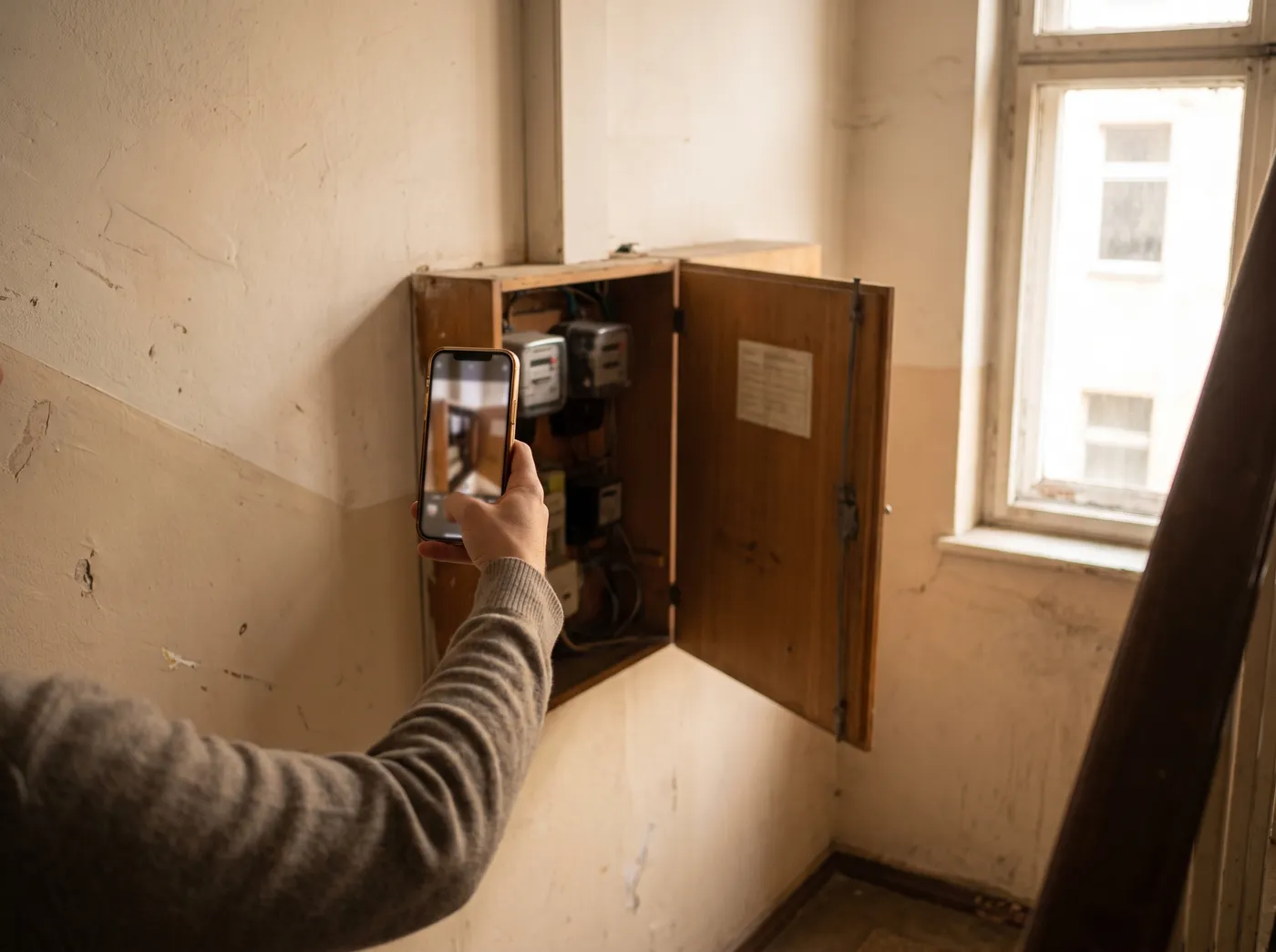
A tip that comes up often enough to be worth repeating: photograph the meter reading, ideally with a timestamp, the moment you get the keys, before any furniture blocks access to it. Tagesspiegel’s own consumer advice column makes exactly this recommendation to Vattenfall customers specifically to avoid billing disputes later, since a documented reading at handover is the clearest evidence if your first bill ever looks wrong.
Step by Step
- Ask your landlord or the outgoing tenant for the meter number (Zählernummer) and, if possible, the MaLo-ID a few days before your Schlüsselübernahme, both are usually on the unit’s last energy bill.
- Register with an electricity supplier, Vattenfall or a market competitor, before or right at key handover. Since 6 June 2025, Vattenfall no longer accepts retroactive electricity sign-ups, so don’t wait.
- Register gas separately with GASAG or another supplier, ideally around six weeks before your move-in date, gas still allows retroactive registration up to six weeks after handover if you’re late.
- Photograph the meter reading (Zählerstand) the moment you get the keys, this documented reading protects you if a later bill looks wrong.
- If you genuinely don’t register in time, you’ll default to Vattenfall/GASAG’s Grundversorgung tariff automatically, not a power cut, but plan to actively switch to a chosen tariff once you’re settled in, since the fallback rate (37.93 cents/kWh gross as of April 2026) is usually more than a market tariff.
- If you don’t yet have a German Schufa record, know that your basic supply is legally guaranteed regardless, credit checks and prepayment requirements only apply if you’re chasing a specific market tariff, not the Grundversorgung fallback itself.
Compliance Note
This page explains the general framework for registering electricity and gas as a tenant in Berlin, current as of mid-2026. It is not legal or financial advice. Registration rules, tariffs, and prices can change, confirm your specific situation directly with Vattenfall, GASAG, or Stromnetz Berlin before relying on any figure here.
FAQ & Common Pitfalls
We just signed a Berlin lease and haven't picked an electricity supplier yet. Is this our landlord's job to sort out?
No, genuinely not. Vattenfall's own customer FAQ states plainly that you're responsible for your own electricity registration, not your Hausverwaltung or landlord. The one exception is a narrow fallback: if you were told about it in advance and still haven't signed your own contract by the actual handover date, your landlord can pass your basic data to Vattenfall so you're not left without power, but that's a safety net, not a substitute for registering yourself.
Why are three different companies involved, Vattenfall, GASAG, and Stromnetz Berlin, for something that feels like it should be one bill?
Because Berlin splits the job rather than bundling it into one combined municipal utility. Vattenfall and GASAG are the companies you actually sign a contract with and pay, they're the Grundversorger, the region's default electricity and gas suppliers respectively, and you can also choose a different market supplier through either of them or a competitor. Stromnetz Berlin GmbH is a separate company that owns the physical electricity grid and coordinates meter installation and readings, you generally never contact them directly for a standard registration, your chosen supplier handles that behind the scenes using your meter number and MaLo-ID.
What actually happens if we don't get around to registering before we move in?
You're not left without electricity or gas. From day one, Vattenfall (electricity) and GASAG (gas) automatically supply you as your region's Grundversorger, this is a legal right regardless of your credit history. It usually costs more than a chosen market tariff though, as of April 2026 Vattenfall's own Grundversorgung Basis tariff runs 37.93 cents per kWh gross, so it's worth actively picking a tariff once you're settled rather than staying on the fallback indefinitely.
Can we still register our electricity retroactively if we genuinely forget for a couple of weeks after moving in?
For electricity, no, not anymore. Since 6 June 2025, Vattenfall's own terms confirm retroactive electricity sign-ups and cancellations are no longer accepted, so register on or before your Schlüsselübernahme (key handover), not after. Gas works differently: GASAG's own guidance says you can generally still choose your gas supplier retroactively for up to six weeks after the handover date, though registering around six weeks before your move-in date is genuinely the smoother approach for either utility.
We don't have German Schufa history yet. Can Vattenfall or GASAG refuse to supply us?
Not in their role as Grundversorger, no. Germany's Energy Industry Act guarantees basic supply regardless of your credit history, so Vattenfall and GASAG must supply you in that capacity. If you're instead applying for a cheaper market tariff with them or a different provider, that company can run a Bonitätsprüfung (credit check) and decline or ask for Vorauskasse (prepayment) or a deposit if you don't have a German credit record yet, that's a separate commercial decision from your basic right to supply.