
What You're Actually Allowed to Drill, Hang, and Plant as a German Renter
German rental law treats a handful of drill holes as ordinary wear: hanging pictures, mirrors, curtain rods, and shelves generally needs no landlord permission, and you don't have to fill those holes back in when you move out. That changes once the number gets excessive. A Wuppertal court ruled in 2020 that 126 holes plus heavy-duty latex paint counted as genuine damage to the building's structure rather than normal use, and ordered professional repair regardless of what the lease said about cosmetic repairs. Balconies come with their own specific rules: sun and privacy screens up to railing height need no landlord sign-off, satellite dishes can't be blanket-banned but come with real conditions attached, grilling is generally allowed within the country's standard quiet hours, and anything that actually drills into the balcony's structure needs permission first. Once you know what you're allowed to do, matching your dowel to your wall matters more than which store you buy it from: solid brick or concrete takes a different anchor than hollow drywall entirely. The three biggest Baumarkt chains aren't structured alike either, Hagebau is a retailer-owned cooperative dating to 1964, while OBI is majority owned by the Tengelmann Group's Haub family.
What a Handful of Drill Holes Actually Costs You
Germany’s rental law draws a real distinction between using an apartment and damaging it, and drilling holes to hang things sits mostly on the “using it” side. Pictures, mirrors, curtain rods, and shelves are exactly what a rented wall is for, and putting up a reasonable, evenly spread number of them generally doesn’t require asking your landlord first, and doesn’t create an obligation to patch every hole before you leave.
That protection has a limit, and the case that keeps getting cited in tenant-law guidance is a 2020 ruling from the Wuppertal Landgericht: a departing tenant had left 126 drill holes behind, on top of heavy-duty latex paint on the walls. The court found that this went well past ordinary wear and constituted real damage to the building’s substance, ordering professional repair regardless of whether the lease’s cosmetic-repairs clause was even valid. Broader tenant-rights guidance puts the practical, unofficial line somewhere around 10 to 20 holes per room for normal furnishing purposes, below that, don’t expect a landlord to have a real claim; well above it, especially if the holes are messy or the dowels were broken off rather than removed properly, expect one.
If you do need to fill holes before handing back the keys, the method matters. Cutting a dowel flush and painting over it is not a real repair, and the outline usually stays visible. The dowel needs to come out entirely, the hole gets cleaned and filled with a fine spackling compound, sanded once dry, and repainted to match, at which point it should genuinely disappear.
| Situation | Landlord permission needed? |
|---|---|
| A reasonable number of picture, mirror, or shelf holes | No |
| Excessive, messy, or damaged holes (the Wuppertal-style case) | Repair required regardless of lease terms |
| Balcony privacy or sun screen within railing height | No |
| Satellite dish (conditions apply: cost, professional install, building code) | Generally cannot be blanket-refused |
| Grilling on the balcony, within standard quiet hours | No |
| Drilling into the balcony's own structure | Yes, ask first |
The Balcony Has Its Own Rulebook
A balcony gets treated differently from an interior wall, since it’s shared exterior structure rather than something fully inside your rented space. A privacy or sun screen that stays within the height of the balcony railing needs no landlord sign-off at all, and the same goes for a freestanding umbrella in a weighted base. The moment a screen extends above the railing, or involves a structural change that can’t simply be removed at move-out, contacting the landlord first becomes the safer move.
Satellite dishes sit in a genuinely more legally protected spot than most people expect: a landlord cannot issue a blanket ban, though the right comes with real conditions attached. If the building already has a shared satellite dish or a broadband connection capable of delivering the same channels, that condition alone can justify a refusal. Where it doesn’t apply, the installation still needs to be at the tenant’s own cost, mounted by a qualified professional rather than DIY, and compliant with local building rules, at which point the landlord is generally expected to allow it. Grilling follows a simpler pattern: it’s broadly allowed on a balcony, provided the standard quiet hours, 10pm to 6am plus all day on Sundays and public holidays, are respected and neighbors aren’t left dealing with unreasonable smoke.
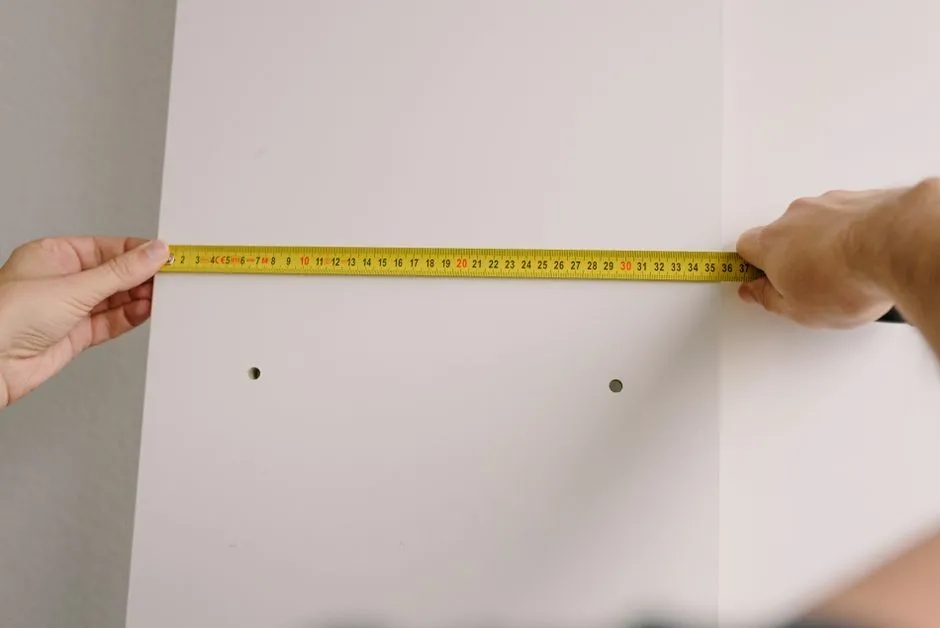
Photo by Ksenia Chernaya on Pexels
Match the Dowel to the Wall, Not the Other Way Around
The single most common reason a newly hung shelf or curtain rod fails isn’t a bad drill or a cheap screw, it’s the wrong dowel for the wall behind the plaster. Solid brick, concrete, and similarly dense materials take a standard expansion or all-purpose anchor, which grips by pressing outward against solid material. Drilling into concrete produces a fine, light grey dust, while brick or fired clay block produces a noticeably reddish dust, a quick, free way to check what you’re actually dealing with mid-job. Hollow walls, drywall partitions, chipboard, or plywood panels common in newer interior walls, need the opposite approach entirely: a Hohlraumdübel (cavity anchor) or spring-toggle type that expands or folds out behind the panel, since there’s no solid material for a standard anchor to bite into. A universal anchor exists specifically to cover both cases when you’re not sure which wall type you’re facing, a reasonable default to keep a few of on hand.
The Three Big Chains Aren’t Built the Same Way
Once you know what you’re shopping for, which Baumarkt you walk into matters less than most newcomers assume, but the ownership behind each one is a genuine point of difference rather than trivia. Hagebau operates as a retailer-owned cooperative founded in 1964, held together by roughly 350 independent, mid-sized wholesalers and retailers rather than a single parent company, which is part of why individual Hagebau stores can feel more locally run than a typical chain. OBI, by contrast, is majority owned by the Tengelmann Group, controlled by the Haub family, whose stake has grown from an original 63 percent to 74 percent since 2007, with the Lueg Group holding the remaining minority share. Bauhaus runs a centralized structure out of its Swiss headquarters and, since it isn’t publicly listed, doesn’t disclose detailed financials the way a stock-market company would.
| Chain | Ownership structure | What that means for you |
|---|---|---|
| Hagebau | Retailer-owned cooperative, ~350 independent members, founded 1964 | Store range and policy can vary more by location than at a single corporate chain |
| OBI | 74% owned by Tengelmann Group (Haub family), 26% Lueg Group | Nationally standardized, consistently one of the top-rated chains for selection and reviews |
| Bauhaus | Privately held, centralized, headquartered in Switzerland | Strongest presence in western Germany rather than nationwide |
None of the three wins across every category. An independent price-performance comparison scored Hagebau close behind the category leader on overall value, while OBI drew the strongest customer reviews and widest product selection in the same study, and cheapest isn’t always the same store for every item, the price gap on an identical branded power drill between the cheapest and most expensive of the major chains has been measured at over 37 percent for the exact same product.
What Real People Say
IamExpat’s own guide to a first Baumarkt trip makes a point that’s easy to miss until you’re standing in the aisle: German DIY culture treats a Saturday Baumarkt trip as close to a national pastime, and the vocabulary is specific enough that walking in without knowing the German name for the exact dowel, screw, or fitting you need turns a quick errand into a long one. The same guide’s practical advice on finding staff, a firm, audible “Entschuldigung” rather than hovering, and waiting until they’ve finished with the customer already in front of you, holds up as generally good etiquette across German retail, not just hardware stores specifically.
Step by Step
- Figure out what’s behind the wall before you buy dowels. A quick test drill tells you from the color of the dust, grey for concrete, reddish for brick, whether you need a standard anchor or a cavity dowel for hollow drywall.
- Keep your drilling to a reasonable, evenly spread number of holes per room. Ordinary furnishing use is protected; dozens of unnecessary or messy holes start to look like the kind of damage courts have actually penalized.
- Check the balcony rule that applies before you install anything there. A privacy screen within railing height needs nothing, a satellite dish has real conditions attached, and anything drilled into the balcony structure itself needs the landlord’s sign-off first.
- Build a basic toolkit rather than buying tools one emergency at a time: a hammer, a multi-bit screwdriver, combination pliers, a tape measure, a spirit level, and a mixed box of screws and dowels covers most rental-apartment fixes.
- If you do need to remove holes before moving out, do it properly. Pull the dowel, fill with spackling compound, sand once dry, and repaint, rather than just snapping off the visible end.
- Pick whichever Baumarkt is actually closest for routine trips, and only shop around across Hagebau, OBI, and Bauhaus specifically when buying a bigger, branded item where the price gap is worth the extra stop.
Compliance Note
This page explains general patterns in German tenant rights around drilling, hanging, and balcony use, current as of mid-2026. It is not legal advice. Individual lease terms, building rules, and regional court rulings can vary, confirm anything you’re unsure about directly with your landlord, a tenants’ association (Mieterverein), or a qualified advisor before making changes to a rented space.
FAQ & Common Pitfalls
How many drill holes can I actually leave in the walls when I move out?
There's no single number written into federal law, but tenant-law guidance and court practice treat somewhere around 10 to 20 holes per room, for pictures, mirrors, shelves, and curtain rods, as ordinary use that doesn't need repairing. The 2020 Wuppertal case that keeps getting cited involved 126 holes plus heavy-duty latex paint in one apartment, which the court found went well beyond normal wear and into genuine damage to the building's structure. Somewhere between a handful and well over a hundred is a judgment call, but a reasonable, evenly spread set of holes for actually hanging things is the kind of use the law protects.
If I do need to fill holes before moving out, what's the right way to do it?
Simply snapping off the visible end of a dowel and painting over it isn't considered a proper repair, the hole itself is still there under the surface and often remains visible. The accepted method is removing the dowel entirely, cleaning out the loose material, filling the hole with a fine-grain spackling compound, sanding it smooth once dry, and repainting to match. Done properly, the spot should be invisible, which is also what protects you if a landlord later tries to charge for it.
Can my landlord just say no to a satellite dish or a balcony privacy screen?
Not automatically, though each comes with its own conditions. A privacy or sun screen that stays within the height of the balcony railing generally needs no permission at all. A satellite dish is different: a landlord can't impose a blanket ban, but if the building already has a shared antenna or broadband connection, if the dish would need to be installed at your own cost, mounted by a professional, and meets building-code requirements, the landlord is generally expected to allow it. Anything that requires drilling into the balcony's actual structure, rather than sitting on it, is the one case where you should ask first regardless.
Do I need different dowels for different walls in my apartment?
Yes, and getting this wrong is the most common reason a shelf or curtain rod fails. Solid brick, concrete, and similar dense materials take a standard expansion or all-purpose anchor, drilling into concrete produces fine, light grey dust, while brick produces a reddish dust, a quick visual check for which material you're in. Hollow walls, drywall, chipboard, or plywood partitions, need a Hohlraumdübel (cavity anchor) or spring-toggle type instead, since a standard anchor has nothing solid to grip behind a hollow panel. A universal anchor exists for exactly this uncertainty and adapts to either situation, worth keeping a few on hand if you're not sure what's behind a given wall.
Is Hagebau actually a single company the way OBI is?
No, and that's a genuine structural difference, not just branding. Hagebau operates as a retailer-owned cooperative founded in 1964, roughly 350 independent, mid-sized wholesalers and retailers hold the group together rather than a single parent company. OBI, by contrast, is majority owned by the Tengelmann Group, controlled by the Haub family, with a minority stake held by the Lueg Group. Bauhaus runs a centralized structure out of its Swiss headquarters and doesn't publish detailed financials since it isn't publicly listed. None of that changes what's on the shelves day to day, but it explains why store policies and regional presence can vary more at Hagebau than at a single corporate chain.