
Does Your Child Need Their Own Residence Permit? The Age Thresholds That Actually Matter
A child's residence status doesn't simply follow a parent's, and it doesn't stay invisible until they turn 18 either. Three ages actually matter. From age 6, a child must personally appear at the KVR for fingerprinting whenever a residence document is issued or renewed, even though a parent still legally represents them. At 16, a child can apply for their own permanent settlement permit (Niederlassungserlaubnis) under Section 35 of the Residence Act, but only if they've already held a residence permit continuously for 5 years, it is never automatically inherited just because a parent holds one. At 18, legal capacity transfers to the child themselves, and if that 5-year mark wasn't reached at 16, extra conditions kick in: B1 German and either financial self-sufficiency or active schooling.
The Official Rule
A child’s residence status in Germany doesn’t automatically mirror a parent’s, and it doesn’t stay simple until 18 either. Three specific ages change what’s actually required, and mixing them up is where most of the confusion in this area comes from.
- Birth to age 5If a child is born in Germany or joins parents who already hold a secure residence status (both parents, or the parent with sole custody, holding a residence permit, settlement permit, or EU long-term residence permit), the child's own residence permit for family reunification purposes is typically issued close to automatically under Section 32 AufenthG. If only one parent holds status, or the family entered on a visa, the residence permit for the child has to be actively applied for rather than assumed.
- Age 6German law requires fingerprints to be captured for any residence document from the child's sixth birthday onward. This means personal appearance at the KVR becomes mandatory from this point for any application or renewal involving the child, even though a parent continues to sign and legally represent them. A parent handling the paperwork alone no longer covers it.
- Age 16A child can apply for their own, independent Niederlassungserlaubnis (permanent settlement permit) under Section 35 AufenthG, separate from whatever status their parents hold. The condition is specific: the child must have held a residence permit continuously for 5 years by this point. If they have, no further integration requirements apply. If they haven't reached 5 years yet, they simply remain on a standard residence permit until they do, nothing forces a change at exactly 16.
- Age 18Legal capacity to handle applications shifts to the young adult themselves. If the 5-year residence history wasn't reached by 16, applying for a Niederlassungserlaubnis at or after 18 adds real conditions on top of the 5-year requirement: B1-level German and either financial self-sufficiency or active enrollment in school, training, or university.
The detail that trips up the most families: a settlement permit is never simply inherited. Even when both parents hold a Niederlassungserlaubnis, their child does not receive one automatically at any age. What the parents’ status usually does is smooth the child’s own residence permit for family reunification, but the child’s personal path to their own settlement permit runs on its own 5-year clock, starting from whenever the child themselves first held a residence permit, not from when the parents got theirs.
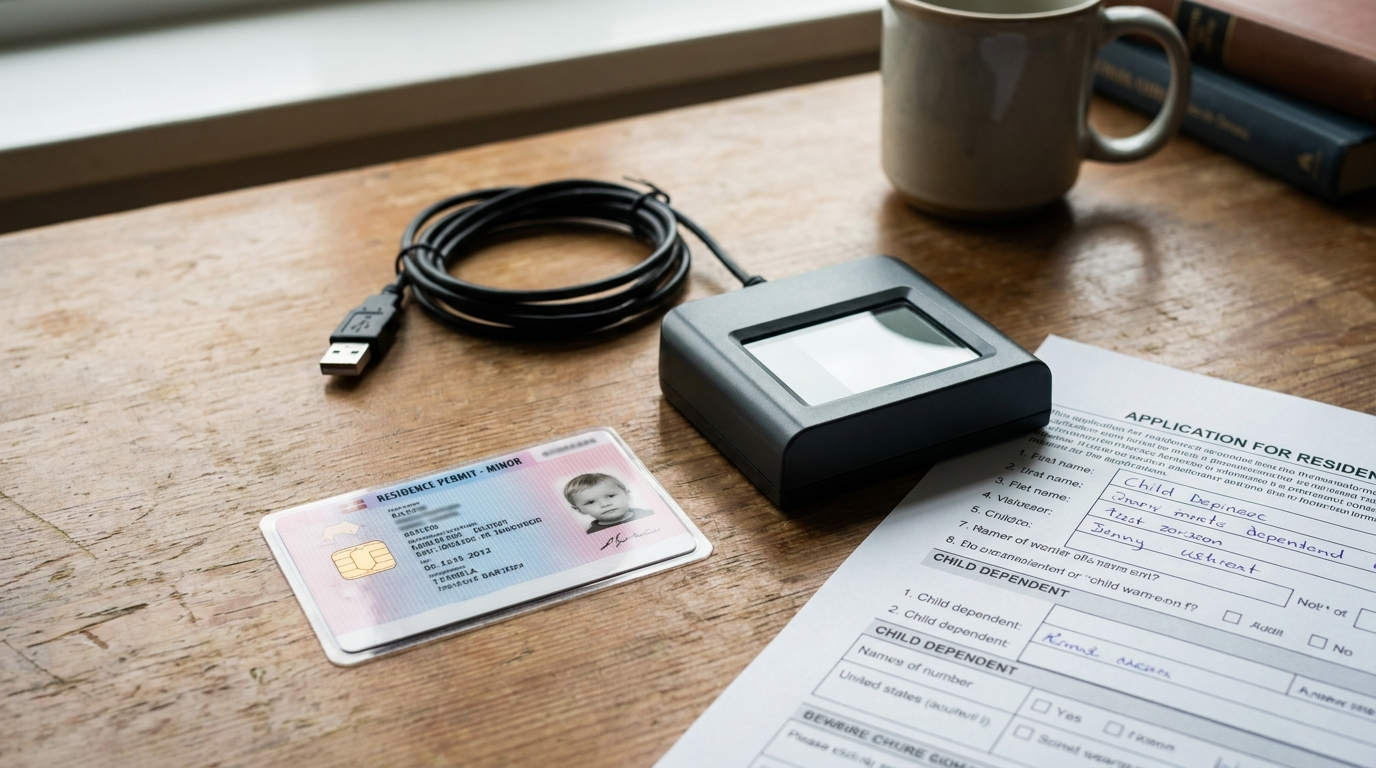
In Munich specifically, the under-16 Niederlassungserlaubnis application has its own fee and process, distinct from a standard permit renewal: 113 euros when an adult applies for themselves, 55 euros for a minor’s own application, a roughly 20-week processing window, registration in Munich, 5 years of continuous documented residence, secure means of support (waived while the child is in school or training), and no entries in the federal register of offenses. From 18 onward, a B1 German certificate is added to that list. A minor applicant needs a parent’s signature on the form and the responsible parent has to attend the in-person appointment together with them, it isn’t something a teenager can walk through alone even once they’re old enough to apply on their own behalf.
What Real People Say
A claim that circulates often among parents comparing notes online is some version of “a child can never get a permanent residence permit, even if the parents have one.” It’s not quite right, but it’s not pure myth either, it’s a real feature of the law described in an oversimplified way. What’s true is that inheritance is never automatic. What’s missing from the shorthand is that a child gets their own real shot at a Niederlassungserlaubnis starting at 16, on their own residence-history clock, which is exactly why the distinction matters enough to spell out rather than pass along as a flat “never.”
Parents comparing experiences also consistently flag the fingerprinting requirement as the detail that catches people off guard, particularly families who assumed a parent could simply handle a young child’s paperwork start to finish without the child present. Once a child turns 6, that assumption stops holding, and scheduling an appointment without checking this first tends to mean rescheduling once the office explains why the child needs to be there in person.
Step by Step
- Check which parent’s status is doing the work for your child’s own residence permit. If both parents, or the parent with sole custody, hold a secure status, the family-reunification permit is usually close to automatic. If not, treat it as an application you need to actively file, not one that happens on its own.
- From your child’s sixth birthday, plan for them to personally attend any KVR appointment involving a residence document, fingerprinting makes this mandatory regardless of who’s signing the paperwork.
- Don’t assume a settlement permit passes down. If you hold a Niederlassungserlaubnis yourself, your child’s own path to one starts from their own residence history, not yours.
- If your child is approaching 16, count their own continuous years with a residence permit. At 5 years, they can apply for their own Niederlassungserlaubnis with no extra conditions attached.
- If the 5-year mark won’t be reached by 16, don’t treat that as a problem to solve immediately. They simply continue on their existing permit, and the option reopens automatically once 5 years is reached, including after 18 with the added B1 and self-sufficiency conditions.
- For a Munich application involving a minor, budget for the parent’s required attendance at the in-person appointment, this isn’t optional even for a 16 or 17 year old applying in their own name.
FAQ & Common Pitfalls
If both parents have a Niederlassungserlaubnis, does our child automatically get one too?
No, and this is the single most common misunderstanding about this topic. A parent's settlement permit does not transfer to a child. What a strong parental status usually does is make it easier for the child to be issued their own residence permit (Aufenthaltserlaubnis) for family reunification purposes, often close to automatically if both parents or the parent with sole custody already hold a secure status. But that's still a residence permit, not a settlement permit, and the child's own path to their own Niederlassungserlaubnis only opens up starting at age 16, based on their own 5 years of residence history, not on what their parents hold.
Our child is 4. Do we need to bring them to any appointments yet?
For most routine steps, no, but check the specific service you're using since some do want the child present at any age for identity verification. The clear legal threshold to know is age 6: from a child's sixth birthday onward, German law requires fingerprints to be captured for any residence document, which means the child has to personally appear at that specific appointment, even though a parent continues to sign and represent them legally. Below age 6, that particular requirement doesn't apply.
Our teenager turns 16 next year but we only got our residence permits 3 years ago. What happens?
At 16, your child can only apply for their own Niederlassungserlaubnis under Section 35 AufenthG if they've personally held a residence permit continuously for 5 years, and 3 years doesn't clear that bar yet. Until they do reach 5 years, they simply continue on a standard residence permit like before, tied to the family reunification basis they already have. Nothing forces a change at 16 if the 5-year condition isn't met, it's an option that opens up, not a deadline that closes something down.