
How to Actually Get a KVR Appointment in Munich (Residence Permit Renewal)
Munich's KVR releases new appointment slots for residence permit renewals in small batches rather than one daily flood, so plan on checking repeatedly, not on one lucky refresh. What actually protects a family whose permit is about to expire isn't landing an appointment before that date, it's filing the renewal application before that date, since German law automatically extends your current permit's rights while the KVR decides.
The Official Rule
Residence permit renewals in Munich go through the Servicestelle für Zuwanderung und Einbürgerung (SZE), the branch of the Kreisverwaltungsreferat (KVR) that most people still call the Ausländerbehörde out of habit. It’s based at Ruppertstraße 19, and for nearly everything, the process starts online, not by walking in.
SZE / Ausländerbehörde: Ruppertstraße 19, 80337 Munich. Confirm the exact entrance and floor on your appointment confirmation, this building also houses other KVR services.
New appointment slots for the routine, non-emergency process are released Monday through Friday, in the morning and around midday, roughly ten minutes before the office opens for the day. Appointments for the following week get spread across several release windows rather than dropping all at once, so a day with nothing available on Monday can open up by Wednesday. If nothing turns up online, the next step is the service line (+49 89 233-96010), not a walk-in visit. Munich’s KVR is explicit about this: don’t show up without an appointment, there’s no ticket system for queuing on site anymore.
The deadline that actually matters is the application, not the appointment. Under Section 81 of the Residence Act (Aufenthaltsgesetz), filing your renewal before your current permit expires keeps your existing rights active automatically, work, travel, everything your current title already allowed, while the KVR processes the case. This is called Fortgeltungsfiktion, and it’s the single most useful thing to understand about this whole process: you don’t need a confirmed appointment before your expiry date, you need a submitted application before that date.

Most guidance converges on applying two to three months before your permit expires, and starting to gather documents earlier still. A written submission, even without a confirmed appointment yet, is what starts the legal clock, not the day someone at the KVR actually sees you.
Genuine emergencies do have a real path, but it’s narrower than the rumor mill suggests. Munich runs two separate emergency tracks. Employees, their family members, and a handful of other defined groups can use a walk-in emergency counter for specific, mostly asylum-adjacent situations, at set hours during the week. Students, researchers, highly qualified professionals, and the self-employed (plus their family members) have to book an emergency slot online instead, no walk-ins accepted, released daily at 6:30am on Monday, Wednesday, and Friday, and 7:30am on Tuesday and Thursday. Either way, “emergency” is defined narrowly: imminent job loss, risk of losing benefits, or travel required within the next seven days, and you need documentation to back it up. The office states plainly that changing jobs or starting a new one doesn’t count, and the emergency counter can’t process a routine extension at all, only short-term documents like a Fiktionsbescheinigung while your actual application is pending.
If your passport gets renewed while your residence permit is still tied to the old one, that’s a separate errand (Übertrag). You apply online, submit both passports and a fresh biometric photo, and pay 67 euros, plus 15 euros if you want it mailed directly once ready. Processing runs 10 to 12 weeks, and the office asks people not to call and check status during that window. If your permit extension itself hasn’t been decided yet, you’ll need a Fiktionsbescheinigung to go alongside the transfer request. One thing worth knowing before you panic: if you’re not traveling to a non-EU country any time soon, there’s no rush, a permit sitting in an old, expired passport stays valid, and re-entry to Germany works by presenting both passports together at the border.
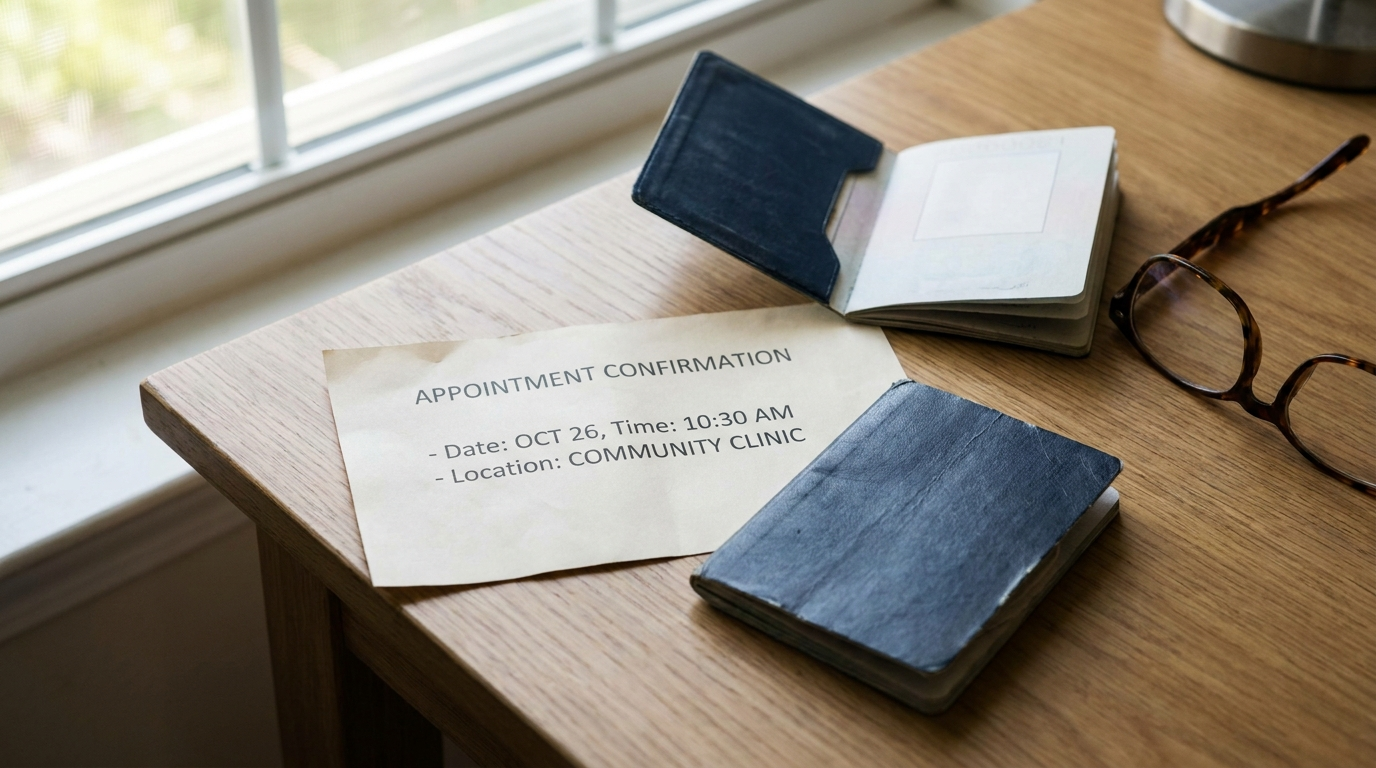
What Real People Say
Ask anyone who has actually been through this, and it’s the appointment system itself, not the paperwork, that they remember most. Private expat guides describe checking the booking portal repeatedly over several days rather than expecting one big release: new slots trickle in outside the official release windows too, whenever someone else cancels or reschedules, so checking back periodically over a few days tends to beat camping at exactly one time of day.
The wait time people actually report varies enough that it’s worth being honest about the range rather than pretending there’s one number. Some guides describe typical appointment waits of two to six weeks, others describe stretches of eight to twelve weeks depending on the season, with autumn (September through November) mentioned repeatedly as the slowest stretch of the year. Munich is generally described as faster than Berlin for this specific step, for whatever comfort that comparison is worth.
The mistakes people actually make tend to be mundane and avoidable. Showing up at the wrong building costs a slot entirely, since Munich’s immigration-related services aren’t all concentrated in one address. A registration certificate (Meldebescheinigung) that’s more than a few months old, or a biometric photo that doesn’t match the current format, gets flagged on the spot rather than quietly overlooked. More than one guide stresses arriving 10 to 15 minutes early, since running late can mean losing the appointment outright.
On the Fiktionsbescheinigung specifically, the nuance people tend to learn the hard way is the gap between applying on time and applying late. File before your permit expires and you keep full continuity, including the right to leave and re-enter Germany. File after it has already lapsed, and the resulting certificate is more limited, in some cases not covering re-entry at all, which is exactly the kind of gap you want to catch before a flight, not after landing back in Munich.
Step by Step
- Start collecting documents three to four months before your permit expires, not two weeks before. Income proof, health insurance confirmation, and address registration all take time to line up.
- Check the KVR’s online appointment system repeatedly, not once. Slots appear both at the scheduled release windows and randomly through cancellations, so persistence beats a single well-timed refresh.
- If nothing is available with weeks to spare, submit your renewal application online anyway before the expiry date. The filing date, not the appointment date, is what activates Fortgeltungsfiktion under Section 81.
- Keep the submission confirmation somewhere you can find it fast. It’s your proof of legal status if an employer, a landlord, or a border officer asks before your new title is actually issued.
- If your situation is genuinely urgent (real risk of losing your job, or travel required within a week), check whether you fall into one of Munich’s two emergency tracks, and be ready to document exactly why it’s urgent.
- If you get a new passport before your residence permit is renewed, apply separately for the Übertrag, and budget 10 to 12 weeks for that process specifically.
- Once you have an actual appointment, arrive 10 to 15 minutes early and double check the building address on your confirmation. Munich’s immigration services aren’t concentrated in a single office, and the wrong address can cost you the slot.
FAQ & Common Pitfalls
Is the KVR's emergency appointment (Notfall-Termin) real, or is it just a rumor?
It's real, but narrower than the rumor suggests. Munich runs two separate emergency tracks. Employees, their family members, and a few other defined groups can use a walk-in counter for specific, mostly asylum-adjacent situations. Students, researchers, highly qualified professionals, and the self-employed (plus their family members) have to book an emergency slot online, released daily at 6:30am Monday, Wednesday, and Friday, and 7:30am Tuesday and Thursday. Either way, the office defines 'emergency' narrowly: imminent job loss, risk of losing benefits, or travel required within seven days, backed by real documentation. Starting a new job or simply wanting to skip the queue doesn't qualify, and the emergency counter can't process a routine extension, only short-term documents while your real application is pending.
What exactly is a Fiktionsbescheinigung, and does it let me work and travel normally?
It's a certificate under Section 81 of the Residence Act confirming your legal stay continues while your application is being decided, usually valid for three to six months and renewed if the KVR hasn't finished by then. The catch is timing. Apply for your renewal before your current permit expires and you get the stronger version (Fortgeltungsfiktion): your existing rights, including work and travel, continue as if nothing changed. Apply after it has already expired and you get a more limited version, and in some cases it won't cover leaving and re-entering Germany at all, which is exactly the kind of thing you want to know before booking a flight, not at the gate.
My passport was renewed. Do I need to do anything about my residence permit?
Yes, this is a separate step called Übertrag (transfer). You apply online through the SZE portal with both passports and a new biometric photo, pay 67 euros (plus 15 euros for direct mail delivery), and budget 10 to 12 weeks for processing. If your permit renewal itself hasn't been decided yet, you'll need a Fiktionsbescheinigung alongside the transfer request. One relief: if you're not traveling to a non-EU country soon, there's no rush, a permit in an old, expired passport stays valid, and you re-enter Germany by presenting both passports together.
What happens if I genuinely can't get an appointment before my permit expires?
The appointment date isn't actually the deadline that matters, the filing date is. Submit your renewal application online before your permit expires, even without a confirmed appointment yet, and your current rights continue automatically under Section 81 while the KVR works through the backlog. Keep the submission confirmation somewhere accessible, it's your proof of legal status if anyone asks before the new title is issued. If your permit has already expired and you never filed, contact the KVR immediately rather than waiting, and consider whether your situation meets the narrow emergency criteria above.