
Munich's Bewohnerparkausweis: Application, Zones, and Why It's Still Cheap
If your registered address sits inside one of Munich's Parklizenzgebiete (resident parking zones) and you don't have your own parking space, a Bewohnerparkausweis lets you park there without the time limits that apply to everyone else. You don't need to personally own the car: a company car, a car-sharing membership, or a regularly rented vehicle can all qualify with the right proof, and one permit covers up to three vehicles registered to your household. The genuinely good news, contrary to what many other German cities have done, is the price: Munich still charges just 30 euros for 12 months or 60 euros for 24 months, because Bavaria kept its own fee ceiling well below the federal maximum that let cities like Freiburg and Stuttgart raise theirs into the hundreds of euros. Apply online through Munich's official portal for the fastest turnaround, submissions before 11am are often processed the same day, with an emailed confirmation valid as temporary proof while the physical permit is produced. As of a January 2025 city council decision, Munich has 76 resident parking zones and counting, with five more approved and rolling out through 2028, so it's worth checking which specific zone covers your street before you apply.
The Official Rule
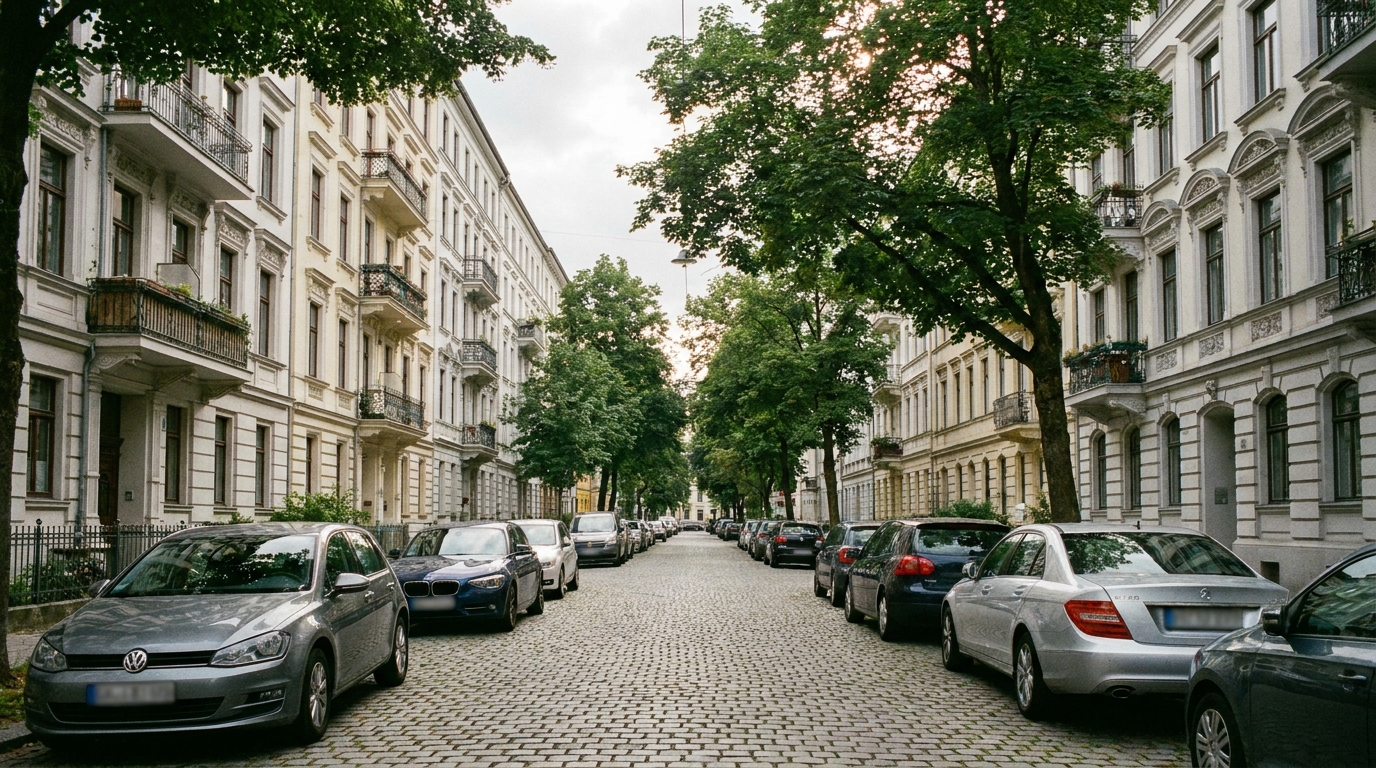
Munich’s inner districts run on a genuinely tight parking system: most streets inside a Parklizenzgebiet cap how long anyone without a permit can leave a car parked there, sometimes as little as an hour or two. If your registered address falls inside one of these zones and you don’t have a private garage or driveway, the Bewohnerparkausweis is what lets you park near your own home without constantly moving the car or watching the clock.
Eligibility comes down to two core requirements, per Munich’s official city page: your registered residence (Anmeldung) has to sit inside the specific zone you’re applying for, and you can’t have a private parking space available at that address. Beyond that, you need a vehicle you genuinely, regularly use, not necessarily one registered in your own name. Company cars qualify if you can show authorized private use and that it’s taxed as a non-cash benefit. Car-sharing memberships and ongoing rental arrangements qualify with the right documentation. A vehicle you’ve borrowed long-term works too, if its actual owner confirms your permanent use in writing. Trailers and vehicles primarily intended for commercial use are excluded outright, and foreign-plated vehicles generally aren’t accepted unless the car is primarily used within Germany.
| Detail | |
|---|---|
| Cost, 12 months | 30 euros |
| Cost, 24 months | 60 euros |
| Payment method | Bank transfer only |
| Vehicles per permit | Up to 3 |
| Where it's valid | Only the specific Parklizenzgebiet covering your registered address |
| Fastest application route | Online, via Munich's official portal |
Applying online is genuinely the fast path. Munich’s official process runs through an online form, and the city’s own guidance notes that applications submitted before 11am are often processed the same day, with an immediate email confirmation you can display in your vehicle as temporary proof for up to about a week while the physical permit gets produced and mailed. In-person applications are also possible at the Kommunale Verkehrsüberwachung office on Implerstraße 11, but only by appointment, and even those don’t get you a permit on the spot.
What Real People Say
The genuinely notable story here is what didn’t happen. A 2020 federal reform to Germany’s fee regulation raised the nationwide ceiling on resident parking fees from around 30 euros a year to as much as 390 euros, and plenty of German cities took advantage: Freiburg now charges up to 360 euros a year, Stuttgart up to 180. Bavaria’s state government chose not to follow, keeping its own fee ceiling at 30.70 euros a year, and a planned restructuring toward higher fees was reportedly withdrawn in 2023, with officials citing a wish not to pile financial pressure onto residents during a period of high inflation. For a Munich family weighing whether a second car is worth the hassle, this matters: the permit itself stays one of the cheapest fixed costs of car ownership in the city, even as parking enforcement inside the zones has gotten stricter and the number of zones keeps expanding.
That expansion is worth tracking if you’re apartment hunting or planning a move within Munich. The city council’s January 2025 decision added five new zones, Gern, Mangfallplatz, Scharfreiterplatz, Mittersendling, and Pasing Süd, on top of an existing expansion in Partnachplatz, plus new (permit-free) parking management for Freiham. The rollout is staggered through 2028 rather than happening all at once, so a street that’s currently unrestricted could become a Parklizenzgebiet within your first few years in the city.
Step by Step
- Confirm your registered address is inside a Parklizenzgebiet using Munich’s official zone map, since permits are only valid for the specific zone matching your Anmeldung.
- Gather your documents: a copy of your vehicle’s Zulassungsbescheinigung Teil I (registration certificate), and if the car isn’t registered in your own name, written confirmation of your permanent use from the actual owner or holder, plus car-sharing or rental proof if that’s your situation.
- Apply online through Munich’s official portal for the fastest processing, ideally before 11am if you want a same-day response. Keep the emailed confirmation on hand and displayed in your vehicle while you wait for the physical permit.
- Choose 12 or 24 months based on how settled your situation is, the 24-month option effectively halves your annual cost.
- Pay by bank transfer, since that’s the only accepted payment method for this permit.
- Watch for your renewal letter, sent roughly six weeks before expiry. If your plate and address haven’t changed, you don’t need to reapply from scratch, just pay the fee stated in the letter.
Compliance Note
This page explains the general framework for Munich’s resident parking permit, current as of mid-2026. It is not legal advice. Fees, zone boundaries, and eligibility details can change, and your specific situation, especially around company cars or shared vehicles, should be confirmed directly with the Kommunale Verkehrsüberwachung before you apply.
FAQ & Common Pitfalls
Do I need to own the car myself to get a Bewohnerparkausweis?
No. Munich's official application explicitly accepts several arrangements beyond personal ownership: a company car, as long as you can show authorization for private use and that it's taxed as a non-cash benefit under the 1 percent rule; a car-sharing membership, with proof of your subscription; or a vehicle you rent on a regular, ongoing basis, shown through the past year's rental contracts. A borrowed or leased vehicle also works if the actual owner or holder provides written confirmation that you use it permanently. What matters is demonstrating genuine, ongoing use, not the registration paper matching your name.
Does my permit work in any Munich parking zone, or just mine?
Just your own. A Bewohnerparkausweis is tied to the specific Parklizenzgebiet that covers your registered address, and Munich's official guidance gives no indication of any cross-zone privilege. If you move to an apartment in a different zone, even elsewhere in Munich, you'll need to apply for a new permit rather than assuming your existing one carries over.
I heard German cities have been raising resident parking fees a lot. Is Munich next?
Not based on anything decided so far. A 2020 federal reform did raise the nationwide fee ceiling from roughly 30 euros a year to as much as 390 euros, and cities like Freiburg and Stuttgart used that room to charge dramatically more. Bavaria's state government, though, kept its own fee ceiling at 30.70 euros a year, well under the new federal maximum, and reportedly withdrew a planned restructuring in 2023, citing a wish not to add financial pressure on residents during a period of inflation. As of the most recent reporting available, Munich's 30 euro (12 month) and 60 euro (24 month) pricing remains unchanged.
How do I find out which zone covers my street, and how many zones are there?
Munich's parking zone map is maintained by the city and is the most reliable way to check your specific street, since zone boundaries shift as new areas get added. As of a January 2025 city council decision, Munich manages 76 Parklizenzgebiete plus a few special-regime areas like the Altstadt and the Hauptbahnhof district, covering roughly 100,000 parking spaces citywide. Five additional zones, Gern, Mangfallplatz, Scharfreiterplatz, Mittersendling, and Pasing Süd, were approved in that same decision and are rolling out on a staggered timeline through 2028, so it's worth checking again if your area wasn't covered when you last looked.